


 癌症的基本特征包括细胞增殖、血管生成、迁移、凋亡逃避机制和细胞永生等。找到癌症发生过程中这些通路的关键标记物和对应的抗体用于检测至关重要。
 为您推荐一个泛素化位点预测神器——泛素化分析工具,可以为您的蛋白的泛素化位点作出预测和评分。
 细胞自噬受体图形绘图工具为你的蛋白的细胞受体结合位点作出预测和评分,识别结合到自噬通路中的蛋白是非常重要的,便于让我们理解自噬在正常生理、病理过程中的作用,如发育、细胞分化、神经退化性疾病、压力条件下、感染和癌症。
PLA2G7 Antibody (Center) 精选
Affinity Purified Rabbit Polyclonal Antibody (Pab)

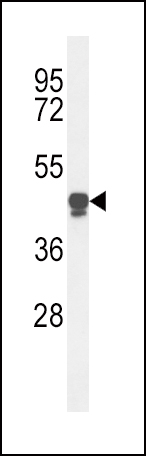
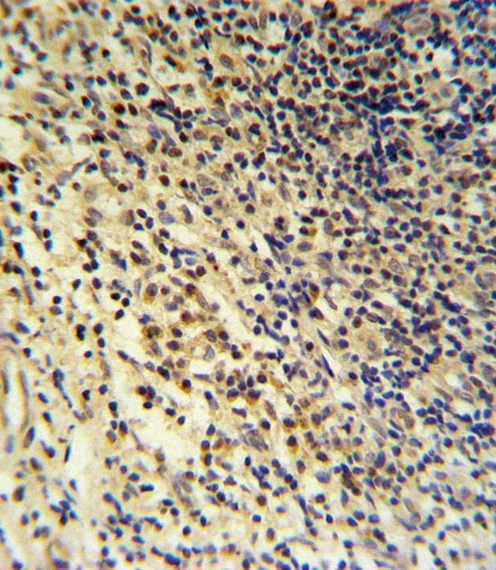
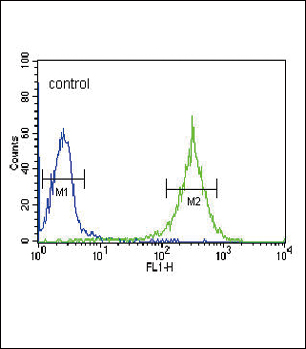
- 产品详情
- 文献引用 : 1
- 实验流程
- 背景知识
Application 
| WB, IHC-P, FC, E |
|---|---|
| Primary Accession | Q13093 |
| Reactivity | Human, Mouse |
| Predicted | Bovine, Rabbit |
| Host | Rabbit |
| Clonality | Polyclonal |
| Isotype | Rabbit IgG |
| Calculated MW | 50077 Da |
| Antigen Region | 200-228 aa |
| Gene ID | 7941 |
|---|---|
| Other Names | Platelet-activating factor acetylhydrolase, PAF acetylhydrolase, 1-alkyl-2-acetylglycerophosphocholine esterase, 2-acetyl-1-alkylglycerophosphocholine esterase, Group-VIIA phospholipase A2, gVIIA-PLA2, LDL-associated phospholipase A2, LDL-PLA(2), PAF 2-acylhydrolase, PLA2G7, PAFAH |
| Target/Specificity | This PLA2G7 antibody is generated from rabbits immunized with a KLH conjugated synthetic peptide between 200-228 amino acids from the Central region of human PLA2G7. |
| Dilution | WB~~1:1000 IHC-P~~1:100~500 FC~~1:10~50 E~~Use at an assay dependent concentration. |
| Format | Purified polyclonal antibody supplied in PBS with 0.09% (W/V) sodium azide. This antibody is purified through a protein A column, followed by peptide affinity purification. |
| Storage | Maintain refrigerated at 2-8°C for up to 2 weeks. For long term storage store at -20°C in small aliquots to prevent freeze-thaw cycles. |
| Precautions | PLA2G7 Antibody (Center) is for research use only and not for use in diagnostic or therapeutic procedures. |
For Research Use Only. Not For Use In Diagnostic Procedures.
| Name | PLA2G7 |
|---|---|
| Synonyms | PAFAH |
| Function | Lipoprotein-associated calcium-independent phospholipase A2 involved in phospholipid catabolism during inflammatory and oxidative stress response (PubMed:10066756, PubMed:16371369, PubMed:17090529, PubMed:2040620, PubMed:7700381, PubMed:8624782). At the lipid-aqueous interface, hydrolyzes the ester bond of fatty acyl group attached at sn-2 position of phospholipids (phospholipase A2 activity) (PubMed:10504265, PubMed:2040620). Specifically targets phospholipids with a short-chain fatty acyl group at sn-2 position (PubMed:2040620). Can hydrolyze phospholipids with long fatty acyl chains, only if they carry oxidized functional groups (PubMed:2040620, PubMed:8624782). Hydrolyzes and inactivates platelet-activating factor (PAF, 1-O-alkyl- 2-acetyl-sn-glycero-3-phosphocholine), a potent pro-inflammatory signaling lipid that acts through PTAFR on various innate immune cells (PubMed:10066756, PubMed:10504265, PubMed:11590221, PubMed:16371369, PubMed:18434304, PubMed:7592717, PubMed:7700381, PubMed:8624782, PubMed:8675689). Hydrolyzes oxidatively truncated phospholipids carrying an aldehyde group at omega position, preventing their accumulation in low-density lipoprotein (LDL) particles and uncontrolled pro-inflammatory effects (PubMed:2040620, PubMed:7700381). As part of high-density lipoprotein (HDL) particles, can hydrolyze phospholipids having long-chain fatty acyl hydroperoxides at sn-2 position and protect against potential accumulation of these oxylipins in the vascular wall (PubMed:17090529). Catalyzes the release from membrane phospholipids of F2-isoprostanes, lipid biomarkers of cellular oxidative damage (PubMed:16371369). |
| Cellular Location | Secreted, extracellular space Note=Associates with both LDL and HDL particles in plasma (PubMed:10066756, PubMed:11590221, PubMed:12821559, PubMed:18434304) Mainly associates with pro-inflammatory electronegative LDL particles (PubMed:12821559). |
| Tissue Location | Plasma (PubMed:11590221, PubMed:12821559). Secreted by macrophages (at protein level) (PubMed:11590221) |

Provided below are standard protocols that you may find useful for product applications.
BACKGROUND
The protein encoded by this gene is a secreted enzyme that catalyzes the degradation of platelet-activating factor to biologically inactive products. Defects in this gene are a cause of platelet-activating factor acetylhydrolase deficiency.
REFERENCES
Fan, P., et al. Hum. Reprod. 25(5):1288-1294(2010)
Paik, J.K., et al. Clin. Chim. Acta 411 (7-8), 486-493 (2010)
Meng, X., et al. Psychiatry Res 175 (1-2), 186-187 (2010)
McGeachie, M., et al. Circulation 120(24):2448-2454(2009)
Cojocaru, I.M., et al. Rom J Intern Med 47(1):61-65(2009)

终于等到您。ABCEPTA(百远生物)抗体产品。
点击下方“我要评价 ”按钮提交您的反馈信息,您的反馈和评价是我们最宝贵的财富之一,
我们将在1-3个工作日内处理您的反馈信息。
如有疑问,联系:0512-88856768 tech-china@abcepta.com.


