


 癌症的基本特征包括细胞增殖、血管生成、迁移、凋亡逃避机制和细胞永生等。找到癌症发生过程中这些通路的关键标记物和对应的抗体用于检测至关重要。
 为您推荐一个泛素化位点预测神器——泛素化分析工具,可以为您的蛋白的泛素化位点作出预测和评分。
 细胞自噬受体图形绘图工具为你的蛋白的细胞受体结合位点作出预测和评分,识别结合到自噬通路中的蛋白是非常重要的,便于让我们理解自噬在正常生理、病理过程中的作用,如发育、细胞分化、神经退化性疾病、压力条件下、感染和癌症。
Anti-Cyclophilin A Picoband Antibody
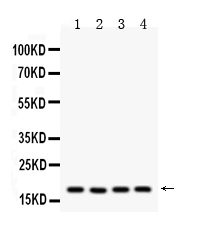
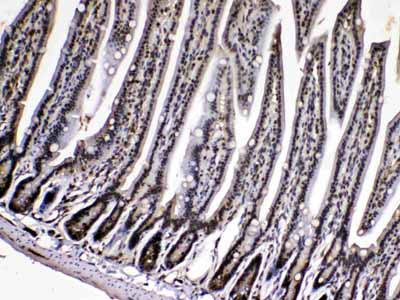
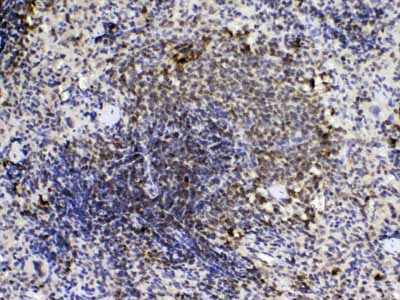
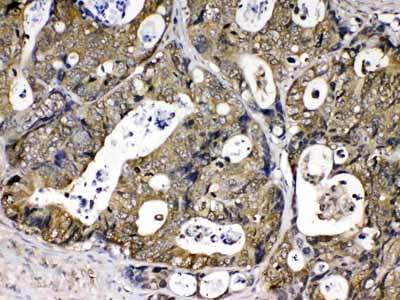
- 产品详情
- 实验流程
- 背景知识
Application 
| WB, IHC-P |
|---|---|
| Primary Accession | P62937 |
| Host | Rabbit |
| Reactivity | Human, Mouse, Rat |
| Clonality | Polyclonal |
| Format | Lyophilized |
| Description | Rabbit IgG polyclonal antibody for Peptidyl-prolyl cis-trans isomerase A(PPIA) detection. Tested with WB, IHC-P in Human;Mouse;Rat. |
| Reconstitution | Add 0.2ml of distilled water will yield a concentration of 500ug/ml. |
| Gene ID | 5478 |
|---|---|
| Other Names | Peptidyl-prolyl cis-trans isomerase A, PPIase A, 5.2.1.8, Cyclophilin A, Cyclosporin A-binding protein, Rotamase A, Peptidyl-prolyl cis-trans isomerase A, N-terminally processed, PPIA, CYPA |
| Calculated MW | 18012 Da |
| Application Details | Immunohistochemistry(Paraffin-embedded Section), 0.5-1 µg/ml, Human, Mouse, Rat, By Heat Western blot, 0.1-0.5 µg/ml, Human, Mouse, Rat |
| Subcellular Localization | Cytoplasm . Secreted . Secretion occurs in response to oxidative stress in vascular smooth muscle through a vesicular secretory pathway that involves actin remodeling and myosin II activation, and mediates ERK1/2 activation. |
| Source | Eukaryota |
| Protein Name | Peptidyl-prolyl cis-trans isomerase A |
| Contents | Each vial contains 5mg BSA, 0.9mg NaCl, 0.2mg Na2HPO4, 0.05mg NaN3. |
| Immunogen | E.coli-derived human Cyclophilin A recombinant protein (Position: T116-E165). Human Cyclophilin A shares 98% and 95.9% amino acid (aa) sequence identity with mouse and rat Cyclophilin A, respectively. |
| Purification | Immunogen affinity purified. |
| Cross Reactivity | No cross reactivity with other proteins |
| Storage | At -20˚C for one year. After r˚Constitution, at 4˚C for one month. It˚Can also be aliquotted and stored frozen at -20˚C for a longer time.Avoid repeated freezing and thawing. |
For Research Use Only. Not For Use In Diagnostic Procedures.
| Name | PPIA |
|---|---|
| Synonyms | CYPA |
| Function | Catalyzes the cis-trans isomerization of proline imidic peptide bonds in oligopeptides (PubMed:2001362, PubMed:20676357, PubMed:21245143, PubMed:21593166, PubMed:25678563). Exerts a strong chemotactic effect on leukocytes partly through activation of one of its membrane receptors BSG/CD147, initiating a signaling cascade that culminates in MAPK/ERK activation (PubMed:11943775, PubMed:21245143). Activates endothelial cells (ECs) in a pro-inflammatory manner by stimulating activation of NF-kappa-B and ERK, JNK and p38 MAP-kinases and by inducing expression of adhesion molecules including SELE and VCAM1 (PubMed:15130913). Induces apoptosis in ECs by promoting the FOXO1-dependent expression of CCL2 and BCL2L11 which are involved in EC chemotaxis and apoptosis (PubMed:31063815). In response to oxidative stress, initiates proapoptotic and antiapoptotic signaling in ECs via activation of NF-kappa-B and AKT1 and up-regulation of antiapoptotic protein BCL2 (PubMed:23180369). Negatively regulates MAP3K5/ASK1 kinase activity, autophosphorylation and oxidative stress-induced apoptosis mediated by MAP3K5/ASK1 (PubMed:26095851). Necessary for the assembly of TARDBP in heterogeneous nuclear ribonucleoprotein (hnRNP) complexes and regulates TARDBP binding to RNA UG repeats and TARDBP-dependent expression of HDAC6, ATG7 and VCP which are involved in clearance of protein aggregates (PubMed:25678563). Plays an important role in platelet activation and aggregation (By similarity). Regulates calcium mobilization and integrin ITGA2B:ITGB3 bidirectional signaling via increased ROS production as well as by facilitating the interaction between integrin and the cell cytoskeleton (By similarity). Binds heparan sulfate glycosaminoglycans (PubMed:11943775). Inhibits replication of influenza A virus (IAV) (PubMed:19207730). Inhibits ITCH/AIP4-mediated ubiquitination of matrix protein 1 (M1) of IAV by impairing the interaction of ITCH/AIP4 with M1, followed by the suppression of the nuclear export of M1, and finally reduction of the replication of IAV (PubMed:22347431, PubMed:30328013). |
| Cellular Location | Cytoplasm. Secreted Nucleus Cell membrane. Note=Secretion occurs in response to oxidative stress in vascular smooth muscle through a vesicular secretory pathway that includes Rho GTPase signaling, actin remodeling, and myosin II activation. |
Provided below are standard protocols that you may find useful for product applications.
BACKGROUND
Cyclophilin A (PPIA), Peptidylprolyl isomerase A, is an enzyme that in humans is encoded by the PPIA gene. Using chromosome 7 and chromosome 10 deletion hybrid panels, the PPIA coding gene is localized to 7p13-p11.2. This gene encodes a member of the peptidyl-prolyl cis-trans isomerase (PPIase) family. Cyclophilin A is also a member of the immunophilin class of proteins that all possess peptidyl-prolyl cis/trans isomerase activity and are believed to be involved in protein folding and/or intracellular protein transport. And Cyclophilin A binds to the Gag protein of human immunodeficiency virus type 1 (HIV-1). Additionally, Cyclophilin A may have an essential function in HIV-1 replication.may have an essential function in HIV-1 replication.

终于等到您。ABCEPTA(百远生物)抗体产品。
点击下方“我要评价 ”按钮提交您的反馈信息,您的反馈和评价是我们最宝贵的财富之一,
我们将在1-3个工作日内处理您的反馈信息。
如有疑问,联系:0512-88856768 tech-china@abcepta.com.


