


 癌症的基本特征包括细胞增殖、血管生成、迁移、凋亡逃避机制和细胞永生等。找到癌症发生过程中这些通路的关键标记物和对应的抗体用于检测至关重要。
 为您推荐一个泛素化位点预测神器——泛素化分析工具,可以为您的蛋白的泛素化位点作出预测和评分。
 细胞自噬受体图形绘图工具为你的蛋白的细胞受体结合位点作出预测和评分,识别结合到自噬通路中的蛋白是非常重要的,便于让我们理解自噬在正常生理、病理过程中的作用,如发育、细胞分化、神经退化性疾病、压力条件下、感染和癌症。
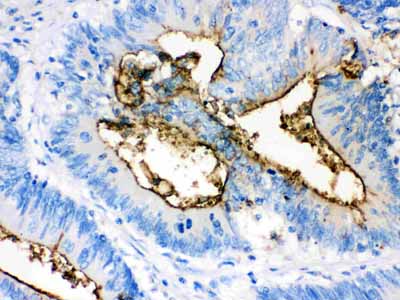
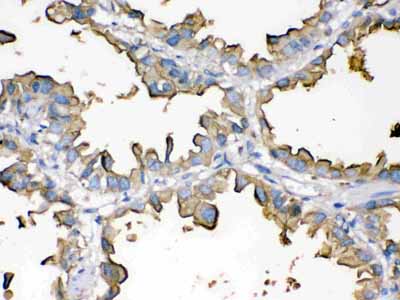
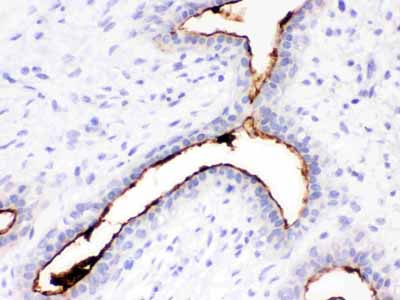
Anti-Episialin, EMA Antibody (Monoclonal, GP1.4)
- 产品详情
- 实验流程
- 背景知识
Application 
| IHC-P, IHC-F |
|---|---|
| Primary Accession | P15941 |
| Host | Mouse |
| Isotype | Mouse IgG1 |
| Reactivity | Human |
| Clonality | Monoclonal |
| Format | Lyophilized |
| Description | Mouse IgG monoclonal antibody for Episialin, EMA, mucin 1, cell surface associated (MUC1) detection. Tested with IHC-P, IHC-F in Human. No cross reactivity with other proteins. |
| Reconstitution | Add 1ml of PBS buffer will yield a concentration of 100ug/ml. |
| Gene ID | 4582 |
|---|---|
| Other Names | Mucin-1, MUC-1, Breast carcinoma-associated antigen DF3, Cancer antigen 15-3, CA 15-3, Carcinoma-associated mucin, Episialin, H23AG, Krebs von den Lungen-6, KL-6, PEMT, Peanut-reactive urinary mucin, PUM, Polymorphic epithelial mucin, PEM, Tumor-associated epithelial membrane antigen, EMA, Tumor-associated mucin, CD227, Mucin-1 subunit alpha, MUC1-NT, MUC1-alpha, Mucin-1 subunit beta, MUC1-beta, MUC1-CT, MUC1, PUM |
| Calculated MW | 122102 Da |
| Application Details | Immunohistochemistry(Paraffin-embedded Section), 2-4 µg/ml, Human, By Heat Immunohistochemistry(Frozen Section), 2-4 µg/ml, Human |
| Subcellular Localization | Apical cell membrane ; Single- pass type I membrane protein . Exclusively located in the apical domain of the plasma membrane of highly polarized epithelial cells. After endocytosis, internalized and recycled to the cell membrane. Located to microvilli and to the tips of long filopodial protusions. |
| Tissue Specificity | Expressed on the apical surface of epithelial cells, especially of airway passages, breast and uterus. Also expressed in activated and unactivated T-cells. Overexpressed in epithelial tumors, such as breast or ovarian cancer and also in non-epithelial tumor cells. Isoform 7 is expressed in tumor cells only. . |
| Source | Eukaryota |
| Protein Name | Mucin-1 |
| Contents | Mouse ascites fluid, 1.2% sodium acetate, 2mg BSA, with 0.01mg NaN3 as preservative. |
| Clone Names | GP1.4 |
| Immunogen | Human milk fat globule membranes. |
| Purification | Ascites |
| Cross Reactivity | No cross reactivity with other proteins |
| Storage | At -20˚C for one year. After r˚Constitution, at 4˚C for one month. It˚Can also be aliquotted and stored frozen at -20˚C for a longer time.Avoid repeated freezing and thawing. |
| Sequence Similarities | Contains 1 SEA domain. |
For Research Use Only. Not For Use In Diagnostic Procedures.
| Name | MUC1 |
|---|---|
| Synonyms | PUM |
| Function | The alpha subunit has cell adhesive properties. Can act both as an adhesion and an anti-adhesion protein. May provide a protective layer on epithelial cells against bacterial and enzyme attack. |
| Cellular Location | Apical cell membrane; Single-pass type I membrane protein. Note=Exclusively located in the apical domain of the plasma membrane of highly polarized epithelial cells After endocytosis, internalized and recycled to the cell membrane Located to microvilli and to the tips of long filopodial protusions [Isoform Y]: Secreted. [Mucin-1 subunit beta]: Cell membrane. Cytoplasm. Nucleus. Note=On EGF and PDGFRB stimulation, transported to the nucleus through interaction with CTNNB1, a process which is stimulated by phosphorylation. On HRG stimulation, colocalizes with JUP/gamma-catenin at the nucleus |
| Tissue Location | Expressed on the apical surface of epithelial cells, especially of airway passages, breast and uterus. Also expressed in activated and unactivated T-cells. Overexpressed in epithelial tumors, such as breast or ovarian cancer and also in non-epithelial tumor cells. Isoform Y is expressed in tumor cells only |
Provided below are standard protocols that you may find useful for product applications.
BACKGROUND
MUC1 is a large cell surface mucin glycoprotein expressed by most glandular and ductal epithelial cells and some hematopoietic cell lineages. It is expressed on most secretory epithelium, including mammary gland and some hematopoietic cells. It is expressed abundantly in lactating mammary glands and overexpressed abundantly in >90% breast carcinomas and metastases. Transgenic MUC1 has been shown to associate with all four cebB receptors and localize with erbB1(EGFR) in lactating glands. The MUC1 gene contains seven exons and produces several different alternatively spliced variants. The major expressed form of MUC1 uses all seven exons and is a type I transmembrane protein with a large extracellular tandem repeat domain. The tandem repeat domain is highly O glycosylated and alterations in glycosylation have been shown in epithelial cancer cells.

终于等到您。ABCEPTA(百远生物)抗体产品。
点击下方“我要评价 ”按钮提交您的反馈信息,您的反馈和评价是我们最宝贵的财富之一,
我们将在1-3个工作日内处理您的反馈信息。
如有疑问,联系:0512-88856768 tech-china@abcepta.com.


