


 癌症的基本特征包括细胞增殖、血管生成、迁移、凋亡逃避机制和细胞永生等。找到癌症发生过程中这些通路的关键标记物和对应的抗体用于检测至关重要。
 为您推荐一个泛素化位点预测神器——泛素化分析工具,可以为您的蛋白的泛素化位点作出预测和评分。
 细胞自噬受体图形绘图工具为你的蛋白的细胞受体结合位点作出预测和评分,识别结合到自噬通路中的蛋白是非常重要的,便于让我们理解自噬在正常生理、病理过程中的作用,如发育、细胞分化、神经退化性疾病、压力条件下、感染和癌症。
Anti-Alkaline Phosphatase Antibody
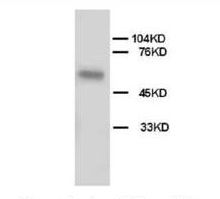
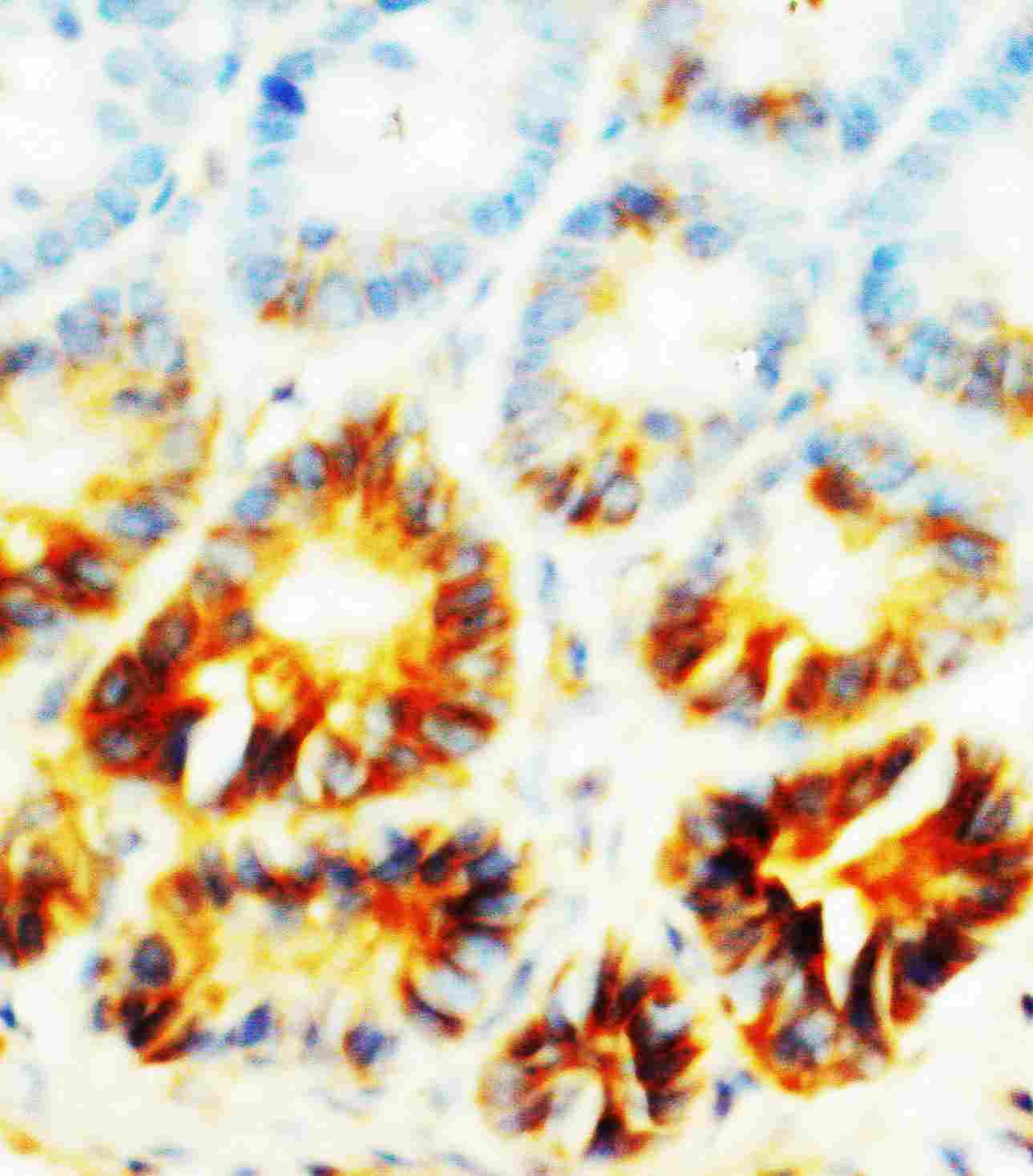
- 产品详情
- 实验流程
- 背景知识
Application 
| WB, IHC-P |
|---|---|
| Primary Accession | P05186 |
| Host | Rabbit |
| Reactivity | Human, Mouse, Rat |
| Clonality | Polyclonal |
| Format | Lyophilized |
| Description | Rabbit IgG polyclonal antibody for Alkaline phosphatase, tissue-nonspecific isozyme(ALPL) detection. Tested with WB, IHC-P in Human;Mouse;Rat. |
| Reconstitution | Add 0.2ml of distilled water will yield a concentration of 500ug/ml. |
| Gene ID | 249 |
|---|---|
| Other Names | Alkaline phosphatase, tissue-nonspecific isozyme, AP-TNAP, TNSALP, 3.1.3.1, Alkaline phosphatase liver/bone/kidney isozyme, ALPL |
| Calculated MW | 57305 Da |
| Application Details | Immunohistochemistry(Paraffin-embedded Section), 0.5-1 µg/ml, Human, Rat, Mouse, By Heat Western blot, 0.1-0.5 µg/ml, Human |
| Subcellular Localization | Cell membrane ; Lipid-anchor, GPI-anchor . |
| Source | Eukaryota |
| Protein Name | Alkaline phosphatase, tissue-nonspecific isozyme(AP-TNAP/TNSALP) |
| Contents | Each vial contains 5mg BSA, 0.9mg NaCl, 0.2mg Na2HPO4, 0.05mg Thimerosal, 0.05mg NaN3. |
| Immunogen | A synthetic peptide corresponding to a sequence at the N-terminus of human Alkaline Phosphatase(21-35aa,EKEKDPKYWRDQAQE), different from the related rat and mouse sequences by two amino acids. |
| Purification | Immunogen affinity purified. |
| Cross Reactivity | No cross reactivity with other proteins. |
| Storage | At -20˚C for one year. After r˚Constitution, at 4˚C for one month. It˚Can also be aliquotted and stored frozen at -20˚C for a longer time.Avoid repeated freezing and thawing. |
For Research Use Only. Not For Use In Diagnostic Procedures.
| Name | ALPL {ECO:0000303|PubMed:8406453, ECO:0000312|HGNC:HGNC:438} |
|---|---|
| Function | Alkaline phosphatase that metabolizes various phosphate compounds and plays a key role in skeletal mineralization and adaptive thermogenesis (PubMed:12162492, PubMed:23688511, PubMed:25982064). Has broad substrate specificity and can hydrolyze a considerable variety of compounds: however, only a few substrates, such as diphosphate (inorganic pyrophosphate; PPi), pyridoxal 5'-phosphate (PLP) and N- phosphocreatine are natural substrates (PubMed:12162492, PubMed:2220817). Plays an essential role in skeletal and dental mineralization via its ability to hydrolyze extracellular diphosphate, a potent mineralization inhibitor, to phosphate: it thereby promotes hydroxyapatite crystal formation and increases inorganic phosphate concentration (PubMed:23688511, PubMed:25982064). Acts in a non- redundant manner with PHOSPHO1 in skeletal mineralization: while PHOSPHO1 mediates the initiation of hydroxyapatite crystallization in the matrix vesicles (MVs), ALPL/TNAP catalyzes the spread of hydroxyapatite crystallization in the extracellular matrix (By similarity). Also promotes dephosphorylation of osteopontin (SSP1), an inhibitor of hydroxyapatite crystallization in its phosphorylated state; it is however unclear whether ALPL/TNAP mediates SSP1 dephosphorylation via a direct or indirect manner (By similarity). Catalyzes dephosphorylation of PLP to pyridoxal (PL), the transportable form of vitamin B6, in order to provide a sufficient amount of PLP in the brain, an essential cofactor for enzymes catalyzing the synthesis of diverse neurotransmitters (PubMed:20049532, PubMed:2220817). Additionally, also able to mediate ATP degradation in a stepwise manner to adenosine, thereby regulating the availability of ligands for purinergic receptors (By similarity). Also capable of dephosphorylating microbial products, such as lipopolysaccharides (LPS) as well as other phosphorylated small-molecules, such as poly-inosine:cytosine (poly I:C) (PubMed:28448526). Acts as a key regulator of adaptive thermogenesis as part of the futile creatine cycle: localizes to the mitochondria of thermogenic fat cells and acts by mediating hydrolysis of N-phosphocreatine to initiate a futile cycle of creatine dephosphorylation and phosphorylation (By similarity). During the futile creatine cycle, creatine and N-phosphocreatine are in a futile cycle, which dissipates the high energy charge of N-phosphocreatine as heat without performing any mechanical or chemical work (By similarity). |
| Cellular Location | Cell membrane; Lipid-anchor, GPI-anchor Extracellular vesicle membrane {ECO:0000250|UniProtKB:P09242}; Lipid- anchor, GPI-anchor {ECO:0000250|UniProtKB:P09242}. Mitochondrion membrane {ECO:0000250|UniProtKB:P09242}; Lipid-anchor, GPI-anchor {ECO:0000250|UniProtKB:P09242}. Mitochondrion intermembrane space {ECO:0000250|UniProtKB:P09242}. Note=Localizes to special class of extracellular vesicles, named matrix vesicles (MVs), which are released by osteogenic cells. Localizes to the mitochondria of thermogenic fat cells: tethered to mitochondrial membranes via a GPI-anchor and probably resides in the mitochondrion intermembrane space {ECO:0000250|UniProtKB:P09242} |
Provided below are standard protocols that you may find useful for product applications.
BACKGROUND
Alkaline phosphatase(ALPL) removes phosphate groups from the 5' end of DNA and RNA, and from proteins, at high pH. Most mammals have 4 different isozymes: placental, placental like, intestinal and non tissue specific(found in liver, kidney and bone). Tissues with particularly high concentrations of ALP include the liver, bile ducts, placenta, and bone. ALPL is the alkaline phosphatase of skin fibroblasts ,the tissue-nonspecific type, and that it is active toward millimolar concentrations of the putative natural substrates phosphoethanolamine(PEA) and pyridoxal-5-prime-phosphate(PLP). ALPL gene exists in single copy in the haploid genome and is composed of 12 exons distributed over more than 50 kb.Damaged or diseased tissue releases enzymes into the blood, so serum ALP measurements can be abnormal in many conditions, including bone disease and liver disease.

终于等到您。ABCEPTA(百远生物)抗体产品。
点击下方“我要评价 ”按钮提交您的反馈信息,您的反馈和评价是我们最宝贵的财富之一,
我们将在1-3个工作日内处理您的反馈信息。
如有疑问,联系:0512-88856768 tech-china@abcepta.com.


