


 癌症的基本特征包括细胞增殖、血管生成、迁移、凋亡逃避机制和细胞永生等。找到癌症发生过程中这些通路的关键标记物和对应的抗体用于检测至关重要。
 为您推荐一个泛素化位点预测神器——泛素化分析工具,可以为您的蛋白的泛素化位点作出预测和评分。
 细胞自噬受体图形绘图工具为你的蛋白的细胞受体结合位点作出预测和评分,识别结合到自噬通路中的蛋白是非常重要的,便于让我们理解自噬在正常生理、病理过程中的作用,如发育、细胞分化、神经退化性疾病、压力条件下、感染和癌症。
Anti-PF4 Antibody
- 产品详情
- 实验流程
- 背景知识
Application 
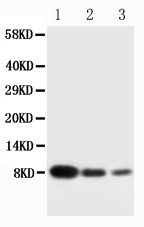
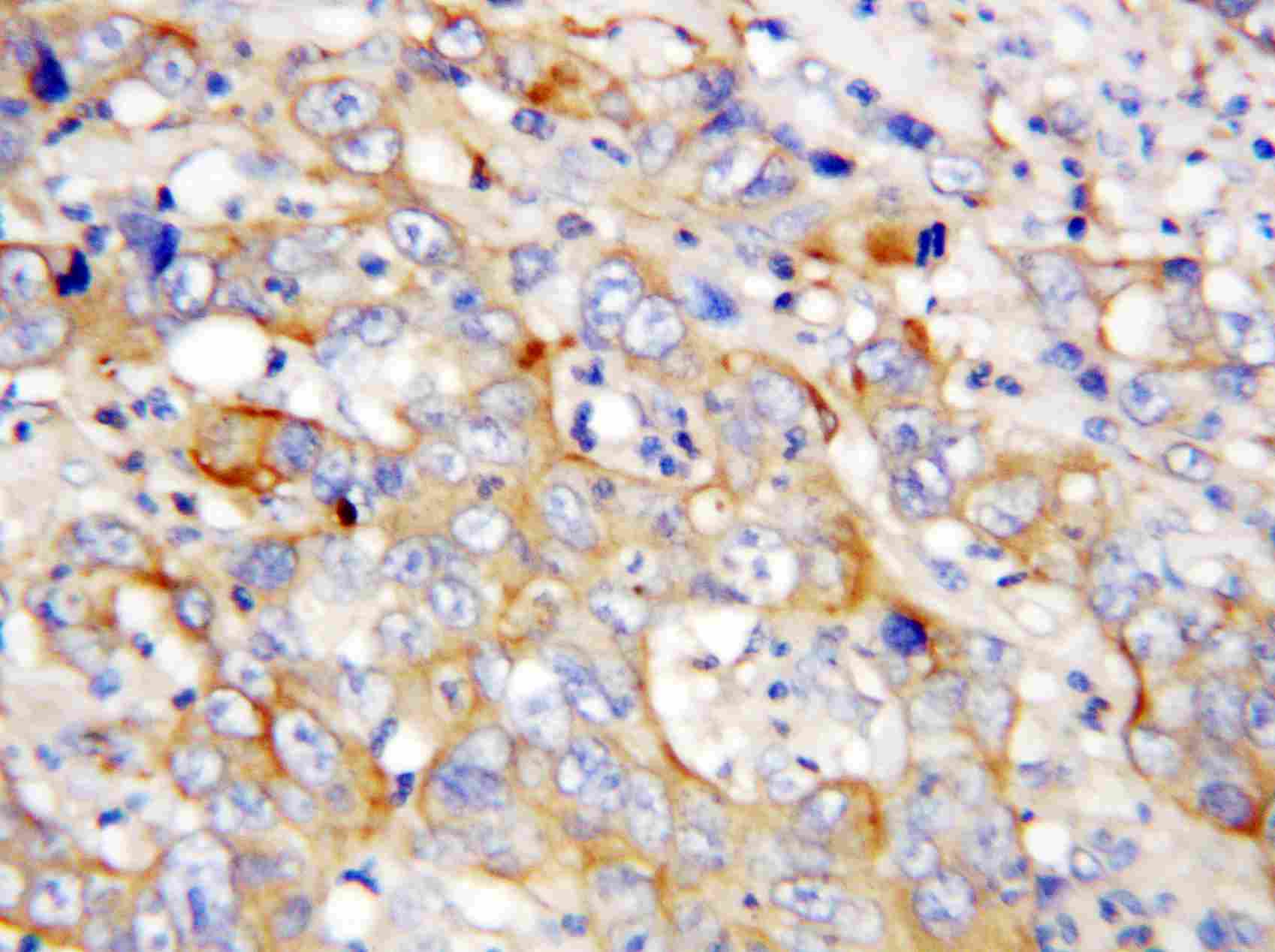
| WB, IHC-P |
|---|---|
| Primary Accession | P02776 |
| Host | Rabbit |
| Reactivity | Human |
| Clonality | Polyclonal |
| Format | Lyophilized |
| Description | Rabbit IgG polyclonal antibody for Platelet factor 4(PF4) detection. Tested with WB, IHC-P in Human. |
| Reconstitution | Add 0.2ml of distilled water will yield a concentration of 500ug/ml. |
| Gene ID | 5196 |
|---|---|
| Other Names | Platelet factor 4, PF-4, C-X-C motif chemokine 4, Iroplact, Oncostatin-A, Platelet factor 4, short form, PF4, CXCL4, SCYB4 |
| Calculated MW | 10845 Da |
| Application Details | Immunohistochemistry(Paraffin-embedded Section), 0.5-1 µg/ml, Human, By Heat Western blot, 0.1-0.5 µg/ml, Human |
| Subcellular Localization | Secreted. |
| Source | Eukaryota |
| Protein Name | Platelet factor 4(PF-4) |
| Contents | Each vial contains 5mg BSA, 0.9mg NaCl, 0.2mg Na2HPO4, 0.05mg Thimerosal, 0.05mg NaN3. |
| Immunogen | A synthetic peptide corresponding to a sequence at the C-terminus of human PF4(85-101aa DLQAPLYKKIIKKLLES). |
| Purification | Immunogen affinity purified. |
| Cross Reactivity | No cross reactivity with other proteins |
| Storage | At -20˚C for one year. After r˚Constitution, at 4˚C for one month. It˚Can also be aliquotted and stored frozen at -20˚C for a longer time.Avoid repeated freezing and thawing. |
| Sequence Similarities | Belongs to the intercrine alpha (chemokine CxC) family. |
For Research Use Only. Not For Use In Diagnostic Procedures.
| Name | PF4 |
|---|---|
| Synonyms | CXCL4, SCYB4 |
| Function | Chemokine released during platelet aggregation that plays a role in different biological processes including hematopoiesis, cell proliferation, differentiation, and activation (PubMed:29930254, PubMed:9531587). Acts via different functional receptors including CCR1, CXCR3A or CXCR3B (PubMed:18174362, PubMed:29930254). Upon interaction with CXCR3A receptor, induces activated T-lymphocytes migration mediated via downstream Ras/extracellular signal-regulated kinase (ERK) signaling (PubMed:18174362, PubMed:24469069). Neutralizes the anticoagulant effect of heparin by binding more strongly to heparin than to the chondroitin-4-sulfate chains of the carrier molecule. Plays a role in the inhibition of hematopoiesis and in the maintenance of hematopoietic stem cell (HSC) quiescence (PubMed:9531587). Chemotactic for neutrophils and monocytes via CCR1 (PubMed:29930254). Inhibits endothelial cell proliferation. In cooperation with toll-like receptor 8/TLR8, induces chromatin remodeling and activates inflammatory gene expression via the TBK1-IRF5 axis (PubMed:35701499). In addition, induces myofibroblast differentiation and collagen synthesis in different precursor cells, including endothelial cells, by stimulating endothelial-to-mesenchymal transition (PubMed:34986347). Interacts with thrombomodulin/THBD to enhance the activation of protein C and thus potentiates its anticoagulant activity (PubMed:9395524). |
| Cellular Location | Secreted. |
Provided below are standard protocols that you may find useful for product applications.
BACKGROUND
CXCL4, Chemokine(C-X-C motif) ligand 4, is a 70-amino acid protein that is released from the alpha-granules of activated platelets and binds with high affinity to heparin. CXCL4 belongs to the CXC chemokine family. The CXCL4 gene contains 3 exons spanning approximately 1 kb. The gene is encoded on a 10-kb EcoRI fragment of genomic DNA. By in situ hybridization, the CXCL4 gene is mapped to chromosome 4q12-q21. Its major physiologic role appears to be neutralization of heparin-like molecules on the endothelial surface of blood vessels, thereby inhibiting local antithrombin III activity and promoting coagulation. As a strong chemoattractant for neutrophils and fibroblasts, PF4 probably has a role in inflammation and wound repair.

终于等到您。ABCEPTA(百远生物)抗体产品。
点击下方“我要评价 ”按钮提交您的反馈信息,您的反馈和评价是我们最宝贵的财富之一,
我们将在1-3个工作日内处理您的反馈信息。
如有疑问,联系:0512-88856768 tech-china@abcepta.com.


