


 癌症的基本特征包括细胞增殖、血管生成、迁移、凋亡逃避机制和细胞永生等。找到癌症发生过程中这些通路的关键标记物和对应的抗体用于检测至关重要。
 为您推荐一个泛素化位点预测神器——泛素化分析工具,可以为您的蛋白的泛素化位点作出预测和评分。
 细胞自噬受体图形绘图工具为你的蛋白的细胞受体结合位点作出预测和评分,识别结合到自噬通路中的蛋白是非常重要的,便于让我们理解自噬在正常生理、病理过程中的作用,如发育、细胞分化、神经退化性疾病、压力条件下、感染和癌症。
Anti-SHC Antibody
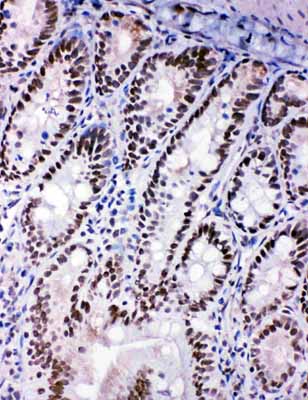
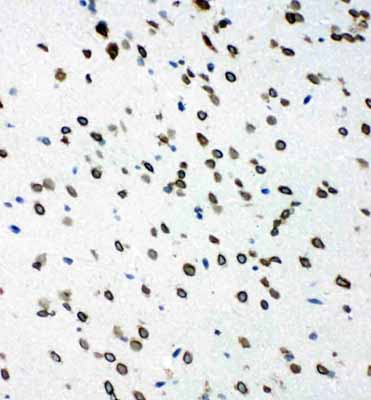
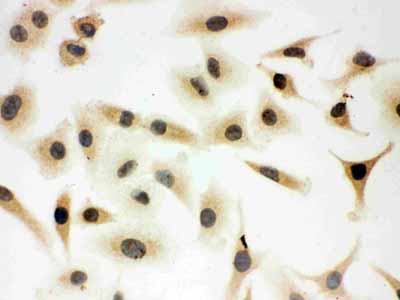
- 产品详情
- 实验流程
- 背景知识
Application 
| WB, IHC-P, IHC-F, ICC |
|---|---|
| Primary Accession | P29353 |
| Host | Rabbit |
| Reactivity | Human, Mouse, Rat |
| Clonality | Polyclonal |
| Format | Lyophilized |
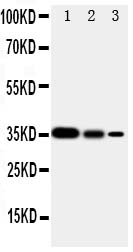
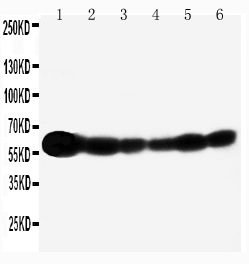
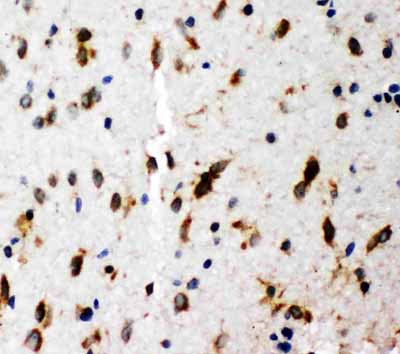
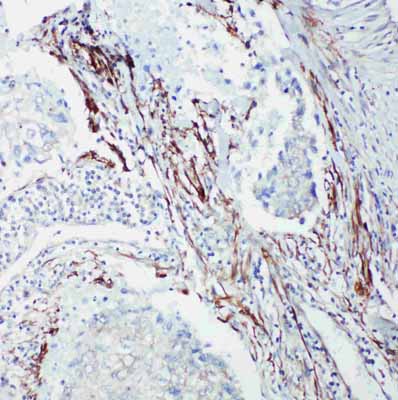
| Description | Rabbit IgG polyclonal antibody for SHC-transforming protein 1(SHC1) detection. Tested with WB, IHC-P, IHC-F, ICC in Human;Mouse;Rat. |
| Reconstitution | Add 0.2ml of distilled water will yield a concentration of 500ug/ml. |
| Gene ID | 6464 |
|---|---|
| Other Names | SHC-transforming protein 1, SHC-transforming protein 3, SHC-transforming protein A, Src homology 2 domain-containing-transforming protein C1, SH2 domain protein C1, SHC1, SHC, SHCA |
| Calculated MW | 62822 Da |
| Application Details | Immunocytochemistry , 0.5-1 µg/ml, Human, - Immunohistochemistry(Frozen Section), 0.5-1 µg/ml, Rat, Human, Mouse Immunohistochemistry(Paraffin-embedded Section), 0.5-1 µg/ml, Human, Rat, Mouse, By Heat Western blot, 0.1-0.5 µg/ml, Human, Rat, Mouse |
| Subcellular Localization | Cytoplasm. |
| Tissue Specificity | Widely expressed. Expressed in neural stem cells but absent in mature neurons. |
| Source | Eukaryota |
| Protein Name | SHC-transforming protein 1 |
| Contents | Each vial contains 5mg BSA, 0.9mg NaCl, 0.2mg Na2HPO4, 0.05mg Thimerosal, 0.05mg NaN3. |
| Immunogen | A synthetic peptide corresponding to a sequence at the C-terminus of human SHC(424-440aa DPSYVNVQNLDKARQAV), different from the related rat and mouse sequences by two amino acids. |
| Purification | Immunogen affinity purified. |
| Cross Reactivity | No cross reactivity with other proteins |
| Storage | At -20˚C for one year. After r˚Constitution, at 4˚C for one month. It˚Can also be aliquotted and stored frozen at -20˚C for a longer time.Avoid repeated freezing and thawing. |
| Sequence Similarities | Contains 1 PID domain. |
For Research Use Only. Not For Use In Diagnostic Procedures.
| Name | SHC1 (HGNC:10840) |
|---|---|
| Synonyms | SHC, SHCA |
| Function | Signaling adapter that couples activated growth factor receptors to signaling pathways. Participates in a signaling cascade initiated by activated KIT and KITLG/SCF. Isoform p46Shc and isoform p52Shc, once phosphorylated, couple activated receptor tyrosine kinases to Ras via the recruitment of the GRB2/SOS complex and are implicated in the cytoplasmic propagation of mitogenic signals. Isoform p46Shc and isoform p52Shc may thus function as initiators of the Ras signaling cascade in various non-neuronal systems. Isoform p66Shc does not mediate Ras activation, but is involved in signal transduction pathways that regulate the cellular response to oxidative stress and life span. Isoform p66Shc acts as a downstream target of the tumor suppressor p53 and is indispensable for the ability of stress-activated p53 to induce elevation of intracellular oxidants, cytochrome c release and apoptosis. The expression of isoform p66Shc has been correlated with life span (By similarity). Participates in signaling downstream of the angiopoietin receptor TEK/TIE2, and plays a role in the regulation of endothelial cell migration and sprouting angiogenesis. Involved in the oncostatin-M-mediated signaling pathway through type II OSM receptor complex (heterodimers composed of OSMR and IL6ST) where it contributes to activation of the Ras/Raf/MAPK pathway through JAK1-dependent recruitment to OSMR subunit of OSMR complex and SHC1 association with GRB2 (PubMed:11016927). |
| Cellular Location | Cytoplasm. Cell junction, focal adhesion [Isoform p66Shc]: Mitochondrion. Note=In case of oxidative conditions, phosphorylation at 'Ser-36' of isoform p66Shc, leads to mitochondrial accumulation. |
| Tissue Location | Widely expressed. Expressed in neural stem cells but absent in mature neurons |
Provided below are standard protocols that you may find useful for product applications.
BACKGROUND
SHC1(SHC-transforming protein 1), also known as SHCA, is a protein that in humans is encoded by the SHC1 gene. SCOP classifies the 3D structure as belonging to the SH2 domain family. By Southern analysis of somatic cell hybrids followed by both isotopic and fluorescence in situ hybridization, Huebner et al.(1994) assigned the SHC1 gene to 1q21. Yulug et al.(1995) used fluorescence in situ hybridization to map the SHC1 gene to 1q21. By the same method, an SHC-related sequence(SHCL1) was mapped to 17q21-q22. By FISH analysis and direct sequencing of vectorette library PCR products, Harun et al.(1997) identified SHC1P1, a 3.2-kb processed pseudogene, in Xq12-q13.1. SHC1P1 is 85% identical to mouse Shc p66. Reporter assays showed FKHRL1 transactivates CAT, suggesting a capacity to augment antioxidant scavenging. Nemoto and Finkel(2002) concluded that there is an important functional relationship between forkhead proteins(e.g., FKHRL1), SHC1, and intracellular oxidants, all of which are though to be involved in the aging process in worms and mammals.

终于等到您。ABCEPTA(百远生物)抗体产品。
点击下方“我要评价 ”按钮提交您的反馈信息,您的反馈和评价是我们最宝贵的财富之一,
我们将在1-3个工作日内处理您的反馈信息。
如有疑问,联系:0512-88856768 tech-china@abcepta.com.


