


 癌症的基本特征包括细胞增殖、血管生成、迁移、凋亡逃避机制和细胞永生等。找到癌症发生过程中这些通路的关键标记物和对应的抗体用于检测至关重要。
 为您推荐一个泛素化位点预测神器——泛素化分析工具,可以为您的蛋白的泛素化位点作出预测和评分。
 细胞自噬受体图形绘图工具为你的蛋白的细胞受体结合位点作出预测和评分,识别结合到自噬通路中的蛋白是非常重要的,便于让我们理解自噬在正常生理、病理过程中的作用,如发育、细胞分化、神经退化性疾病、压力条件下、感染和癌症。
Anti-ACE Picoband Antibody
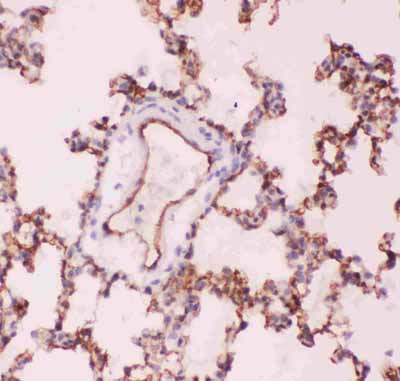
- 产品详情
- 实验流程
- 背景知识
Application 
| WB, IHC-P, IHC-F |
|---|---|
| Primary Accession | P12821 |
| Host | Rabbit |
| Reactivity | Human, Mouse, Rat |
| Clonality | Polyclonal |
| Format | Lyophilized |
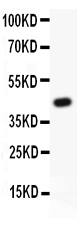
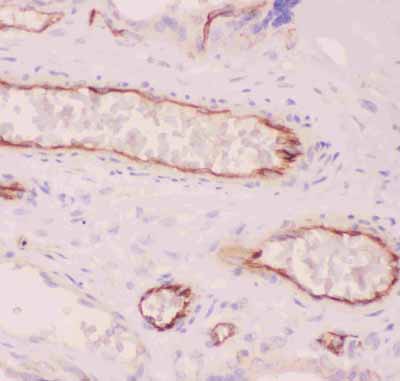
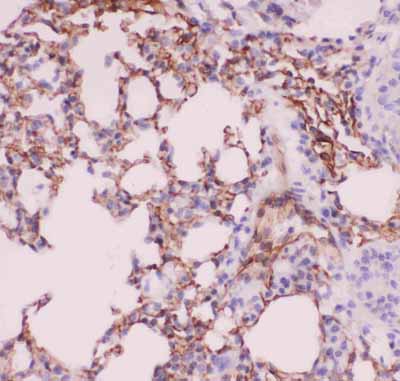
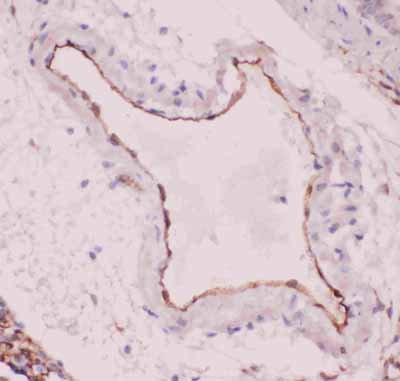
| Description | Rabbit IgG polyclonal antibody for Angiotensin-converting enzyme(ACE) detection. Tested with WB, IHC-P, IHC-F in Human;Mouse;Rat. |
| Reconstitution | Add 0.2ml of distilled water will yield a concentration of 500ug/ml. |
| Gene ID | 1636 |
|---|---|
| Other Names | Angiotensin-converting enzyme, ACE, 3.2.1.-, 3.4.15.1, Dipeptidyl carboxypeptidase I, Kininase II, CD143, Angiotensin-converting enzyme, soluble form, ACE, DCP, DCP1 |
| Calculated MW | 149715 Da |
| Application Details | Immunohistochemistry(Frozen Section), 0.5-1 µg/ml, Mouse, - Immunohistochemistry(Paraffin-embedded Section), 0.5-1 µg/ml, Human, Mouse, Rat, By Heat Western blot, 0.1-0.5 µg/ml, Human, Mouse |
| Subcellular Localization | Angiotensin-converting enzyme, soluble form: Secreted. |
| Tissue Specificity | Ubiquitously expressed, with highest levels in lung, kidney, heart, gastrointestinal system and prostate. Isoform Testis-specific is expressed in spermatocytes and adult testis. . |
| Source | Eukaryota |
| Protein Name | Angiotensin-converting enzyme |
| Contents | Each vial contains 5mg BSA, 0.9mg NaCl, 0.2mg Na2HPO4, 0.05mg NaN3. |
| Immunogen | E.coli-derived human ACE recombinant protein (Position: K651-Y864). Human ACE shares 73% and 76% amino acid (aa) sequences identity with mouse and rat ACE, respectively. |
| Purification | Immunogen affinity purified. |
| Cross Reactivity | No cross reactivity with other proteins |
| Storage | At -20˚C for one year. After r˚Constitution, at 4˚C for one month. It˚Can also be aliquotted and stored frozen at -20˚C for a longer time.Avoid repeated freezing and thawing. |
| Sequence Similarities | Belongs to the peptidase M2 family. |
For Research Use Only. Not For Use In Diagnostic Procedures.
| Name | ACE {ECO:0000303|PubMed:2849100, ECO:0000312|HGNC:HGNC:2707} |
|---|---|
| Function | Dipeptidyl carboxypeptidase that removes dipeptides from the C-terminus of a variety of circulating hormones, such as angiotensin I, bradykinin or enkephalins, thereby playing a key role in the regulation of blood pressure, electrolyte homeostasis or synaptic plasticity (PubMed:15615692, PubMed:20826823, PubMed:2558109, PubMed:4322742, PubMed:7523412, PubMed:7683654). Composed of two similar catalytic domains, each possessing a functional active site, with different selectivity for substrates (PubMed:10913258, PubMed:1320019, PubMed:1851160, PubMed:19773553, PubMed:7683654, PubMed:7876104). Plays a major role in the angiotensin-renin system that regulates blood pressure and sodium retention by the kidney by converting angiotensin I to angiotensin II, resulting in an increase of the vasoconstrictor activity of angiotensin (PubMed:11432860, PubMed:1851160, PubMed:19773553, PubMed:23056909, PubMed:4322742). Also able to inactivate bradykinin, a potent vasodilator, and therefore enhance the blood pressure response (PubMed:15615692, PubMed:2558109, PubMed:4322742, PubMed:6055465, PubMed:6270633, PubMed:7683654). Acts as a regulator of synaptic transmission by mediating cleavage of neuropeptide hormones, such as substance P, neurotensin or enkephalins (PubMed:15615692, PubMed:6208535, PubMed:6270633, PubMed:656131). Catalyzes degradation of different enkephalin neuropeptides (Met- enkephalin, Leu-enkephalin, Met-enkephalin-Arg-Phe and possibly Met- enkephalin-Arg-Gly-Leu) (PubMed:2982830, PubMed:6270633, PubMed:656131). Acts as a regulator of synaptic plasticity in the nucleus accumbens of the brain by mediating cleavage of Met-enkephalin- Arg-Phe, a strong ligand of Mu-type opioid receptor OPRM1, into Met- enkephalin (By similarity). Met-enkephalin-Arg-Phe cleavage by ACE decreases activation of OPRM1, leading to long-term synaptic potentiation of glutamate release (By similarity). Also acts as a regulator of hematopoietic stem cell differentiation by mediating degradation of hemoregulatory peptide N-acetyl-SDKP (AcSDKP) (PubMed:26403559, PubMed:7876104, PubMed:8257427, PubMed:8609242). Acts as a regulator of cannabinoid signaling pathway by mediating degradation of hemopressin, an antagonist peptide of the cannabinoid receptor CNR1 (PubMed:18077343). Involved in amyloid-beta metabolism by catalyzing degradation of Amyloid-beta protein 40 and Amyloid-beta protein 42 peptides, thereby preventing plaque formation (PubMed:11604391, PubMed:16154999, PubMed:19773553). Catalyzes cleavage of cholecystokinin (maturation of Cholecystokinin-8 and Cholecystokinin-5) and Gonadoliberin-1 (both maturation and degradation) hormones (PubMed:10336644, PubMed:2983326, PubMed:7683654, PubMed:9371719). Degradation of hemoregulatory peptide N-acetyl-SDKP (AcSDKP) and amyloid-beta proteins is mediated by the N-terminal catalytic domain, while angiotensin I and cholecystokinin cleavage is mediated by the C-terminal catalytic region (PubMed:10336644, PubMed:19773553, PubMed:7876104). |
| Cellular Location | Cell membrane; Single-pass type I membrane protein. Cytoplasm {ECO:0000250|UniProtKB:P09470}. Note=Detected in both cell membrane and cytoplasm in neurons. {ECO:0000250|UniProtKB:P09470} [Isoform Testis-specific]: Cell membrane; Single-pass type I membrane protein. Secreted. Note=The testis-specific isoform can be cleaved before the transmembrane region, releasing a soluble form |
| Tissue Location | Ubiquitously expressed, with highest levels in lung, kidney, heart, gastrointestinal system and prostate |
Provided below are standard protocols that you may find useful for product applications.
BACKGROUND
Angiotensin-converting enzyme (ACE), an exopeptidase, is a circulating enzyme that participates in the body's renin-angiotensin system(RAS), which mediates extracellular volume (i.e. that of the blood plasma, lymph and interstitial fluid), and arterial vasoconstriction. It is secreted by pulmonary and renal endothelial cells and catalyzes the conversion of decapeptide angiotensin I to octapeptide angiotensin II. Using a DNA marker at the growth hormone gene locus, which they characterized as 'extremely polymorphic' and which showed no recombination with ACE, ACE was mapped to 17q22-q24, consistent with the in situ hybridization mapping to 17q23. ACE, or kininase II, is a dipeptidyl carboxypeptidase that plays an important role in blood pressure regulation and electrolyte balance by hydrolyzing angiotensin I into angiotensin II, a potent vasopressor, and aldosterone-stimulating peptide. The enzyme is also able to inactivate bradykinin, a potent vasodilator.

终于等到您。ABCEPTA(百远生物)抗体产品。
点击下方“我要评价 ”按钮提交您的反馈信息,您的反馈和评价是我们最宝贵的财富之一,
我们将在1-3个工作日内处理您的反馈信息。
如有疑问,联系:0512-88856768 tech-china@abcepta.com.


