


 癌症的基本特征包括细胞增殖、血管生成、迁移、凋亡逃避机制和细胞永生等。找到癌症发生过程中这些通路的关键标记物和对应的抗体用于检测至关重要。
 为您推荐一个泛素化位点预测神器——泛素化分析工具,可以为您的蛋白的泛素化位点作出预测和评分。
 细胞自噬受体图形绘图工具为你的蛋白的细胞受体结合位点作出预测和评分,识别结合到自噬通路中的蛋白是非常重要的,便于让我们理解自噬在正常生理、病理过程中的作用,如发育、细胞分化、神经退化性疾病、压力条件下、感染和癌症。
Anti-EGFR Picoband Antibody
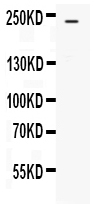
- 产品详情
- 实验流程
- 背景知识
Application 
| WB |
|---|---|
| Primary Accession | Q01279 |
| Host | Rabbit |
| Reactivity | Mouse |
| Clonality | Polyclonal |
| Format | Lyophilized |
| Description | Rabbit IgG polyclonal antibody for Epidermal growth factor receptor(EGFR) detection. Tested with WB in Mouse. |
| Reconstitution | Add 0.2ml of distilled water will yield a concentration of 500ug/ml. |
| Gene ID | 13649 |
|---|---|
| Other Names | Epidermal growth factor receptor, 2.7.10.1, Egfr |
| Calculated MW | 134853 Da |
| Application Details | Western blot, 0.1-0.5 µg/ml, Mouse |
| Subcellular Localization | Cell membrane; Single-pass type I membrane protein. Endoplasmic reticulum membrane ; Single-pass type I membrane protein . Golgi apparatus membrane ; Single-pass type I membrane protein . Nucleus membrane ; Single-pass type I membrane protein . Endosome. Endosome membrane. Nucleus . In response to EGF, translocated from the cell membrane to the nucleus via Golgi and ER. Endocytosed upon activation by ligand. Colocalized with GPER1 in the nucleus of estrogen agonist-induced cancer-associated fibroblasts (CAF) (By similarity). . |
| Source | Eukaryota |
| Protein Name | Epidermal growth factor receptor |
| Contents | Each vial contains 5mg BSA, 0.9mg NaCl, 0.2mg Na2HPO4, 0.05mg NaN3. |
| Immunogen | E. coli-derived mouse EGFR recombinant protein (Position: L25-L249). Mouse EGFR shares 88% amino acid (aa) sequence identity with human EGFR. |
| Purification | Immunogen affinity purified. |
| Cross Reactivity | No cross reactivity with other proteins. |
| Storage | At -20˚C for one year. After r˚Constitution, at 4˚C for one month. It˚Can also be aliquotted and stored frozen at -20˚C for a longer time.Avoid repeated freezing and thawing. |
For Research Use Only. Not For Use In Diagnostic Procedures.
| Name | Egfr {ECO:0000312|MGI:MGI:95294} |
|---|---|
| Function | Receptor tyrosine kinase binding ligands of the EGF family and activating several signaling cascades to convert extracellular cues into appropriate cellular responses (PubMed:10953014, PubMed:8404850). Known ligands include EGF, TGFA/TGF-alpha, AREG, epigen/EPGN, BTC/betacellulin, epiregulin/EREG and HBEGF/heparin-binding EGF (By similarity). Ligand binding triggers receptor homo- and/or heterodimerization and autophosphorylation on key cytoplasmic residues (By similarity). The phosphorylated receptor recruits adapter proteins like GRB2 which in turn activates complex downstream signaling cascades (By similarity). Activates at least 4 major downstream signaling cascades including the RAS-RAF-MEK-ERK, PI3 kinase-AKT, PLCgamma-PKC and STATs modules (By similarity). May also activate the NF-kappa-B signaling cascade (By similarity). Also directly phosphorylates other proteins like RGS16, activating its GTPase activity and probably coupling the EGF receptor signaling to the G protein-coupled receptor signaling (By similarity). Also phosphorylates MUC1 and increases its interaction with SRC and CTNNB1/beta-catenin (By similarity). Positively regulates cell migration via interaction with CCDC88A/GIV which retains EGFR at the cell membrane following ligand stimulation, promoting EGFR signaling which triggers cell migration (By similarity). Acts as a positive regulator of cGAS-STING signaling by mediating tyrosine phosphorylation of STING1, promoting production of type I interferon (IFN-alpha and IFN-beta), while inhibiting STING1 ability to regulate autophagy (By similarity). Plays a role in enhancing learning and memory performance (PubMed:20639532). Plays a role in mammalian pain signaling (long-lasting hypersensitivity) (PubMed:35131940). |
| Cellular Location | Cell membrane {ECO:0000250|UniProtKB:P00533}; Single-pass type I membrane protein {ECO:0000250|UniProtKB:P00533} Endoplasmic reticulum membrane {ECO:0000250|UniProtKB:P00533}; Single- pass type I membrane protein {ECO:0000250|UniProtKB:P00533}. Golgi apparatus membrane {ECO:0000250|UniProtKB:P00533}; Single-pass type I membrane protein {ECO:0000250|UniProtKB:P00533}. Nucleus membrane {ECO:0000250|UniProtKB:P00533}; Single-pass type I membrane protein {ECO:0000250|UniProtKB:P00533}. Endosome {ECO:0000250|UniProtKB:P00533}. Endosome membrane {ECO:0000250|UniProtKB:P00533}. Nucleus {ECO:0000250|UniProtKB:P00533} Note=In response to EGF, translocated from the cell membrane to the nucleus via Golgi and ER. Endocytosed upon activation by ligand Colocalized with GPER1 in the nucleus of estrogen agonist-induced cancer-associated fibroblasts (CAF). {ECO:0000250|UniProtKB:P00533} |
Provided below are standard protocols that you may find useful for product applications.
BACKGROUND
The epidermal growth factor receptor (EGFR; ErbB-1; HER1 in humans) is the cell-surface receptor for members of the epidermal growth factor family (EGF-family) of extracellular protein ligands. It is a member of the ErbB family of receptors, a subfamily of four closely related receptor tyrosine kinases: EGFR (ErbB-1), HER2/c-neu (ErbB-2), Her 3 (ErbB-3) and Her 4 (ErbB-4). EGFR exists on the cell surface and is activated by binding of its specific ligands, including epidermal growth factor and transforming growth factor α (TGFα). EGFR and its ligands are cell signaling molecules involved in diverse cellular functions, including cell proliferation, differentiation, motility, and survival, and in tissue development. Mutations that lead to EGFR overexpression (known as upregulation) or overactivity have been associated with a number of cancers, including lung cancer and glioblastoma multiforme. In this latter case a more or less specific mutation of EGFR, called EGFRvIII is often observed.

终于等到您。ABCEPTA(百远生物)抗体产品。
点击下方“我要评价 ”按钮提交您的反馈信息,您的反馈和评价是我们最宝贵的财富之一,
我们将在1-3个工作日内处理您的反馈信息。
如有疑问,联系:0512-88856768 tech-china@abcepta.com.


