


 癌症的基本特征包括细胞增殖、血管生成、迁移、凋亡逃避机制和细胞永生等。找到癌症发生过程中这些通路的关键标记物和对应的抗体用于检测至关重要。
 为您推荐一个泛素化位点预测神器——泛素化分析工具,可以为您的蛋白的泛素化位点作出预测和评分。
 细胞自噬受体图形绘图工具为你的蛋白的细胞受体结合位点作出预测和评分,识别结合到自噬通路中的蛋白是非常重要的,便于让我们理解自噬在正常生理、病理过程中的作用,如发育、细胞分化、神经退化性疾病、压力条件下、感染和癌症。
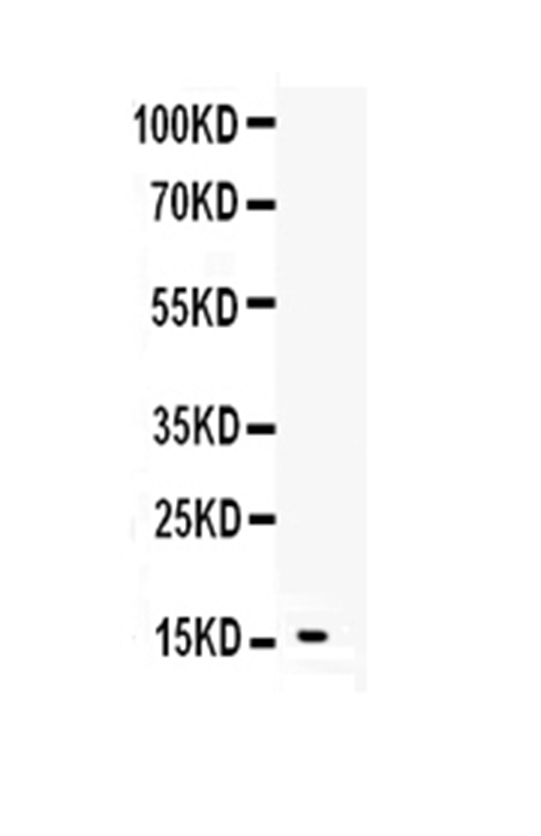
Anti-Leptin Picoband Antibody
- 产品详情
- 实验流程
- 背景知识
Application 
| WB, E |
|---|---|
| Primary Accession | P41159 |
| Host | Rabbit |
| Reactivity | Human, Mouse, Rat |
| Clonality | Polyclonal |
| Format | Lyophilized |
| Description | Rabbit IgG polyclonal antibody for Leptin detection. Tested with WB, ELISA(Cap) in Human;Mouse;Rat. |
| Reconstitution | Add 0.2ml of distilled water will yield a concentration of 500ug/ml. |
| Gene ID | 3952 |
|---|---|
| Other Names | Leptin {ECO:0000312|HGNC:HGNC:6553}, Obese protein, Obesity factor, LEP (HGNC:6553) |
| Calculated MW | 18641 Da |
| Application Details | Western blot, 0.1-0.5 µg/ml ELISA(Cap), 0.1-0.5 µg/ml |
| Subcellular Localization | Secreted. |
| Tissue Specificity | Adipose tissue is the main source of leptin it is also produced by other peripheral tissues such as the skeletal muscle (PubMed:7789654, PubMed:16052473, PubMed:12448771). Expressed by intercalated and striated tracts of submandibular and parotid salivary gland intralobular ducts (PubMed:12448771). Detected by fundic epithelium of the gastric mucosa (PubMed:10896907). Secreted into blood and gastric juice (PubMed:10896907). |
| Source | Eukaryota |
| Contents | Each vial contains 4mg Trehalose, 0.9mg NaCl, 0.2mg Na2HPO4, 0.05mg NaN3. |
| Immunogen | E. coli-derived human Leptin recombinant protein (Position: V22-C167). |
| Cross Reactivity | No cross reactivity with other proteins. |
| Storage | At -20˚C; for one year. After r˚Constitution, at 4˚C; for one month. It˚Can also be aliquotted and stored frozen at -20˚C; for a longer time. Avoid repeated freezing and thawing. |
For Research Use Only. Not For Use In Diagnostic Procedures.
| Name | LEP (HGNC:6553) |
|---|---|
| Function | Key player in the regulation of energy balance and body weight control. Once released into the circulation, has central and peripheral effects by binding LEPR, found in many tissues, which results in the activation of several major signaling pathways (PubMed:15899045, PubMed:17344214, PubMed:19688109). In the hypothalamus, acts as an appetite-regulating factor that induces a decrease in food intake and an increase in energy consumption by inducing anorexinogenic factors and suppressing orexigenic neuropeptides, also regulates bone mass and secretion of hypothalamo- pituitary-adrenal hormones. In the periphery, increases basal metabolism, influences reproductive function, regulates pancreatic beta-cell function and insulin secretion, is pro-angiogenic for endothelial cell and affects innate and adaptive immunity (By similarity) (PubMed:11460888, PubMed:19688109, PubMed:24340098, PubMed:25060689, PubMed:8589726). In the arcuate nucleus of the hypothalamus, activates by depolarization POMC neurons inducing FOS and SOCS3 expression to release anorexigenic peptides and inhibits by hyperpolarization NPY neurons inducing SOCS3 with a consequent reduction on release of orexigenic peptides (By similarity). In addition to its known satiety inducing effect, has a modulatory role in nutrient absorption. In the intestine, reduces glucose absorption by enterocytes by activating PKC and leading to a sequential activation of p38, PI3K and ERK signaling pathways which exerts an inhibitory effect on glucose absorption (PubMed:24340098). Acts as a growth factor on certain tissues, through the activation of different signaling pathways increases expression of genes involved in cell cycle regulation such as CCND1, via JAK2-STAT3 pathway, or VEGFA, via MAPK1/3 and PI3K-AKT1 pathways (By similarity) (PubMed:17344214). May also play an apoptotic role via JAK2-STAT3 pathway and up-regulation of BIRC5 expression (PubMed:18242580). Pro-angiogenic, has mitogenic activity on vascular endothelial cells and plays a role in matrix remodeling by regulating the expression of matrix metalloproteinases (MMPs) and tissue inhibitors of metalloproteinases (TIMPs) (PubMed:11460888). In innate immunity, modulates the activity and function of neutrophils by increasing chemotaxis and the secretion of oxygen radicals. Increases phagocytosis by macrophages and enhances secretion of pro-inflammatory mediators. Increases cytotoxic ability of NK cells (PubMed:12504075). Plays a pro-inflammatory role, in synergy with IL1B, by inducing NOS2 which promotes the production of IL6, IL8 and Prostaglandin E2, through a signaling pathway that involves JAK2, PI3K, MAP2K1/MEK1 and MAPK14/p38 (PubMed:15899045, PubMed:19688109). In adaptive immunity, promotes the switch of memory T-cells towards T helper-1 cell immune responses (By similarity). Increases CD4(+)CD25(-) T-cell proliferation and reduces autophagy during TCR (T-cell receptor) stimulation, through MTOR signaling pathway activation and BCL2 up-regulation (PubMed:25060689). |
| Cellular Location | Secreted. |
| Tissue Location | Adipose tissue is the main source of leptin. It is also produced by other peripheral tissues such as the skeletal muscle (PubMed:12448771, PubMed:16052473, PubMed:7789654). Expressed by intercalated and striated tracts of submandibular and parotid salivary gland intralobular ducts (PubMed:12448771). Detected by fundic epithelium of the gastric mucosa (PubMed:10896907). Secreted into blood and gastric juice (PubMed:10896907). |
Provided below are standard protocols that you may find useful for product applications.
BACKGROUND
Leptin have been found to be obese and diabetic and to have reduced activity, metabolism and body temperature. cDNA clones encoding Leptin have been isolated from human, simian, mouse, and rat cells. The expression of Leptin mRNA has been shown to be restricted to adipose tissue. Although regulation of fat stores is deemed to be the primary function of leptin, it also plays a role in other physiological processes, as evidenced by its multiple sites of synthesis other than fat cells, and the multiple cell types beside hypothalamic cells that have leptin receptors. Many of these additional functions are yet to be defined.

终于等到您。ABCEPTA(百远生物)抗体产品。
点击下方“我要评价 ”按钮提交您的反馈信息,您的反馈和评价是我们最宝贵的财富之一,
我们将在1-3个工作日内处理您的反馈信息。
如有疑问,联系:0512-88856768 tech-china@abcepta.com.


