


 癌症的基本特征包括细胞增殖、血管生成、迁移、凋亡逃避机制和细胞永生等。找到癌症发生过程中这些通路的关键标记物和对应的抗体用于检测至关重要。
 为您推荐一个泛素化位点预测神器——泛素化分析工具,可以为您的蛋白的泛素化位点作出预测和评分。
 细胞自噬受体图形绘图工具为你的蛋白的细胞受体结合位点作出预测和评分,识别结合到自噬通路中的蛋白是非常重要的,便于让我们理解自噬在正常生理、病理过程中的作用,如发育、细胞分化、神经退化性疾病、压力条件下、感染和癌症。
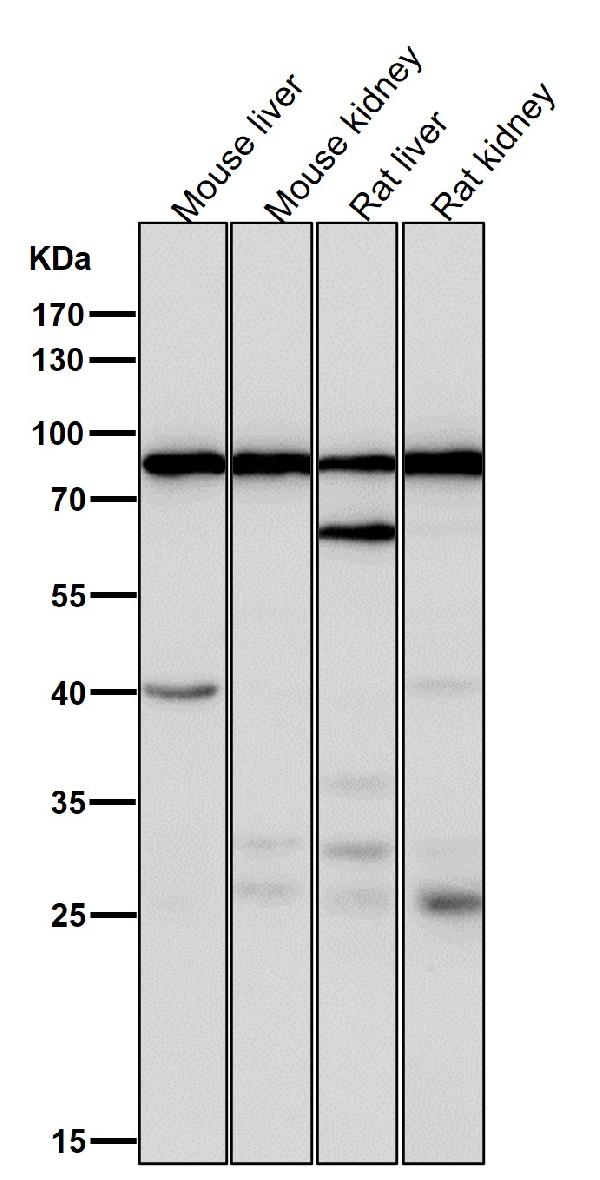
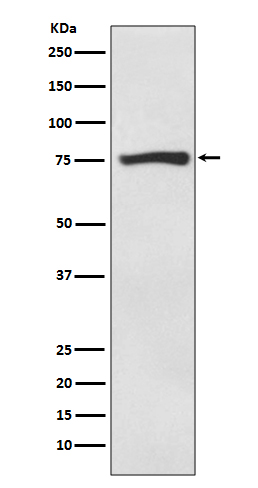
Anti-ACSS2/Acetyl Coa Synthetase Rabbit Monoclonal Antibody
- 产品详情
- 实验流程
Application 
| WB, IF, ICC |
|---|---|
| Primary Accession | Q9NR19 |
| Host | Rabbit |
| Isotype | Rabbit IgG |
| Reactivity | Rat, Human, Mouse |
| Clonality | Monoclonal |
| Format | Liquid |
| Description | Anti-ACSS2/Acetyl Coa Synthetase Rabbit Monoclonal Antibody . Tested in WB, ICC/IF applications. This antibody reacts with Human, Mouse, Rat. |
| Gene ID | 55902 |
|---|---|
| Other Names | Acetyl-coenzyme A synthetase, cytoplasmic, 6.2.1.1, Acetate--CoA ligase, Acetyl-CoA synthetase, ACS, AceCS, Acetyl-CoA synthetase 1, ACSS2, ACAS2 |
| Calculated MW | 78580 Da |
| Application Details | WB 1:500-1:2000 ICC/IF 1:50-1:200 |
| Subcellular Localization | Cytoplasm. |
| Source | Eukaryota |
| Contents | Rabbit IgG in phosphate buffered saline, pH 7.4, 150mM NaCl, 0.02% sodium azide and 50% glycerol, 0.4-0.5mg/ml BSA. |
| Clone Names | Clone: IEF-1 |
| Immunogen | A synthesized peptide derived from human ACSS2 |
| Purification | Affinity-chromatography |
| Storage | Store at -20°C for one year. For short term storage and frequent use, store at 4°C for up to one month. Avoid repeated freeze-thaw cycles. |
For Research Use Only. Not For Use In Diagnostic Procedures.
| Name | ACSS2 |
|---|---|
| Synonyms | ACAS2 |
| Function | Catalyzes the synthesis of acetyl-CoA from short-chain fatty acids (PubMed:10843999, PubMed:28003429, PubMed:28552616, PubMed:38369012, PubMed:39561764). Acetate is the preferred substrate (PubMed:10843999, PubMed:28003429, PubMed:38369012, PubMed:39561764). Can also utilize propionate with a much lower affinity (PubMed:38369012). Catalyzes the conversion of lactate into lactoyl-CoA (PubMed:39561764). Does not catalyze the conversion of butyrate or crotonate to their corresponding acyl-CoAs (PubMed:38369012). Nuclear ACSS2 promotes glucose deprivation-induced lysosomal biogenesis and autophagy, tumor cell survival and brain tumorigenesis (PubMed:28552616). Glucose deprivation results in AMPK-mediated phosphorylation of ACSS2 leading to its translocation to the nucleus where it binds to TFEB and locally produces acetyl-CoA for histone acetylation in the promoter regions of TFEB target genes thereby activating their transcription (PubMed:28552616). The regulation of genes associated with autophagy and lysosomal activity through ACSS2 is important for brain tumorigenesis and tumor survival (PubMed:28552616). Acts as a chromatin-bound transcriptional coactivator that up-regulates histone acetylation and expression of neuronal genes (By similarity). Can be recruited to the loci of memory-related neuronal genes to maintain a local acetyl-CoA pool, providing the substrate for histone acetylation and promoting the expression of specific genes, which is essential for maintaining long-term spatial memory (By similarity). |
| Cellular Location | Cytoplasm, cytosol. Cytoplasm {ECO:0000250|UniProtKB:Q9QXG4}. Nucleus Note=Glucose deprivation results in its AMPK-dependent phosphorylation and subsequent nuclear translocation (PubMed:28552616). Phosphorylation at Ser-659, leads to exposure of its nuclear localization signal which is required for its interaction with KPNA1 and subsequent translocation to the nucleus (PubMed:28552616). Found in the cytoplasm in undifferentiated neurons and upon differentiation, translocates to nucleus (By similarity). {ECO:0000250|UniProtKB:Q9QXG4, ECO:0000269|PubMed:28552616} |
Research Areas
Application Protocols
Provided below are standard protocols that you may find useful for product applications.

终于等到您。ABCEPTA(百远生物)抗体产品。
点击下方“我要评价 ”按钮提交您的反馈信息,您的反馈和评价是我们最宝贵的财富之一,
我们将在1-3个工作日内处理您的反馈信息。
如有疑问,联系:0512-88856768 tech-china@abcepta.com.


