


 癌症的基本特征包括细胞增殖、血管生成、迁移、凋亡逃避机制和细胞永生等。找到癌症发生过程中这些通路的关键标记物和对应的抗体用于检测至关重要。
 为您推荐一个泛素化位点预测神器——泛素化分析工具,可以为您的蛋白的泛素化位点作出预测和评分。
 细胞自噬受体图形绘图工具为你的蛋白的细胞受体结合位点作出预测和评分,识别结合到自噬通路中的蛋白是非常重要的,便于让我们理解自噬在正常生理、病理过程中的作用,如发育、细胞分化、神经退化性疾病、压力条件下、感染和癌症。
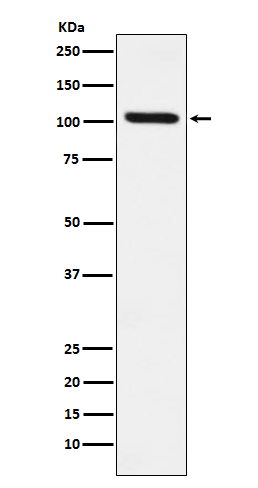
Anti-DDX58 Monoclonal Antibody
- 产品详情
- 实验流程
Application 
| WB, IP |
|---|---|
| Primary Accession | O95786 |
| Host | Rabbit |
| Isotype | Rabbit IgG |
| Reactivity | Human |
| Clonality | Monoclonal |
| Format | Liquid |
| Description | Anti-DDX58 Monoclonal Antibody . Tested in WB, IP applications. This antibody reacts with Human. |
| Gene ID | 23586 |
|---|---|
| Other Names | Antiviral innate immune response receptor RIG-I, ATP-dependent RNA helicase DDX58, 3.6.4.13, DEAD box protein 58, RIG-I-like receptor 1, RLR-1, RNA sensor RIG-I {ECO:0000312|HGNC:HGNC:19102}, Retinoic acid-inducible gene 1 protein, RIG-1, Retinoic acid-inducible gene I protein, RIG-I, RIGI (HGNC:19102), DDX58 |
| Calculated MW | 106600 Da |
| Application Details | WB 1:500-1:1000 IP 1:50 |
| Source | Eukaryota |
| Contents | Rabbit IgG in phosphate buffered saline, pH 7.4, 150mM NaCl, 0.02% sodium azide and 50% glycerol, 0.4-0.5mg/ml BSA. |
| Clone Names | Clone: ACEA-4 |
| Immunogen | A synthesized peptide derived from human DDX58 Retinoic acid inducible gene I (RIG-I) is a 925 amino acid, interferon-inducible cellular DExD/H box RNA helicase that activates type I interferon (IFN), an important effector of the innate immune system that is sensitive to these dsRNA viruses. dsRNA is normally present in very low quantities in cells, so when a virus is present, the elevated levels of dsRNA act as a sign telling RIG-I to activate the production of IFN. |
| Purification | Affinity-chromatography |
| Storage | Store at -20°C for one year. For short term storage and frequent use, store at 4°C for up to one month. Avoid repeated freeze-thaw cycles. |
For Research Use Only. Not For Use In Diagnostic Procedures.
| Name | RIGI (HGNC:19102) |
|---|---|
| Synonyms | DDX58 |
| Function | Innate immune receptor that senses cytoplasmic viral nucleic acids and activates a downstream signaling cascade leading to the production of type I interferons and pro-inflammatory cytokines (PubMed:15208624, PubMed:15708988, PubMed:16125763, PubMed:16127453, PubMed:16153868, PubMed:17190814, PubMed:18636086, PubMed:19122199, PubMed:19211564, PubMed:24366338, PubMed:28469175, PubMed:29117565, PubMed:31006531, PubMed:34935440, PubMed:35263596, PubMed:36793726). Forms a ribonucleoprotein complex with viral RNAs on which it homooligomerizes to form filaments (PubMed:15208624, PubMed:15708988). The homooligomerization allows the recruitment of RNF135 an E3 ubiquitin-protein ligase that activates and amplifies the RIG-I- mediated antiviral signaling in an RNA length-dependent manner through ubiquitination-dependent and -independent mechanisms (PubMed:28469175, PubMed:31006531). Upon activation, associates with mitochondria antiviral signaling protein (MAVS/IPS1) that activates the IKK-related kinases TBK1 and IKBKE which in turn phosphorylate the interferon regulatory factors IRF3 and IRF7, activating transcription of antiviral immunological genes including the IFN-alpha and IFN-beta interferons (PubMed:28469175, PubMed:31006531). Ligands include 5'- triphosphorylated ssRNAs and dsRNAs but also short dsRNAs (<1 kb in length) (PubMed:15208624, PubMed:15708988, PubMed:19576794, PubMed:19609254, PubMed:21742966). In addition to the 5'-triphosphate moiety, blunt-end base pairing at the 5'-end of the RNA is very essential (PubMed:15208624, PubMed:15708988, PubMed:19576794, PubMed:19609254, PubMed:21742966). Overhangs at the non- triphosphorylated end of the dsRNA RNA have no major impact on its activity (PubMed:15208624, PubMed:15708988, PubMed:19576794, PubMed:19609254, PubMed:21742966). A 3'overhang at the 5'triphosphate end decreases and any 5'overhang at the 5' triphosphate end abolishes its activity (PubMed:15208624, PubMed:15708988, PubMed:19576794, PubMed:19609254, PubMed:21742966). Detects both positive and negative strand RNA viruses including members of the families Paramyxoviridae: Human respiratory syncytial virus and measles virus (MeV), Rhabdoviridae: vesicular stomatitis virus (VSV), Orthomyxoviridae: influenza A and B virus, Flaviviridae: Japanese encephalitis virus (JEV), hepatitis C virus (HCV), dengue virus (DENV) and west Nile virus (WNV) (PubMed:21616437, PubMed:21884169). It also detects rotaviruses and reoviruses (PubMed:21616437, PubMed:21884169). Detects and binds to SARS-CoV-2 RNAs which is inhibited by m6A RNA modifications (Ref.74). Also involved in antiviral signaling in response to viruses containing a dsDNA genome such as Epstein-Barr virus (EBV) (PubMed:19631370). Detects dsRNA produced from non-self dsDNA by RNA polymerase III, such as Epstein-Barr virus-encoded RNAs (EBERs). May play important roles in granulocyte production and differentiation, bacterial phagocytosis and in the regulation of cell migration. |
| Cellular Location | Cytoplasm. Cell projection, ruffle membrane. Cytoplasm, cytoskeleton. Cell junction, tight junction Note=Colocalized with TRIM25 at cytoplasmic perinuclear bodies Associated with the actin cytoskeleton at membrane ruffles |
| Tissue Location | Present in vascular smooth cells (at protein level). |
Research Areas
Application Protocols
Provided below are standard protocols that you may find useful for product applications.

终于等到您。ABCEPTA(百远生物)抗体产品。
点击下方“我要评价 ”按钮提交您的反馈信息,您的反馈和评价是我们最宝贵的财富之一,
我们将在1-3个工作日内处理您的反馈信息。
如有疑问,联系:0512-88856768 tech-china@abcepta.com.


