


 癌症的基本特征包括细胞增殖、血管生成、迁移、凋亡逃避机制和细胞永生等。找到癌症发生过程中这些通路的关键标记物和对应的抗体用于检测至关重要。
 为您推荐一个泛素化位点预测神器——泛素化分析工具,可以为您的蛋白的泛素化位点作出预测和评分。
 细胞自噬受体图形绘图工具为你的蛋白的细胞受体结合位点作出预测和评分,识别结合到自噬通路中的蛋白是非常重要的,便于让我们理解自噬在正常生理、病理过程中的作用,如发育、细胞分化、神经退化性疾病、压力条件下、感染和癌症。
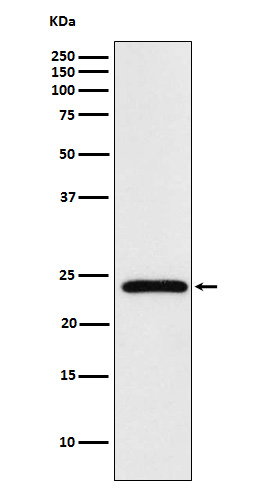
Anti-Mad2L2 Monoclonal Antibody
- 产品详情
- 实验流程
Application 
| WB, IHC, IF, ICC, IP, FC |
|---|---|
| Primary Accession | Q9UI95 |
| Host | Rabbit |
| Isotype | Rabbit IgG |
| Reactivity | Rat, Human, Mouse |
| Clonality | Monoclonal |
| Format | Liquid |
| Description | Anti-Mad2L2 Monoclonal Antibody . Tested in WB, IHC, ICC/IF, IP, Flow Cytometry applications. This antibody reacts with Human, Mouse, Rat. |
| Gene ID | 10459 |
|---|---|
| Other Names | Mitotic spindle assembly checkpoint protein MAD2B, Mitotic arrest deficient 2-like protein 2, MAD2-like protein 2, REV7 homolog, hREV7, MAD2L2, MAD2B, REV7 |
| Calculated MW | 24334 Da |
| Application Details | WB 1:500-1:1000 IHC 1:100-1:500 ICC/IF 1:50-1:200 IP 1:30 FC 1:40 |
| Source | Eukaryota |
| Contents | Rabbit IgG in phosphate buffered saline, pH 7.4, 150mM NaCl, 0.02% sodium azide and 50% glycerol, 0.4-0.5mg/ml BSA. |
| Clone Names | Clone: ADFO-13 |
| Immunogen | A synthesized peptide derived from human Mad2L2 |
| Purification | Affinity-chromatography |
| Storage | Store at -20°C for one year. For short term storage and frequent use, store at 4°C for up to one month. Avoid repeated freeze-thaw cycles. |
For Research Use Only. Not For Use In Diagnostic Procedures.
| Name | MAD2L2 |
|---|---|
| Synonyms | MAD2B, REV7 |
| Function | Adapter protein able to interact with different proteins and involved in different biological processes (PubMed:11459825, PubMed:11459826, PubMed:17296730, PubMed:17719540, PubMed:19443654, PubMed:29656893). Mediates the interaction between the error-prone DNA polymerase zeta catalytic subunit REV3L and the inserter polymerase REV1, thereby mediating the second polymerase switching in translesion DNA synthesis (PubMed:20164194, PubMed:23143872). Translesion DNA synthesis releases the replication blockade of replicative polymerases, stalled in presence of DNA lesions (PubMed:20164194). Component of the shieldin complex, which plays an important role in repair of DNA double-stranded breaks (DSBs) (PubMed:29656893). During G1 and S phase of the cell cycle, the complex functions downstream of TP53BP1 to promote non-homologous end joining (NHEJ) and suppress DNA end resection (PubMed:29656893). Mediates various NHEJ-dependent processes including immunoglobulin class-switch recombination, and fusion of unprotected telomeres (PubMed:29656893). May also regulate another aspect of cellular response to DNA damage through regulation of the JNK-mediated phosphorylation and activation of the transcriptional activator ELK1 (PubMed:17296730). Inhibits the FZR1- and probably CDC20-mediated activation of the anaphase promoting complex APC thereby regulating progression through the cell cycle (PubMed:11459825, PubMed:17719540). Regulates TCF7L2-mediated gene transcription and may play a role in epithelial-mesenchymal transdifferentiation (PubMed:19443654). |
| Cellular Location | Nucleus. Cytoplasm, cytoskeleton, spindle. Cytoplasm. Chromosome. Note=Recruited to sites of chromosomal double-stranded breaks during G1 and S phase of the cell cycle |
| Tissue Location | Ubiquitously expressed. |
Research Areas
Application Protocols
Provided below are standard protocols that you may find useful for product applications.

终于等到您。ABCEPTA(百远生物)抗体产品。
点击下方“我要评价 ”按钮提交您的反馈信息,您的反馈和评价是我们最宝贵的财富之一,
我们将在1-3个工作日内处理您的反馈信息。
如有疑问,联系:0512-88856768 tech-china@abcepta.com.


