


 癌症的基本特征包括细胞增殖、血管生成、迁移、凋亡逃避机制和细胞永生等。找到癌症发生过程中这些通路的关键标记物和对应的抗体用于检测至关重要。
 为您推荐一个泛素化位点预测神器——泛素化分析工具,可以为您的蛋白的泛素化位点作出预测和评分。
 细胞自噬受体图形绘图工具为你的蛋白的细胞受体结合位点作出预测和评分,识别结合到自噬通路中的蛋白是非常重要的,便于让我们理解自噬在正常生理、病理过程中的作用,如发育、细胞分化、神经退化性疾病、压力条件下、感染和癌症。
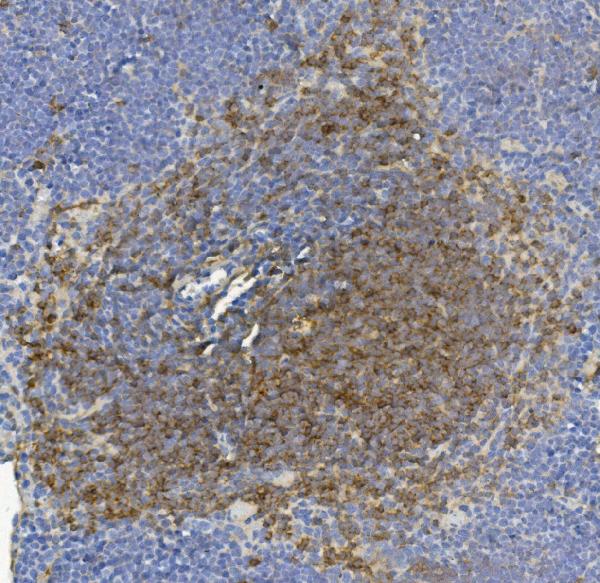
Anti- IL-17F Monoclonal Antibody
- 产品详情
- 实验流程
- 背景知识
Application 
| IHC-P |
|---|---|
| Primary Accession | Q7TNI7 |
| Host | Mouse |
| Isotype | Mouse IgG1, κ |
| Reactivity | Mouse |
| Clonality | Monoclonal |
| Format | Lyophilized |
| Description | Anti- IL-17F Monoclonal Antibody . Tested in IHC-P applications. This antibody reacts with Mouse. |
| Reconstitution | Add 0.2ml of distilled water will yield a concentration of 500 µ/ml. |
| Gene ID | 257630 |
|---|---|
| Other Names | Interleukin-17F, IL-17F, Il17f |
| Calculated MW | 17941 Da |
| Application Details | Immunohistochemistry (Paraffin-embedded Section), 2-5 µg/ml, Mouse |
| Source | Eukaryota |
| Protein Name | Interleukin-17F |
| Contents | PBS, pH 7.0. Contains no stabilizers or preservatives |
| Clone Names | Clone: AFIC-9 |
| Immunogen | Mouse IL-17F |
| Purification | Immunogen affinity purified. |
| Storage | Store at -20°C for one year. For short term storage and frequent use, store at 4°C for up to one month. Avoid repeated freeze-thaw cycles. |
For Research Use Only. Not For Use In Diagnostic Procedures.
| Name | Il17f |
|---|---|
| Function | Effector cytokine of innate and adaptive immune system involved in antimicrobial host defense and maintenance of tissue integrity (PubMed:18025225, PubMed:19144317, PubMed:23255360). IL17A- IL17F signals via IL17RA-IL17RC heterodimeric receptor complex, triggering homotypic interaction of IL17RA and IL17RC chains with TRAF3IP2 adapter through SEFIR domains. This leads to downstream TRAF6- mediated activation of NF-kappa-B and MAPkinase pathways ultimately resulting in transcriptional activation of cytokines, chemokines, antimicrobial peptides and matrix metalloproteinases, with potential strong immune inflammation (PubMed:15477493, PubMed:17911633, PubMed:18025225). IL17A-IL17F is primarily involved in host defense against extracellular bacteria and fungi by inducing neutrophilic inflammation (PubMed:18025225, PubMed:23255360). As signature effector cytokine of T-helper 17 cells (Th17), primarily induces neutrophil activation and recruitment at infection and inflammatory sites (PubMed:18025225). Stimulates the production of antimicrobial beta- defensins DEFB1, DEFB103A, and DEFB104A by mucosal epithelial cells, limiting the entry of microbes through the epithelial barriers (PubMed:19144317). IL17F homodimer can signal via IL17RC homodimeric receptor complex, triggering downstream activation of TRAF6 and NF- kappa-B signaling pathway (PubMed:28813677). Via IL17RC induces transcriptional activation of IL33, a potent cytokine that stimulates group 2 innate lymphoid cells and adaptive T-helper 2 cells involved in pulmonary allergic response to fungi (PubMed:28813677). Likely via IL17RC, promotes sympathetic innervation of peripheral organs by coordinating the communication between gamma-delta T cells and parenchymal cells. Stimulates sympathetic innervation of thermogenic adipose tissue by driving TGFB1 expression (PubMed:32076265). Regulates the composition of intestinal microbiota and immune tolerance by inducing antimicrobial proteins that specifically control the growth of commensal Firmicutes and Bacteroidetes (PubMed:29915298). |
| Cellular Location | Secreted. |
| Tissue Location | Expressed by T-helper 17 cells (Th17) (at protein level). The expression pattern reflects the differentiation state. In fully differentiated Th17 cells, IL17A-IL17F heterodimers are produced at higher levels than IL17A-IL17A and IL17F-IL17F dimers (PubMed:18025225). Dominantly secreted in intestine (PubMed:29915298) Expressed by resident cells of the lamina propria, both epithelial cells and immune cell subsets including natural killer cells, dendritic cells, macrophages and various T and B cell subsets (PubMed:16990136, PubMed:29915298). Expressed by epithelial cells and innate immune cells in the colon (PubMed:19144317). Expressed in group 3 innate lymphoid cells (PubMed:23255360, PubMed:29915298). |
Provided below are standard protocols that you may find useful for product applications.
BACKGROUND
Interleukin 17F, also called IL17F is involved in the regulation of normal versus aberrant T-cell responses. This gene is mapped to 6p12.2. The protein encoded by this gene is a cytokine that shares sequence similarity with IL17. This cytokine is expressed by activated T cells, and has been shown to stimulate the production of several other cytokines, including IL6, IL8, and CSF2/GM_CSF. This cytokine is also found to inhibit the angiogenesis of endothelial cells and induce endothelial cells to produce IL2, TGFB1/TGFB, and monocyte chemoattractant protein-1. It is suggested that targeting IL17 and IL17F or antagonizing IL17R might mitigate neutrophil-mediated inflammation in CF.

终于等到您。ABCEPTA(百远生物)抗体产品。
点击下方“我要评价 ”按钮提交您的反馈信息,您的反馈和评价是我们最宝贵的财富之一,
我们将在1-3个工作日内处理您的反馈信息。
如有疑问,联系:0512-88856768 tech-china@abcepta.com.


