


 癌症的基本特征包括细胞增殖、血管生成、迁移、凋亡逃避机制和细胞永生等。找到癌症发生过程中这些通路的关键标记物和对应的抗体用于检测至关重要。
 为您推荐一个泛素化位点预测神器——泛素化分析工具,可以为您的蛋白的泛素化位点作出预测和评分。
 细胞自噬受体图形绘图工具为你的蛋白的细胞受体结合位点作出预测和评分,识别结合到自噬通路中的蛋白是非常重要的,便于让我们理解自噬在正常生理、病理过程中的作用,如发育、细胞分化、神经退化性疾病、压力条件下、感染和癌症。
Anti-Rab11A Antibody Picoband™ (monoclonal, 4H9)
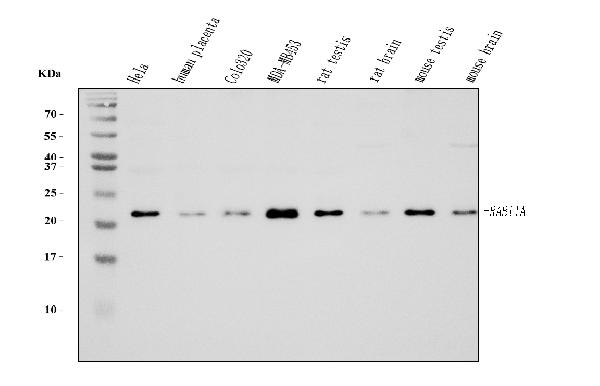
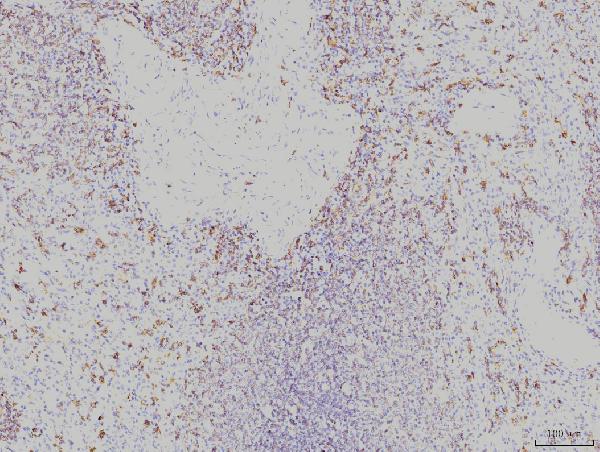
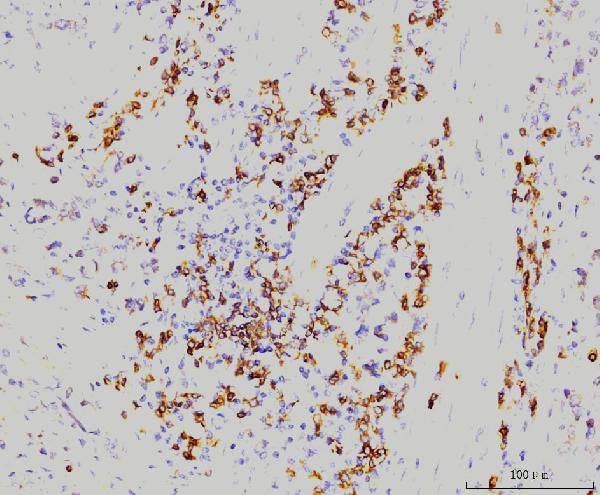
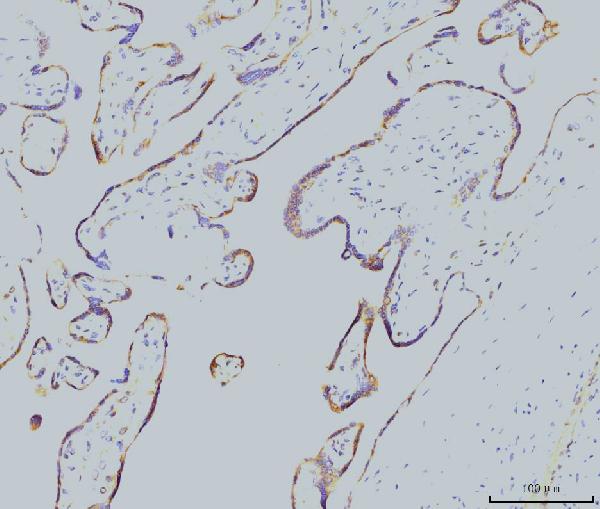
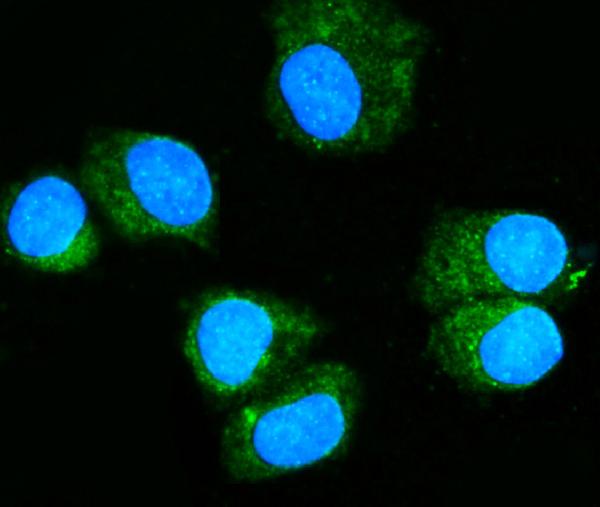
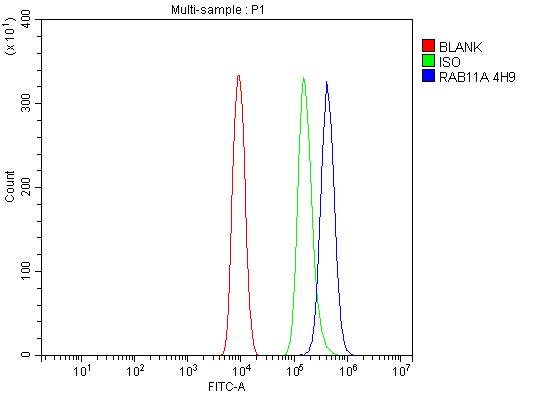
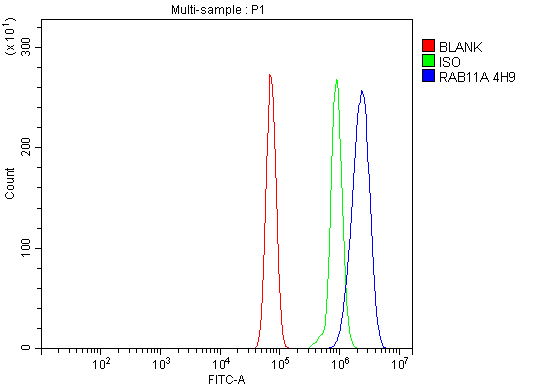
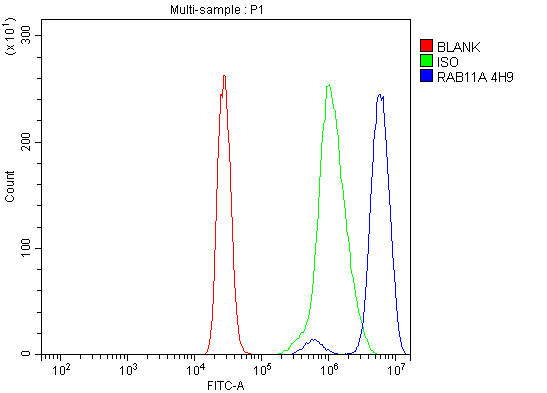
- 产品详情
- 实验流程
- 背景知识
Application 
| WB, IHC, IF, ICC, FC |
|---|---|
| Primary Accession | P62491 |
| Host | Mouse |
| Isotype | Mouse IgG2b |
| Reactivity | Rat, Human, Mouse |
| Clonality | Monoclonal |
| Format | Lyophilized |
| Description | Anti-Rab11A Antibody Picoband™ (monoclonal, 4H9) . Tested in Flow Cytometry, IF, IHC, ICC, WB applications. This antibody reacts with Human, Mouse, Rat. |
| Reconstitution | Adding 0.2 ml of distilled water will yield a concentration of 500 µg/ml. |
| Gene ID | 8766 |
|---|---|
| Other Names | Ras-related protein Rab-11A, Rab-11, 3.6.5.2, YL8, RAB11A (HGNC:9760) |
| Calculated MW | 24394 Da |
| Application Details | Western blot, 0.25-0.5 µg/ml, Human, Mouse, Rat Immunohistochemistry(Paraffin-embedded Section), 2-5 µg/ml, Human Immunocytochemistry/Immunofluorescence, 5 µg/ml, Human Flow Cytometry, 1-3 µg/1x10^6 cells, Human, Mouse, Rat |
| Source | Eukaryota |
| Contents | Each vial contains 4 mg Trehalose, 0.9 mg NaCl and 0.2 mg Na2HPO4. |
| Clone Names | Clone: 4H9 |
| Immunogen | A synthetic peptide corresponding to a sequence at the C-terminus of human Rab11A, identical to the related mouse and rat sequences. |
| Purification | Immunogen affinity purified. |
| Storage | At -20°C for one year from date of receipt. After reconstitution, at 4°C for one month. It can also be aliquotted and stored frozen at -20°C for six months. Avoid repeated freezing and thawing. |
For Research Use Only. Not For Use In Diagnostic Procedures.
| Name | RAB11A (HGNC:9760) |
|---|---|
| Function | The small GTPases Rab are key regulators of intracellular membrane trafficking, from the formation of transport vesicles to their fusion with membranes. Rabs cycle between an inactive GDP-bound form and an active GTP-bound form that is able to recruit to membranes different set of downstream effectors directly responsible for vesicle formation, movement, tethering and fusion (PubMed:15601896, PubMed:15689490, PubMed:17462998, PubMed:19542231, PubMed:20026645, PubMed:20890297, PubMed:21282656, PubMed:26032412). RAB11A regulates endocytic recycling (PubMed:20026645). Forms a functional Rab11/RAB11FIP3/dynein complex that regulates the movement of peripheral sorting endosomes (SE) along microtubule tracks toward the microtubule organizing center/centrosome, generating the endosomal recycling compartment (ERC) (PubMed:20026645). Acts as a major regulator of membrane delivery during cytokinesis (PubMed:15601896). Together with MYO5B and RAB8A participates in epithelial cell polarization (PubMed:21282656). Together with Rabin8/RAB3IP, RAB8A, the exocyst complex, PARD3, PRKCI, ANXA2, CDC42 and DNMBP promotes transcytosis of PODXL to the apical membrane initiation sites (AMIS), apical surface formation and lumenogenesis (PubMed:20890297). Together with MYO5B participates in CFTR trafficking to the plasma membrane and TF (Transferrin) recycling in nonpolarized cells (PubMed:17462998). Required in a complex with MYO5B and RAB11FIP2 for the transport of NPC1L1 to the plasma membrane (PubMed:19542231). Participates in the sorting and basolateral transport of CDH1 from the Golgi apparatus to the plasma membrane (PubMed:15689490). Regulates the recycling of FCGRT (receptor of Fc region of monomeric IgG) to basolateral membranes (By similarity). May also play a role in melanosome transport and release from melanocytes (By similarity). Promotes Rabin8/RAB3IP preciliary vesicular trafficking to mother centriole by forming a ciliary targeting complex containing Rab11, ASAP1, Rabin8/RAB3IP, RAB11FIP3 and ARF4, thereby regulating ciliogenesis initiation (PubMed:25673879, PubMed:31204173). On the contrary, upon LPAR1 receptor signaling pathway activation, interaction with phosphorylated WDR44 prevents Rab11-RAB3IP-RAB11FIP3 complex formation and cilia growth (PubMed:31204173). Participates in the export of a subset of neosynthesized proteins through a Rab8-Rab10-Rab11-endososomal dependent export route via interaction with WDR44 (PubMed:32344433). Also interacts with RABL3 to promote ciliary vesicle formation (PubMed:36052645). |
| Cellular Location | Cell membrane; Lipid-anchor. Endosome membrane; Lipid-anchor. Recycling endosome membrane; Lipid-anchor. Cleavage furrow. Cytoplasmic vesicle, phagosome membrane; Lipid-anchor. Golgi apparatus membrane; Lipid-anchor. Golgi apparatus, trans-Golgi network. Cytoplasmic vesicle membrane; Lipid- anchor. Cell projection, cilium. Note=Localized to WDR44-positive endosomes and tubules (PubMed:32344433). Translocates with RAB11FIP2 from the vesicles of the endocytic recycling compartment (ERC) to the plasma membrane (PubMed:11994279). During interphase, localized in vesicles continuously moving from peripheral sorting endosomes towards the pericentrosomal ERC (PubMed:20026645). Localizes to the cleavage furrow (PubMed:15601896). Colocalizes with PARD3, PRKCI, EXOC5, OCLN, PODXL and RAB8A in apical membrane initiation sites (AMIS) during the generation of apical surface and lumenogenesis (PubMed:20890297) Recruited to phagosomes containing S.aureus or M.tuberculosis (PubMed:21255211). Localized to rhodopsin transport carriers when interacting with RAB11AFIP3 and ASAP1 in photoreceptors (PubMed:25673879). Colocalizes with RAB11AFIP1 on punctate vesicles (PubMed:26032412). |
Provided below are standard protocols that you may find useful for product applications.
BACKGROUND
Ras-related protein Rab-11A is a protein that in humans is encoded by the RAB11A gene. The protein encoded by this gene belongs to the small GTPase superfamily, Rab family which plays essential roles in vesicle and granule targeting. It is mapped to 15q22.31. RAB11A is associated with both constitutive and regulated secretory pathways, and may be involved in protein transport. Additionally, RAB11A can control intracellular trafficking of the innate immune receptor TLR4, and thereby also receptor signaling. It has been shown to interact with RAB11FIP2, RAB11FIP4, and RAB11FIP1 and so on.

终于等到您。ABCEPTA(百远生物)抗体产品。
点击下方“我要评价 ”按钮提交您的反馈信息,您的反馈和评价是我们最宝贵的财富之一,
我们将在1-3个工作日内处理您的反馈信息。
如有疑问,联系:0512-88856768 tech-china@abcepta.com.


