


 癌症的基本特征包括细胞增殖、血管生成、迁移、凋亡逃避机制和细胞永生等。找到癌症发生过程中这些通路的关键标记物和对应的抗体用于检测至关重要。
 为您推荐一个泛素化位点预测神器——泛素化分析工具,可以为您的蛋白的泛素化位点作出预测和评分。
 细胞自噬受体图形绘图工具为你的蛋白的细胞受体结合位点作出预测和评分,识别结合到自噬通路中的蛋白是非常重要的,便于让我们理解自噬在正常生理、病理过程中的作用,如发育、细胞分化、神经退化性疾病、压力条件下、感染和癌症。
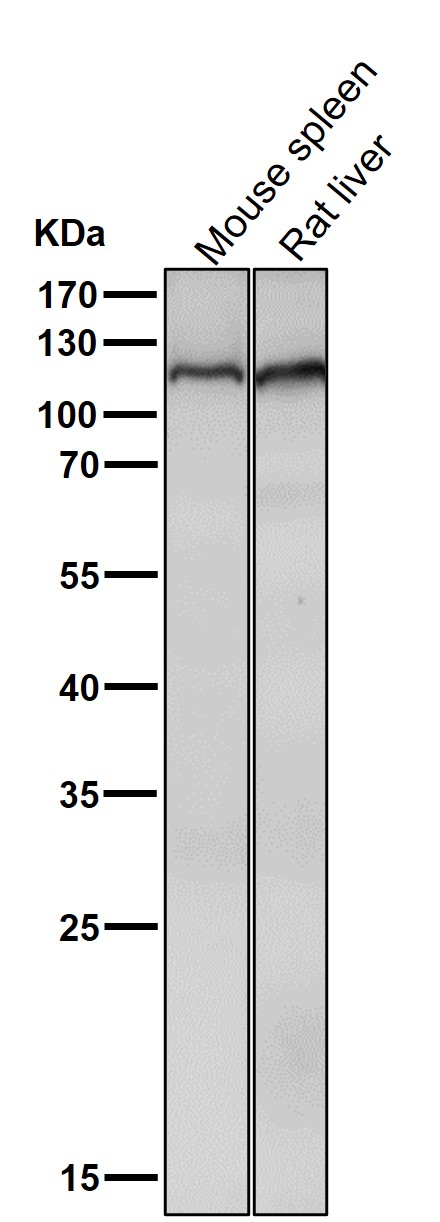
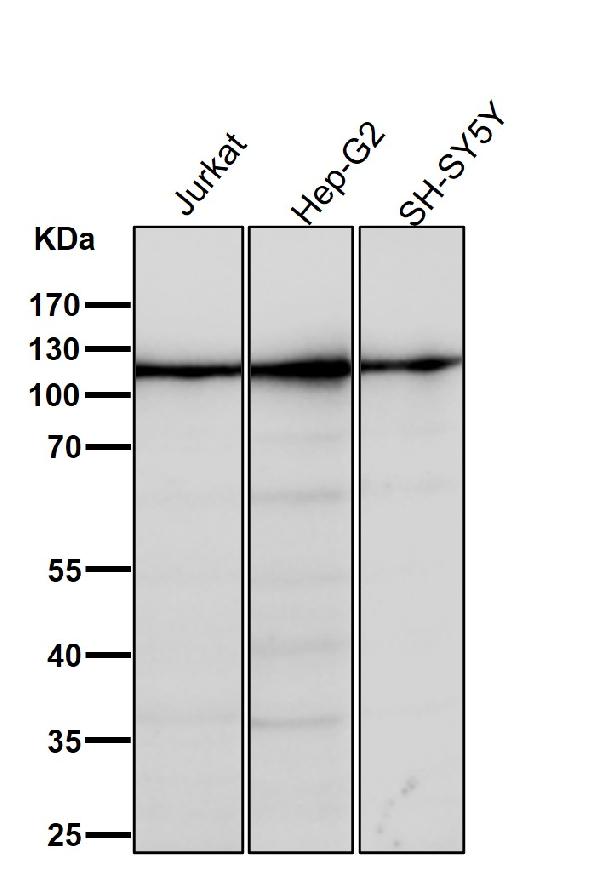
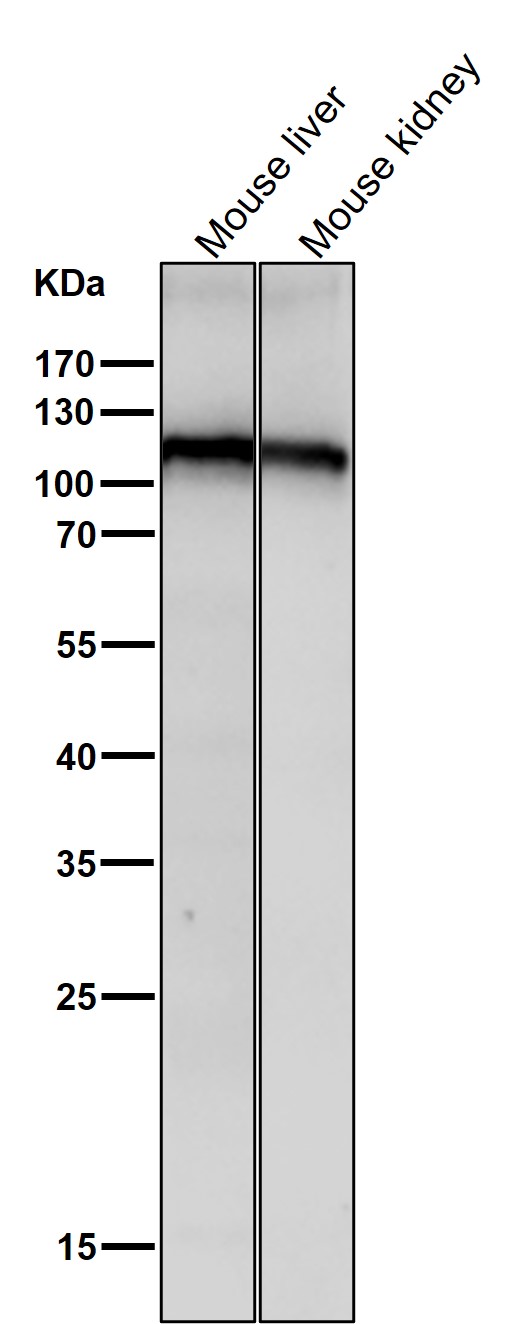
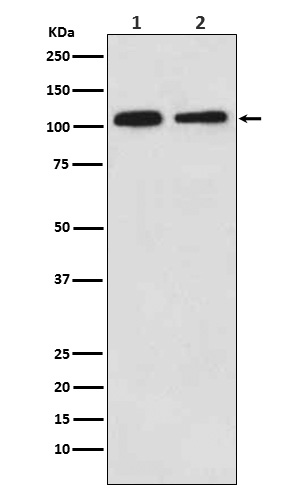
Anti-Mov10 Rabbit Monoclonal Antibody
- 产品详情
- 实验流程
Application 
| WB, IHC |
|---|---|
| Primary Accession | Q9HCE1 |
| Host | Rabbit |
| Isotype | IgG |
| Reactivity | Rat, Human, Mouse |
| Clonality | Monoclonal |
| Format | Liquid |
| Description | Anti-Mov10 Rabbit Monoclonal Antibody . Tested in WB, IHC applications. This antibody reacts with Human, Mouse, Rat. |
| Gene ID | 4343 |
|---|---|
| Other Names | Helicase MOV-10, 3.6.4.13, Armitage homolog, Moloney leukemia virus 10 protein, MOV10 (HGNC:7200), KIAA1631 |
| Calculated MW | 113671 Da |
| Application Details | WB 1:500-1:2000 IHC 1:50-1:200 |
| Source | Eukaryota |
| Contents | Rabbit IgG in phosphate buffered saline, pH 7.4, 150mM NaCl, 0.02% sodium azide and 50% glycerol, 0.4-0.5mg/ml BSA. |
| Clone Names | Clone: 22M67 |
| Immunogen | A synthesized peptide derived from human Mov10 |
| Purification | Affinity-chromatography |
| Storage | Store at -20°C for one year. For short term storage and frequent use, store at 4°C for up to one month. Avoid repeated freeze-thaw cycles. |
For Research Use Only. Not For Use In Diagnostic Procedures.
| Name | MOV10 (HGNC:7200) |
|---|---|
| Synonyms | KIAA1631 |
| Function | 5'-3' RNA helicase (PubMed:24726324). Involved in a number of cellular roles ranging from mRNA metabolism and translation, modulation of viral infectivity, inhibition of retrotransposition, or regulation of synaptic transmission (PubMed:23093941). Plays an important role in innate antiviral immunity by promoting type I interferon production (PubMed:27016603, PubMed:27974568, PubMed:35157734). Mechanistically, specifically uses IKKepsilon/IKBKE as the mediator kinase for IRF3 activation (PubMed:27016603, PubMed:35157734). Blocks HIV-1 virus replication at a post-entry step (PubMed:20215113). Counteracts HIV-1 Vif-mediated degradation of APOBEC3G through its helicase activity by interfering with the ubiquitin-proteasome pathway (PubMed:29258557). Also inhibits hepatitis B virus/HBV replication by interacting with HBV RNA and thereby inhibiting the early step of viral reverse transcription (PubMed:31722967). Contributes to UPF1 mRNA target degradation by translocation along 3' UTRs (PubMed:24726324). Required for microRNA (miRNA)-mediated gene silencing by the RNA-induced silencing complex (RISC). Required for both miRNA-mediated translational repression and miRNA-mediated cleavage of complementary mRNAs by RISC (PubMed:16289642, PubMed:17507929, PubMed:22791714). In cooperation with FMR1, regulates miRNA-mediated translational repression by AGO2 (PubMed:25464849). Restricts retrotransposition of long interspersed element-1 (LINE-1) in cooperation with TUT4 and TUT7 counteracting the RNA chaperonne activity of L1RE1 (PubMed:23093941, PubMed:30122351). Facilitates LINE-1 uridylation by TUT4 and TUT7 (PubMed:30122351). Required for embryonic viability and for normal central nervous system development and function. Plays two critical roles in early brain development: suppresses retroelements in the nucleus by directly inhibiting cDNA synthesis, while regulates cytoskeletal mRNAs to influence neurite outgrowth in the cytosol (By similarity). May function as a messenger ribonucleoprotein (mRNP) clearance factor (PubMed:24726324). |
| Cellular Location | Cytoplasm, P-body. Cytoplasm, Cytoplasmic ribonucleoprotein granule. Cytoplasm, Stress granule. Nucleus {ECO:0000250|UniProtKB:P23249} Cytoplasm {ECO:0000250|UniProtKB:P23249}. Note=Co-enriched in cytoplasmic foci with TUT4 (PubMed:30122351). In developing neurons, localizes both in nucleus and cytoplasm, but in the adulthood it is only cytoplasmic (By similarity). After infection, relocalizes to the DENV replication complex in perinuclear regions (PubMed:27974568) {ECO:0000250|UniProtKB:P23249, ECO:0000269|PubMed:27974568, ECO:0000269|PubMed:30122351} |
Research Areas
Application Protocols
Provided below are standard protocols that you may find useful for product applications.

终于等到您。ABCEPTA(百远生物)抗体产品。
点击下方“我要评价 ”按钮提交您的反馈信息,您的反馈和评价是我们最宝贵的财富之一,
我们将在1-3个工作日内处理您的反馈信息。
如有疑问,联系:0512-88856768 tech-china@abcepta.com.


