


 癌症的基本特征包括细胞增殖、血管生成、迁移、凋亡逃避机制和细胞永生等。找到癌症发生过程中这些通路的关键标记物和对应的抗体用于检测至关重要。
 为您推荐一个泛素化位点预测神器——泛素化分析工具,可以为您的蛋白的泛素化位点作出预测和评分。
 细胞自噬受体图形绘图工具为你的蛋白的细胞受体结合位点作出预测和评分,识别结合到自噬通路中的蛋白是非常重要的,便于让我们理解自噬在正常生理、病理过程中的作用,如发育、细胞分化、神经退化性疾病、压力条件下、感染和癌症。
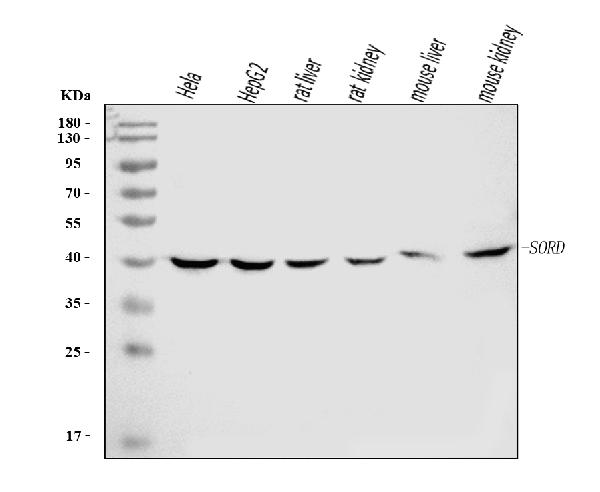
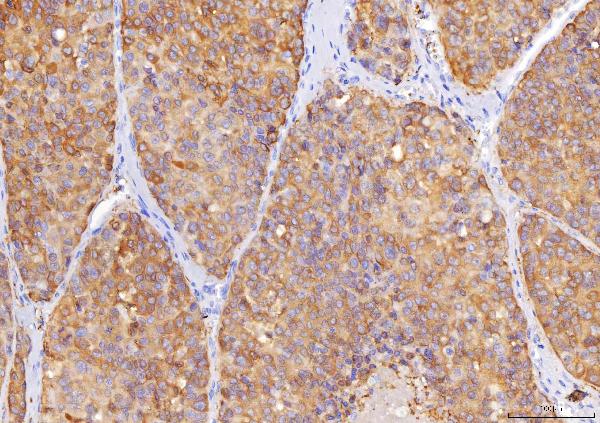
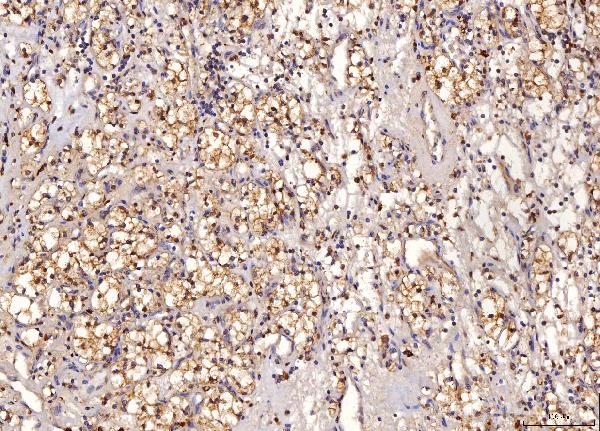
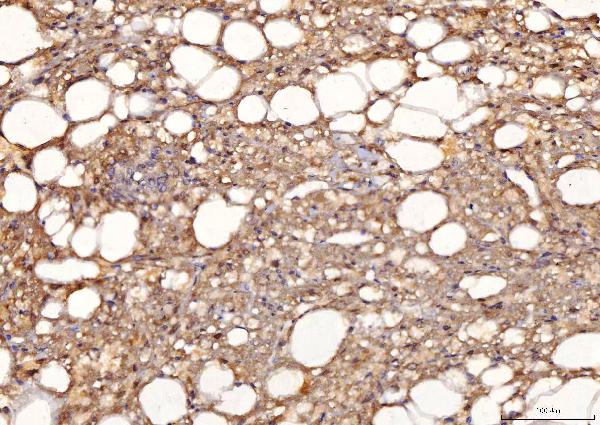
Anti-Sorbitol Dehydrogenase/SORD Antibody Picoband™ (monoclonal, 12B10G2)
- 产品详情
- 实验流程
- 背景知识
Application 
| WB, IHC, FC |
|---|---|
| Primary Accession | Q00796 |
| Host | Mouse |
| Isotype | Mouse IgG1 |
| Reactivity | Rat, Human, Mouse |
| Clonality | Monoclonal |
| Format | Lyophilized |
| Description | Anti-Sorbitol Dehydrogenase/SORD Antibody Picoband™ (monoclonal, 12B10G2) . Tested in Flow Cytometry, IHC, WB applications. This antibody reacts with Human, Mouse, Rat. |
| Reconstitution | Adding 0.2 ml of distilled water will yield a concentration of 500 µg/ml. |
| Gene ID | 6652 |
|---|---|
| Other Names | Sorbitol dehydrogenase, SDH, 1.1.1.-, (R, R)-butanediol dehydrogenase, 1.1.1.4, L-iditol 2-dehydrogenase, 1.1.1.14, Polyol dehydrogenase, Ribitol dehydrogenase, RDH, 1.1.1.56, Xylitol dehydrogenase, XDH, 1.1.1.9, SORD |
| Calculated MW | 38325 Da |
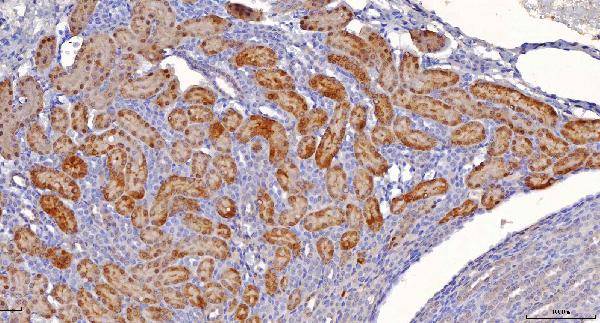
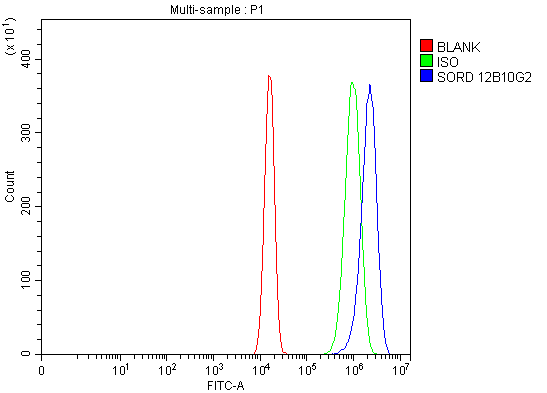
| Application Details | Western blot, 0.25-0.5 µg/ml, Human, Mouse, Rat Immunohistochemistry(Paraffin-embedded Section), 2-5 µg/ml, Human, Rat Flow Cytometry, 1-3 µg/1x10^6 cells, Human |
| Source | Eukaryota |
| Contents | Each vial contains 4 mg Trehalose, 0.9 mg NaCl and 0.2 mg Na2HPO4. |
| Clone Names | Clone: 12B10G2 |
| Immunogen | E.coli-derived human Sorbitol Dehydrogenase/SORD recombinant protein (Position: N8-P357). |
| Purification | Immunogen affinity purified. |
| Storage | At -20°C for one year from date of receipt. After reconstitution, at 4°C for one month. It can also be aliquotted and stored frozen at -20°C for six months. Avoid repeated freezing and thawing. |
For Research Use Only. Not For Use In Diagnostic Procedures.
| Name | SORD |
|---|---|
| Function | Polyol dehydrogenase that catalyzes the reversible NAD(+)- dependent oxidation of various sugar alcohols. Is mostly active with D- sorbitol (D-glucitol), L-threitol, xylitol and ribitol as substrates, leading to the C2-oxidized products D-fructose, L-erythrulose, D- xylulose, and D-ribulose, respectively (PubMed:3365415). Is a key enzyme in the polyol pathway that interconverts glucose and fructose via sorbitol, which constitutes an important alternate route for glucose metabolism. The polyol pathway is believed to be involved in the etiology of diabetic complications, such as diabetic neuropathy and retinopathy, induced by hyperglycemia (PubMed:12962626, PubMed:25105142, PubMed:29966615). May play a role in sperm motility by using sorbitol as an alternative energy source for sperm motility (PubMed:16278369). May have a more general function in the metabolism of secondary alcohols since it also catalyzes the stereospecific oxidation of (2R,3R)-2,3-butanediol. To a lesser extent, can also oxidize L-arabinitol, galactitol and D-mannitol and glycerol in vitro. Oxidizes neither ethanol nor other primary alcohols. Cannot use NADP(+) as the electron acceptor (PubMed:3365415). |
| Cellular Location | Mitochondrion membrane {ECO:0000250|UniProtKB:Q64442}; Peripheral membrane protein {ECO:0000250|UniProtKB:Q64442}. Cell projection, cilium, flagellum {ECO:0000250|UniProtKB:Q64442}. Note=Associated with mitochondria of the midpiece and near the plasma membrane in the principal piece of the flagellum. Also found in the epididymosome, secreted by the epididymal epithelium and that transfers proteins from the epididymal fluid to the sperm surface. {ECO:0000250|UniProtKB:Q64442} |
| Tissue Location | Expressed in liver (PubMed:3365415). Expressed in kidney and epithelial cells of both benign and malignant prostate tissue. Expressed in epididymis (at protein level) |
Provided below are standard protocols that you may find useful for product applications.
BACKGROUND
Sorbitol dehydrogenase is an enzyme that in humans is encoded by the SORD gene. Sorbitol dehydrogenase (SORD) catalyzes the interconversion of polyols and their corresponding ketoses, and together with aldose reductase, makes up the sorbitol pathway that is believed to play an important role in the development of diabetic complications. The first reaction of the pathway (also called the polyol pathway) is the reduction of glucose to sorbitol by ALDR1 with NADPH as the cofactor. SORD then oxidizes the sorbitol to fructose using NAD(+) cofactor.

终于等到您。ABCEPTA(百远生物)抗体产品。
点击下方“我要评价 ”按钮提交您的反馈信息,您的反馈和评价是我们最宝贵的财富之一,
我们将在1-3个工作日内处理您的反馈信息。
如有疑问,联系:0512-88856768 tech-china@abcepta.com.


