


 癌症的基本特征包括细胞增殖、血管生成、迁移、凋亡逃避机制和细胞永生等。找到癌症发生过程中这些通路的关键标记物和对应的抗体用于检测至关重要。
 为您推荐一个泛素化位点预测神器——泛素化分析工具,可以为您的蛋白的泛素化位点作出预测和评分。
 细胞自噬受体图形绘图工具为你的蛋白的细胞受体结合位点作出预测和评分,识别结合到自噬通路中的蛋白是非常重要的,便于让我们理解自噬在正常生理、病理过程中的作用,如发育、细胞分化、神经退化性疾病、压力条件下、感染和癌症。
Slc31a1 antibody - N-terminal region
Rabbit Polyclonal Antibody
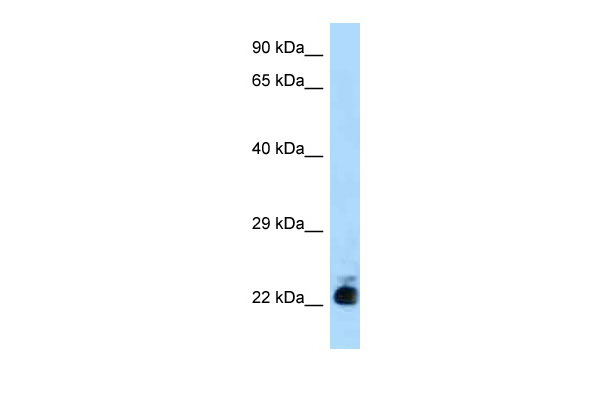
- 产品详情
- 实验流程
Application 
| WB |
|---|---|
| Primary Accession | Q8K211 |
| Other Accession | NM_175090, NP_780299 |
| Reactivity | Human, Mouse, Rat, Rabbit, Dog, Horse |
| Predicted | Human, Mouse, Rabbit, Dog, Horse |
| Host | Rabbit |
| Clonality | Polyclonal |
| Calculated MW | 21961 Da |
| Gene ID | 20529 |
|---|---|
| Alias Symbol | 4930445G01Rik, AI787263, AU016967, Ctr1 |
| Other Names | High affinity copper uptake protein 1, Copper transporter 1, CTR1, Solute carrier family 31 member 1, Slc31a1 |
| Format | Liquid. Purified antibody supplied in 1x PBS buffer with 0.09% (w/v) sodium azide and 2% sucrose. |
| Reconstitution & Storage | Add 50 ul of distilled water. Final anti-Slc31a1 antibody concentration is 1 mg/ml in PBS buffer with 2% sucrose. For longer periods of storage, store at 20°C. Avoid repeat freeze-thaw cycles. |
| Precautions | Slc31a1 antibody - N-terminal region is for research use only and not for use in diagnostic or therapeutic procedures. |
For Research Use Only. Not For Use In Diagnostic Procedures.
| Name | Slc31a1 {ECO:0000312|MGI:MGI:1333843} |
|---|---|
| Function | [High affinity copper uptake protein 1]: Uniporter that mediates the transport of copper(1+) from the extracellular space to the cytoplasm, across the plasma membrane (PubMed:11391005, PubMed:12177073, PubMed:16847145, PubMed:24167251). Then, delivers directly copper(1+) to specific chaperone such as ATOX1, via a copper(1+)- mediated transient interaction between the C-terminal domain and a copper(1+) chaperone, thus controlling intracellular copper(1+) levels (By similarity). May function in copper(1+) import from the apical membrane thus may drive intestinal copper absorption (PubMed:16950140). The copper(1+) transport mechanism is sodium- independent, saturable and of high-affinity (By similarity). Also mediates the uptake of silver(1+) (PubMed:20569931). May function in the influx of the platinum-containing chemotherapeutic agents (PubMed:12370430, PubMed:16847145, PubMed:19144690). The platinum- containing chemotherapeutic agents uptake is saturable (By similarity). Also participates in the first step of copper(2+) acquisition by cells through a direct transfer of copper(2+) from copper(2+) carriers in blood, such as ALB to the N-terminal domain of SLC31A1, leading to copper(2+) reduction and probably followed by copper(1+) stabilization (By similarity). In addition, functions as a redox sensor to promote angiogenesis in endothelial cells, in a copper(1+) transport independent manner, by transmitting the VEGF-induced ROS signal through a sulfenylation at Cys-195 leading to a subsequent disulfide bond formation between SLC31A1 and KDR (PubMed:35027734). The SLC31A1-KDR complex is then co-internalized to early endosomes, driving a sustained VEGFR2 signaling (By similarity). |
| Cellular Location | Cell membrane; Multi-pass membrane protein. Early endosome membrane {ECO:0000250|UniProtKB:O15431}; Multi-pass membrane protein. Recycling endosome membrane; Multi-pass membrane protein. Apical cell membrane; Multi-pass membrane protein. Late endosome membrane; Multi-pass membrane protein. Basolateral cell membrane; Multi-pass membrane protein. Note=The localization is controlled by the intra and extra-cellular copper concentration. Under conditions of elevated extracellular copper concentrations, it is rapidly internalized by endocytosis from the plasma membrane by a clathrin- and dynamin-mediated process and degradated in order to prevent intracellular copper accumulation and to reduce the transport of the copper across the membrane. The internalized SLC31A1 is then localized in early endosomes, and, upon a low extracellular copper concentrations, it is transported back to the plasma membrane in a RAB11A-dependent recycling pathway (By similarity). Localizes to the apical membrane in intestinal epithelial cells (PubMed:16950140, PubMed:20699218). Mainly localized on the basolateral side of renal tubular cells (PubMed:19144690). Localizes to the neuronal cell body plasma membranes (By similarity). {ECO:0000250|UniProtKB:O15431, ECO:0000250|UniProtKB:Q9JK41, ECO:0000269|PubMed:16950140, ECO:0000269|PubMed:19144690, ECO:0000269|PubMed:20699218} |
| Tissue Location | Expressed in the tubules in the inner cortex and inner medulla of the kidney, the villi of the small intestine, the choroid plexus of the brain, the stroma of the ovary, the seminiferous tubules of the testes, and the sclera of the eye (PubMed:11391004) Expressed in intestinal epithelial cells, with an increase expression from the crypt to the tip of the villus (PubMed:16950140). Mainly expressed in both proximal and distal tubular cells in kidneys (PubMed:19144690). |
Research Areas
Application Protocols
Provided below are standard protocols that you may find useful for product applications.

终于等到您。ABCEPTA(百远生物)抗体产品。
点击下方“我要评价 ”按钮提交您的反馈信息,您的反馈和评价是我们最宝贵的财富之一,
我们将在1-3个工作日内处理您的反馈信息。
如有疑问,联系:0512-88856768 tech-china@abcepta.com.


