


 癌症的基本特征包括细胞增殖、血管生成、迁移、凋亡逃避机制和细胞永生等。找到癌症发生过程中这些通路的关键标记物和对应的抗体用于检测至关重要。
 为您推荐一个泛素化位点预测神器——泛素化分析工具,可以为您的蛋白的泛素化位点作出预测和评分。
 细胞自噬受体图形绘图工具为你的蛋白的细胞受体结合位点作出预测和评分,识别结合到自噬通路中的蛋白是非常重要的,便于让我们理解自噬在正常生理、病理过程中的作用,如发育、细胞分化、神经退化性疾病、压力条件下、感染和癌症。
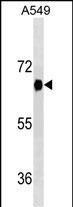
DYRK2 Antibody 精选
Mouse Monoclonal Antibody (Mab)
- 产品详情
- 实验流程
- 背景知识
Application 
| WB, E |
|---|---|
| Primary Accession | Q92630 |
| Other Accession | NP_003574.1 |
| Reactivity | Human |
| Predicted | Mouse, Rat, Bovine, Canine, Rabbit |
| Host | Mouse |
| Clonality | Monoclonal |
| Isotype | IgG1 |
| Clone Names | 492CT4.2.4 |
| Calculated MW | 66652 Da |
| Antigen Region | 105-135 aa |
| Gene ID | 8445 |
|---|---|
| Other Names | Dual specificity tyrosine-phosphorylation-regulated kinase 2, DYRK2 |
| Target/Specificity | This DYRK2 antibody is generated from mice immunized with a KLH conjugated synthetic peptide between 105-135 amino acids from human DYRK2. |
| Dilution | WB~~1:500~1000 E~~Use at an assay dependent concentration. |
| Format | Purified polyclonal antibody supplied in PBS with 0.09% (W/V) sodium azide. This antibody is prepared by Saturated Ammonium Sulfate (SAS) precipitation followed by dialysis against PBS. |
| Storage | Maintain refrigerated at 2-8°C for up to 2 weeks. For long term storage store at -20°C in small aliquots to prevent freeze-thaw cycles. |
| Precautions | DYRK2 Antibody is for research use only and not for use in diagnostic or therapeutic procedures. |
For Research Use Only. Not For Use In Diagnostic Procedures.
| Name | DYRK2 {ECO:0000303|PubMed:9748265, ECO:0000312|HGNC:HGNC:3093} |
|---|---|
| Function | Serine/threonine-protein kinase involved in the regulation of the mitotic cell cycle, cell proliferation, apoptosis, organization of the cytoskeleton and neurite outgrowth (PubMed:11311121, PubMed:12588975, PubMed:16511445, PubMed:16611631, PubMed:17349958, PubMed:18599021, PubMed:22307329, PubMed:9748265). Phosphorylates CRMP2/DPYSL2, CRMP4/DPYSL3, DCX, EIF2B5, EIF4EBP1, GLI2, GLI3, GYS1, JUN, MDM2, MYC, NFATC1, p53/TP53, TAU/MAPT and KATNA1 (PubMed:11311121, PubMed:12588975, PubMed:16511445, PubMed:16611631, PubMed:17349958, PubMed:18599021, PubMed:22307329, PubMed:38968120). Can phosphorylate histone H1, histone H3 and histone H2B (in vitro) (PubMed:9748265). Can phosphorylate CARHSP1 (in vitro) (PubMed:15910284). Functions in part via its role in ubiquitin-dependent proteasomal protein degradation (PubMed:9748265). Functions downstream of ATM and phosphorylates p53/TP53 at 'Ser-46', and thereby contributes to the induction of apoptosis in response to DNA damage (PubMed:17349958, PubMed:18599021). Phosphorylates NFATC1, and thereby inhibits its accumulation in the nucleus and its transcription factor activity (PubMed:16511445). May play a general role in the priming of GSK3 substrates (PubMed:11311121, PubMed:16611631). Phosphorylates EIF2B5 at 'Ser-544', enabling its subsequent phosphorylation and inhibition by GSK3B (PubMed:11311121). Likewise, phosphorylation of NFATC1, CRMP2/DPYSL2 and CRMP4/DPYSL3 promotes their subsequent phosphorylation by GSK3B (PubMed:16611631). Inactivates GYS1 by phosphorylation at 'Ser-641', and potentially also a second phosphorylation site, thus regulating glycogen synthesis (PubMed:14593110). Mediates EDVP E3 ligase complex formation and is required for the phosphorylation and subsequent degradation of KATNA1 (PubMed:19287380). Phosphorylates TERT at 'Ser-457', promoting TERT ubiquitination by the EDVP complex (PubMed:23362280). Phosphorylates SIAH2, and thereby increases its ubiquitin ligase activity (PubMed:22878263). Promotes the proteasomal degradation of MYC and JUN, and thereby regulates progress through the mitotic cell cycle and cell proliferation (PubMed:22307329). Acts as a positive regulator of smoothened signaling by mediating phosphorylation of GLI2 and GLI3 in response to smoothened activation, promoting their dissociation from SUFU inhibitor and translocation to the nucleus (PubMed:38968120). Can also acts as a negative regulator of smoothened by catalyzing phosphorylation of GLI2 and GLI3 and promote their proteasomal degradation (PubMed:18455992). Plays a role in cytoskeleton organization and neurite outgrowth via its phosphorylation of DCX and DPYSL2 (By similarity). |
| Cellular Location | Cytoplasm. Nucleus. Note=Translocates into the nucleus following DNA damage. |
| Tissue Location | Testis, after the onset of spermatogenesis. |
Provided below are standard protocols that you may find useful for product applications.
BACKGROUND
DYRK2 belongs to a family of protein kinases whose members are presumed to be involved in cellular growth and/or development. The family is defined by structural similarity of their kinase domains and their capability to autophosphorylate on tyrosine residues. DYRK2 has demonstrated tyrosine autophosphorylation and catalyzed phosphorylation of histones H3 and H2B in vitro. Two isoforms of DYRK2 have been isolated. The predominant isoform, isoform 1, lacks a 5' terminal insert.
REFERENCES
Taira, N., et al. J. Biol. Chem. 285(7):4909-4919(2010)
Yamashita, S., et al. J. Thorac. Cardiovasc. Surg. 138(6):1303-1308(2009)
Yamashita, S., et al. Anticancer Res. 29(7):2753-2757(2009)
Maddika, S., et al. Nat. Cell Biol. 11(4):409-419(2009)
Rikova, K., et al. Cell 131(6):1190-1203(2007)

终于等到您。ABCEPTA(百远生物)抗体产品。
点击下方“我要评价 ”按钮提交您的反馈信息,您的反馈和评价是我们最宝贵的财富之一,
我们将在1-3个工作日内处理您的反馈信息。
如有疑问,联系:0512-88856768 tech-china@abcepta.com.


