


 癌症的基本特征包括细胞增殖、血管生成、迁移、凋亡逃避机制和细胞永生等。找到癌症发生过程中这些通路的关键标记物和对应的抗体用于检测至关重要。
 为您推荐一个泛素化位点预测神器——泛素化分析工具,可以为您的蛋白的泛素化位点作出预测和评分。
 细胞自噬受体图形绘图工具为你的蛋白的细胞受体结合位点作出预测和评分,识别结合到自噬通路中的蛋白是非常重要的,便于让我们理解自噬在正常生理、病理过程中的作用,如发育、细胞分化、神经退化性疾病、压力条件下、感染和癌症。
BTK Antibody (Ascites) 精选
Mouse Monoclonal Antibody (Mab)
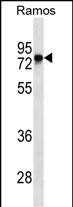
- 产品详情
- 实验流程
- 背景知识
Application 
| WB, E |
|---|---|
| Primary Accession | Q06187 |
| Other Accession | NP_000052.1 |
| Reactivity | Human |
| Predicted | Mouse, Rat, Bovine, Canine, Rabbit |
| Host | Mouse |
| Clonality | Monoclonal |
| Isotype | IgG1 |
| Clone Names | 488CT2.1.2 |
| Calculated MW | 76281 Da |
| Antigen Region | 209-239 aa |
| Gene ID | 695 |
|---|---|
| Other Names | Tyrosine-protein kinase BTK, Agammaglobulinemia tyrosine kinase, ATK, B-cell progenitor kinase, BPK, Bruton tyrosine kinase, BTK, AGMX1, ATK, BPK |
| Target/Specificity | This BTK antibody is generated from mice immunized with a KLH conjugated synthetic peptide between 209-239 amino acids from human BTK. |
| Dilution | WB~~1:2000~8000 E~~Use at an assay dependent concentration. |
| Format | Mouse monoclonal antibody supplied in crude ascites with 0.09% (W/V) sodium azide. |
| Storage | Maintain refrigerated at 2-8°C for up to 2 weeks. For long term storage store at -20°C in small aliquots to prevent freeze-thaw cycles. |
| Precautions | BTK Antibody (Ascites) is for research use only and not for use in diagnostic or therapeutic procedures. |
For Research Use Only. Not For Use In Diagnostic Procedures.
| Name | BTK |
|---|---|
| Synonyms | AGMX1, ATK, BPK |
| Function | Non-receptor tyrosine kinase indispensable for B lymphocyte development, differentiation and signaling (PubMed:19290921). Binding of antigen to the B-cell antigen receptor (BCR) triggers signaling that ultimately leads to B-cell activation (PubMed:19290921). After BCR engagement and activation at the plasma membrane, phosphorylates PLCG2 at several sites, igniting the downstream signaling pathway through calcium mobilization, followed by activation of the protein kinase C (PKC) family members (PubMed:11606584). PLCG2 phosphorylation is performed in close cooperation with the adapter protein B-cell linker protein BLNK (PubMed:11606584). BTK acts as a platform to bring together a diverse array of signaling proteins and is implicated in cytokine receptor signaling pathways (PubMed:16517732, PubMed:17932028). Plays an important role in the function of immune cells of innate as well as adaptive immunity, as a component of the Toll-like receptors (TLR) pathway (PubMed:16517732). The TLR pathway acts as a primary surveillance system for the detection of pathogens and are crucial to the activation of host defense (PubMed:16517732). Especially, is a critical molecule in regulating TLR9 activation in splenic B-cells (PubMed:16517732, PubMed:17932028). Within the TLR pathway, induces tyrosine phosphorylation of TIRAP which leads to TIRAP degradation (PubMed:16415872). BTK also plays a critical role in transcription regulation (PubMed:19290921). Induces the activity of NF- kappa-B, which is involved in regulating the expression of hundreds of genes (PubMed:19290921). BTK is involved on the signaling pathway linking TLR8 and TLR9 to NF-kappa-B (PubMed:19290921). Acts as an activator of NLRP3 inflammasome assembly by mediating phosphorylation of NLRP3 (PubMed:34554188). Transiently phosphorylates transcription factor GTF2I on tyrosine residues in response to BCR (PubMed:9012831). GTF2I then translocates to the nucleus to bind regulatory enhancer elements to modulate gene expression (PubMed:9012831). ARID3A and NFAT are other transcriptional target of BTK (PubMed:16738337). BTK is required for the formation of functional ARID3A DNA-binding complexes (PubMed:16738337). There is however no evidence that BTK itself binds directly to DNA (PubMed:16738337). BTK has a dual role in the regulation of apoptosis (PubMed:9751072). Plays a role in STING1- mediated induction of type I interferon (IFN) response by phosphorylating DDX41 (PubMed:25704810). |
| Cellular Location | Cytoplasm. Cell membrane; Peripheral membrane protein. Nucleus Membrane raft {ECO:0000250|UniProtKB:P35991}. Note=In steady state, BTK is predominantly cytosolic. Following B-cell receptor (BCR) engagement by antigen, translocates to the plasma membrane through its PH domain Plasma membrane localization is a critical step in the activation of BTK. A fraction of BTK also shuttles between the nucleus and the cytoplasm, and nuclear export is mediated by the nuclear export receptor CRM1. |
| Tissue Location | Predominantly expressed in B-lymphocytes. |
Provided below are standard protocols that you may find useful for product applications.
BACKGROUND
The protein encoded by this gene plays a crucial role in B-cell development. Mutations in this gene cause X-linked agammaglobulinemia type 1, which is an immunodeficiency characterized by the failure to produce mature B lymphocytes, and associated with a failure of Ig heavy chain rearrangement.
REFERENCES
Bailey, S.D., et al. Diabetes Care 33(10):2250-2253(2010)
Ng, Y.Y., et al. Leukemia 24(9):1617-1630(2010)
Segat, L., et al. Vaccine 28(10):2201-2206(2010)
Marcotte, D.J., et al. Protein Sci. 19(3):429-439(2010)
Liu, Z., et al. J. Immunol. 184(1):244-254(2010)

终于等到您。ABCEPTA(百远生物)抗体产品。
点击下方“我要评价 ”按钮提交您的反馈信息,您的反馈和评价是我们最宝贵的财富之一,
我们将在1-3个工作日内处理您的反馈信息。
如有疑问,联系:0512-88856768 tech-china@abcepta.com.


