


 癌症的基本特征包括细胞增殖、血管生成、迁移、凋亡逃避机制和细胞永生等。找到癌症发生过程中这些通路的关键标记物和对应的抗体用于检测至关重要。
 为您推荐一个泛素化位点预测神器——泛素化分析工具,可以为您的蛋白的泛素化位点作出预测和评分。
 细胞自噬受体图形绘图工具为你的蛋白的细胞受体结合位点作出预测和评分,识别结合到自噬通路中的蛋白是非常重要的,便于让我们理解自噬在正常生理、病理过程中的作用,如发育、细胞分化、神经退化性疾病、压力条件下、感染和癌症。
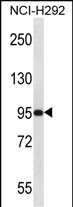
PAPOLG Antibody (C-term) 精选
Affinity Purified Rabbit Polyclonal Antibody (Pab)
- 产品详情
- 实验流程
- 背景知识
Application 
| WB, E |
|---|---|
| Primary Accession | Q9BWT3 |
| Other Accession | NP_075045.2 |
| Reactivity | Human |
| Predicted | Mouse, Rat, Bovine, Canine, Rabbit |
| Host | Rabbit |
| Clonality | Polyclonal |
| Isotype | Rabbit IgG |
| Calculated MW | 82803 Da |
| Antigen Region | 685-714 aa |
| Gene ID | 64895 |
|---|---|
| Other Names | Poly(A) polymerase gamma, PAP-gamma, Neo-poly(A) polymerase, Neo-PAP, Polynucleotide adenylyltransferase gamma, SRP RNA 3'-adenylating enzyme, PAPOLG, PAP2, PAPG |
| Target/Specificity | This PAPOLG antibody is generated from rabbits immunized with a KLH conjugated synthetic peptide between 685-714 amino acids from the C-terminal region of human PAPOLG. |
| Dilution | WB~~1:1000 E~~Use at an assay dependent concentration. |
| Format | Purified polyclonal antibody supplied in PBS with 0.09% (W/V) sodium azide. This antibody is purified through a protein A column, followed by peptide affinity purification. |
| Storage | Maintain refrigerated at 2-8°C for up to 2 weeks. For long term storage store at -20°C in small aliquots to prevent freeze-thaw cycles. |
| Precautions | PAPOLG Antibody (C-term) is for research use only and not for use in diagnostic or therapeutic procedures. |
For Research Use Only. Not For Use In Diagnostic Procedures.
| Name | PAPOLG (HGNC:14982) |
|---|---|
| Synonyms | PAP2, PAPG |
| Function | Responsible for the post-transcriptional adenylation of the 3'-terminal of mRNA precursors and several small RNAs including signal recognition particle (SRP) RNA, nuclear 7SK RNA, U2 small nuclear RNA, and ribosomal 5S RNA. |
| Cellular Location | Nucleus |
| Tissue Location | Expressed predominantly in testis, and weakly in other tissues. Overexpressed in several tumors |
Provided below are standard protocols that you may find useful for product applications.
BACKGROUND
This gene encodes a member of the poly(A) polymerase family which catalyzes template-independent extension of the 3' end of a DNA/RNA strand. This enzyme shares 60% identity to the well characterized poly(A) polymerase II (PAPII) at the amino acid level. These two enzymes have similar organization of structural and functional domains. This enzyme is exclusively localized in the nucleus and exhibits both nonspecific and CPSF (cleavage and polyadenylation specificity factor)/AAUAAA-dependent polyadenylation activity. This gene is located on chromosome 2 in contrast to the PAPII gene, which is located on chromosome 14.
REFERENCES
Lee, Y.S., et al. J. Biol. Chem. 285(36):28105-28116(2010)
Beausoleil, S.A., et al. Proc. Natl. Acad. Sci. U.S.A. 101(33):12130-12135(2004)
Kyriakopoulou, C.B., et al. J. Biol. Chem. 276(36):33504-33511(2001)
Topalian, S.L., et al. Mol. Cell. Biol. 21(16):5614-5623(2001)
Perumal, K., et al. J. Biol. Chem. 276(24):21791-21796(2001)

终于等到您。ABCEPTA(百远生物)抗体产品。
点击下方“我要评价 ”按钮提交您的反馈信息,您的反馈和评价是我们最宝贵的财富之一,
我们将在1-3个工作日内处理您的反馈信息。
如有疑问,联系:0512-88856768 tech-china@abcepta.com.


