


 癌症的基本特征包括细胞增殖、血管生成、迁移、凋亡逃避机制和细胞永生等。找到癌症发生过程中这些通路的关键标记物和对应的抗体用于检测至关重要。
 为您推荐一个泛素化位点预测神器——泛素化分析工具,可以为您的蛋白的泛素化位点作出预测和评分。
 细胞自噬受体图形绘图工具为你的蛋白的细胞受体结合位点作出预测和评分,识别结合到自噬通路中的蛋白是非常重要的,便于让我们理解自噬在正常生理、病理过程中的作用,如发育、细胞分化、神经退化性疾病、压力条件下、感染和癌症。
IL27 Antibody (Center) 精选
Affinity Purified Rabbit Polyclonal Antibody (Pab)
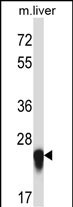
- 产品详情
- 实验流程
- 背景知识
Application 
| WB, E |
|---|---|
| Primary Accession | Q8NEV9 |
| Other Accession | NP_663634.2 |
| Reactivity | Mouse |
| Predicted | Rat, Bovine, Canine |
| Host | Rabbit |
| Clonality | Polyclonal |
| Isotype | Rabbit IgG |
| Calculated MW | 27493 Da |
| Antigen Region | 126-154 aa |
| Gene ID | 246778 |
|---|---|
| Other Names | Interleukin-27 subunit alpha, IL-27 subunit alpha, IL-27-A, IL27-A, Interleukin-30, p28, IL27, IL27A, IL30 |
| Target/Specificity | This IL27 antibody is generated from rabbits immunized with a KLH conjugated synthetic peptide between 126-154 amino acids from the Central region of human IL27. |
| Dilution | WB~~1:1000 E~~Use at an assay dependent concentration. |
| Format | Purified polyclonal antibody supplied in PBS with 0.09% (W/V) sodium azide. This antibody is purified through a protein A column, followed by peptide affinity purification. |
| Storage | Maintain refrigerated at 2-8°C for up to 2 weeks. For long term storage store at -20°C in small aliquots to prevent freeze-thaw cycles. |
| Precautions | IL27 Antibody (Center) is for research use only and not for use in diagnostic or therapeutic procedures. |
For Research Use Only. Not For Use In Diagnostic Procedures.
| Name | IL27 |
|---|---|
| Synonyms | IL27A, IL30 |
| Function | Associates with EBI3 to form the IL-27 interleukin, a heterodimeric cytokine which functions in innate immunity. IL-27 has pro- and anti-inflammatory properties, that can regulate T-helper cell development, suppress T-cell proliferation, stimulate cytotoxic T-cell activity, induce isotype switching in B-cells, and that has diverse effects on innate immune cells. Among its target cells are CD4 T-helper cells which can differentiate in type 1 effector cells (TH1), type 2 effector cells (TH2) and IL17 producing helper T-cells (TH17). It drives rapid clonal expansion of naive but not memory CD4 T-cells. It also strongly synergizes with IL-12 to trigger interferon-gamma/IFN- gamma production of naive CD4 T-cells, binds to the cytokine receptor WSX-1/TCCR which appears to be required but not sufficient for IL-27- mediated signal transduction. IL-27 potentiate the early phase of TH1 response and suppress TH2 and TH17 differentiation. It induces the differentiation of TH1 cells via two distinct pathways, p38 MAPK/TBX21- and ICAM1/ITGAL/ERK-dependent pathways. It also induces STAT1, STAT3, STAT4 and STAT5 phosphorylation and activates TBX21/T-Bet via STAT1 with resulting IL12RB2 up-regulation, an event crucial to TH1 cell commitment. It suppresses the expression of GATA3, the inhibitor TH1 cells development. In CD8 T-cells, it activates STATs as well as GZMB. IL-27 reveals to be a potent inhibitor of TH17 cell development and of IL-17 production. Indeed IL27 alone is also able to inhibit the production of IL17 by CD4 and CD8 T-cells. While IL-27 suppressed the development of pro-inflammatory Th17 cells via STAT1, it inhibits the development of anti-inflammatory inducible regulatory T-cells, iTreg, independently of STAT1. IL-27 also has an effect on cytokine production, it suppresses pro-inflammatory cytokine production such as IL2, IL4, IL5 and IL6 and activates suppressors of cytokine signaling such as SOCS1 and SOCS3. Apart from suppression of cytokine production, IL-27 also antagonizes the effects of some cytokines such as IL6 through direct effects on T-cells. Another important role of IL-27 is its antitumor activity as well as its antiangiogenic activity with activation of production of antiangiogenic chemokines such as IP- 10/CXCL10 and MIG/CXCL9. In vein endothelial cells, it induces IRF1/interferon regulatory factor 1 and increase the expression of MHC class II transactivator/CIITA with resulting up-regulation of major histocompatibility complex class II. IL-27 also demonstrates antiviral activity with inhibitory properties on HIV-1 replication. |
| Cellular Location | Secreted. Note=Does not seem to be secreted without coexpression of EBI3 |
| Tissue Location | Expressed in monocytes and in placenta. |
Provided below are standard protocols that you may find useful for product applications.
BACKGROUND
The protein encoded by this gene is one of the subunits of a heterodimeric cytokine complex. This protein is related to interleukin 12A (IL12A). It interacts with Epstein-Barr virus induced gene 3 (EBI3), a protein similar to interleukin 12B (IL12B), and forms a complex that has been shown to drive rapid expansion of naive but not memory CD4(+) T cells. The complex is also found to synergize strongly with interleukin 12 to trigger interferon gamma (IFNG) production of naive CD4(+) T cells. The biological effects of this cytokine are mediated by the class I cytokine receptor (WSX1/TCRR).
REFERENCES
Li, J.J., et al. J. Immunol. 185(7):4401-4409(2010)
Guzzo, C., et al. J. Biol. Chem. 285(32):24404-24411(2010)
Zhang, J., et al. J. Biol. Chem. 285(28):21269-21281(2010)
Schuurhof, A., et al. Pediatr. Pulmonol. 45(6):608-613(2010)
Morishima, N., et al. J. Biomed. Biotechnol. 2010, 605483 (2010) :

终于等到您。ABCEPTA(百远生物)抗体产品。
点击下方“我要评价 ”按钮提交您的反馈信息,您的反馈和评价是我们最宝贵的财富之一,
我们将在1-3个工作日内处理您的反馈信息。
如有疑问,联系:0512-88856768 tech-china@abcepta.com.


