


 癌症的基本特征包括细胞增殖、血管生成、迁移、凋亡逃避机制和细胞永生等。找到癌症发生过程中这些通路的关键标记物和对应的抗体用于检测至关重要。
 为您推荐一个泛素化位点预测神器——泛素化分析工具,可以为您的蛋白的泛素化位点作出预测和评分。
 细胞自噬受体图形绘图工具为你的蛋白的细胞受体结合位点作出预测和评分,识别结合到自噬通路中的蛋白是非常重要的,便于让我们理解自噬在正常生理、病理过程中的作用,如发育、细胞分化、神经退化性疾病、压力条件下、感染和癌症。
LIN28B Antibody (N-term) 精选
Purified Rabbit Polyclonal Antibody (Pab)
_-_SY5Y.jpg)
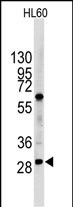
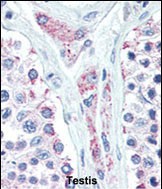
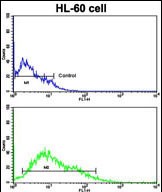
- 产品详情
- 文献引用 : 1
- 实验流程
- 背景知识
Application 
| WB, IHC-P, FC, IF, E |
|---|---|
| Primary Accession | Q6ZN17 |
| Reactivity | Human |
| Host | Rabbit |
| Clonality | Polyclonal |
| Isotype | Rabbit IgG |
| Calculated MW | 27084 Da |
| Antigen Region | 1-30 aa |
| Gene ID | 389421 |
|---|---|
| Other Names | Protein lin-28 homolog B, Lin-28B, LIN28B, CSDD2 |
| Target/Specificity | This LIN28B antibody is generated from rabbits immunized with a KLH conjugated synthetic peptide between 1-30 amino acids from the N-terminal region of human LIN28B. |
| Dilution | WB~~1:1000 IHC-P~~1:100~500 FC~~1:10~50 IF~~1:100 E~~Use at an assay dependent concentration. |
| Format | Purified polyclonal antibody supplied in PBS with 0.09% (W/V) sodium azide. This antibody is prepared by Saturated Ammonium Sulfate (SAS) precipitation followed by dialysis against PBS. |
| Storage | Maintain refrigerated at 2-8°C for up to 2 weeks. For long term storage store at -20°C in small aliquots to prevent freeze-thaw cycles. |
| Precautions | LIN28B Antibody (N-term) is for research use only and not for use in diagnostic or therapeutic procedures. |
For Research Use Only. Not For Use In Diagnostic Procedures.
| Name | LIN28B |
|---|---|
| Synonyms | CSDD2 |
| Function | Suppressor of microRNA (miRNA) biogenesis, including that of let-7 and possibly of miR107, miR-143 and miR-200c. Binds primary let-7 transcripts (pri-let-7), including pri-let-7g and pri-let-7a-1, and sequester them in the nucleolus, away from the microprocessor complex, hence preventing their processing into mature miRNA (PubMed:22118463). Does not act on pri-miR21 (PubMed:22118463). The repression of let-7 expression is required for normal development and contributes to maintain the pluripotent state of embryonic stem cells by preventing let-7-mediated differentiation. When overexpressed, recruits ZCCHC11/TUT4 uridylyltransferase to pre-let-7 transcripts, leading to their terminal uridylation and degradation (PubMed:19703396). This activity might not be relevant in vivo, as LIN28B-mediated inhibition of let-7 miRNA maturation appears to be ZCCHC11-independent (PubMed:22118463). Interaction with target pre-miRNAs occurs via an 5'- GGAG-3' motif in the pre-miRNA terminal loop. Mediates MYC-induced let- 7 repression (By similarity). When overexpressed, isoform 1 stimulates growth of the breast adenocarcinoma cell line MCF-7. Isoform 2 has no effect on cell growth. |
| Cellular Location | Nucleus. Nucleus, nucleolus. Cytoplasm Note=Predominantly nucleolar (PubMed:22118463). In Huh7 cells, predominantly cytoplasmic, with only a subset of cells exhibiting strong nuclear staining; however, the specificity of the polyclonal antibody used in these experiments has not been not documented (PubMed:16971064). |
| Tissue Location | Expressed at high levels in the placenta and, at mucher lower, in testis and fetal liver (PubMed:16971064). Isoform 1 is only detected in placenta and in moderately and poorly differentiated hepatocellular carcinoma cells (at protein level). Isoform 2 is detected in fetal liver, non-tumor liver tissues, as well as well- differentiated tumor tissues (at protein level). Tends to be up- regulated in triple-negative (ER-,PR-,HER2-) breast tumors, as well as in liver, ovarian, and thyroid carcinomas (PubMed:22118463) |

Provided below are standard protocols that you may find useful for product applications.
BACKGROUND
Lin-28 homolog B (LIN28B) is overexpressed in hepatocellular carcinoma. The heterochronic gene lin-28 is a key regulator of developmental timing in the nematode Caenorhabditis elegans. Similar with lin-28 proteins, LIN28B conserves a cold shock domain and a pair of CCHC zinc finger domains. Phylogenetic analysis suggests that they might arise as a result of duplication from an ancestral gene. Overexpression of LIN28B was noted in most HCC cell lines and clinical samples. A short LIN28B isoform was also identified in non-tumor liver tissue and fetal liver. Although predominantly localized in the cytoplasm, LIN28B protein shows cell cycle-dependent nuclear translocation in Huh7 cells. Induced expression of exogenous LIN28B in a tet-off cell line promoted cancer cell proliferation.
REFERENCES
References for protein:
Guo,Y., Gene 384, 51-61 (2006)
References for SY5Y (SH-SY5Y; ATCC#CRL-2266): 1. Ross RA, et al. Coordinate morphological and biochemical interconversion of human neuroblastoma cells. J. Natl. Cancer Inst. 71: 741-749, 1983. [PubMed: 6137586]; 2. Biedler JL, et al. Multiple neurotransmitter synthesis by human neuroblastoma cell lines and clones. Cancer Res. 38: 3751-3757, 1978. [PubMed: 29704].

终于等到您。ABCEPTA(百远生物)抗体产品。
点击下方“我要评价 ”按钮提交您的反馈信息,您的反馈和评价是我们最宝贵的财富之一,
我们将在1-3个工作日内处理您的反馈信息。
如有疑问,联系:0512-88856768 tech-china@abcepta.com.


