


 癌症的基本特征包括细胞增殖、血管生成、迁移、凋亡逃避机制和细胞永生等。找到癌症发生过程中这些通路的关键标记物和对应的抗体用于检测至关重要。
 为您推荐一个泛素化位点预测神器——泛素化分析工具,可以为您的蛋白的泛素化位点作出预测和评分。
 细胞自噬受体图形绘图工具为你的蛋白的细胞受体结合位点作出预测和评分,识别结合到自噬通路中的蛋白是非常重要的,便于让我们理解自噬在正常生理、病理过程中的作用,如发育、细胞分化、神经退化性疾病、压力条件下、感染和癌症。
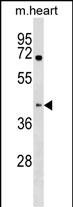
Mouse Khdrbs1 Antibody (C-term) 精选
Affinity Purified Rabbit Polyclonal Antibody (Pab)
- 产品详情
- 文献引用 : 1
- 实验流程
- 背景知识
Application 
| WB, E |
|---|---|
| Primary Accession | Q60749 |
| Other Accession | Q91V33, Q07666, Q8UUW7, NP_035447.3 |
| Reactivity | Mouse |
| Predicted | Chicken, Human, Rat, Bovine, Canine, Rabbit |
| Host | Rabbit |
| Clonality | Polyclonal |
| Isotype | Rabbit IgG |
| Calculated MW | 48371 Da |
| Antigen Region | 414-443 aa |
| Gene ID | 20218 |
|---|---|
| Other Names | KH domain-containing, RNA-binding, signal transduction-associated protein 1, GAP-associated tyrosine phosphoprotein p62, Src-associated in mitosis 68 kDa protein, Sam68, p21 Ras GTPase-activating protein-associated p62, p68, Khdrbs1 {ECO:0000312|MGI:MGI:893579} |
| Target/Specificity | This Mouse Khdrbs1 antibody is generated from rabbits immunized with a KLH conjugated synthetic peptide between 414-443 amino acids from the C-terminal region of mouse Khdrbs1. |
| Dilution | WB~~1:1000 E~~Use at an assay dependent concentration. |
| Format | Purified polyclonal antibody supplied in PBS with 0.09% (W/V) sodium azide. This antibody is purified through a protein A column, followed by peptide affinity purification. |
| Storage | Maintain refrigerated at 2-8°C for up to 2 weeks. For long term storage store at -20°C in small aliquots to prevent freeze-thaw cycles. |
| Precautions | Mouse Khdrbs1 Antibody (C-term) is for research use only and not for use in diagnostic or therapeutic procedures. |
For Research Use Only. Not For Use In Diagnostic Procedures.
| Name | Khdrbs1 {ECO:0000312|MGI:MGI:893579} |
|---|---|
| Function | Recruited and tyrosine phosphorylated by several receptor systems, for example the T-cell, leptin and insulin receptors. Once phosphorylated, functions as an adapter protein in signal transduction cascades by binding to SH2 and SH3 domain-containing proteins. Role in G2-M progression in the cell cycle. Represses CBP-dependent transcriptional activation apparently by competing with other nuclear factors for binding to CBP. Also acts as a putative regulator of mRNA stability and/or translation rates and mediates mRNA nuclear export. Positively regulates the association of constitutive transport element (CTE)-containing mRNA with large polyribosomes and translation initiation. May not be involved in the nucleocytoplasmic export of unspliced (CTE)-containing RNA species. RNA-binding protein that plays a role in the regulation of alternative splicing and influences mRNA splice site selection and exon inclusion. Binds to RNA containing 5'- [AU]UAA-3' as a bipartite motif spaced by more than 15 nucleotides. Binds poly(A). In cooperation with HNRNPA1 modulates alternative splicing of BCL2L1 by promoting splicing toward isoform Bcl-X(S), and of SMN1 (By similarity). Can regulate CD44 alternative splicing in a Ras pathway-dependent manner. Can regulate alternative splicing of NRXN1 and NRXN3 in the laminin G-like domain 6 containing the evolutionary conserved neurexin alternative spliced segment 4 (AS4) involved in neurexin selective targeting to postsynaptic partners. In a neuronal activity-dependent manner cooperates synergistically with KHDRBS2/SLIM-1 in regulation of NRXN1 exon skipping at AS4. The cooperation with KHDRBS2/SLIM-1 is antagonistic for regulation of NXRN3 alternative splicing at AS4 (PubMed:12478298, PubMed:22196734, PubMed:24469635). |
| Cellular Location | Nucleus. Cytoplasm {ECO:0000250|UniProtKB:Q07666}. Membrane Note=Predominantly located in the nucleus but also located partially in the cytoplasm. {ECO:0000250|UniProtKB:Q07666} |
| Tissue Location | In adult cerebellum expressed in most neuronal cell populations, specifically in cerebellar granule cells of the internal granular layer, ROR(alpha)-positive Purkinje cells, internal granular layer and molecular layer interneurons (at protein level) |

Provided below are standard protocols that you may find useful for product applications.
BACKGROUND
Recruited and tyrosine phosphorylated by several receptor systems, for example the T-cell, leptin and insulin receptors. Once phosphorylated, functions as an adapter protein in signal transduction cascades by binding to SH2 and SH3 domain-containing proteins. Role in G2-M progression in the cell cycle. Represses CBP-dependent transcriptional activation apparently by competing with other nuclear factors for binding to CBP. Also acts as a putative regulator of mRNA stability and/or translation rates and mediates mRNA nuclear export.
REFERENCES
Sette, C., et al. J. Androl. 31(1):66-74(2010)
Maroni, P., et al. Mol. Cell. Endocrinol. 309 (1-2), 26-31 (2009) :
Paronetto, M.P., et al. J. Cell Biol. 185(2):235-249(2009)
Huot, M.E., et al. Mol. Cell. Biol. 29(7):1933-1943(2009)
Rajan, P., et al. BMC Cell Biol. 10, 82 (2009) :

终于等到您。ABCEPTA(百远生物)抗体产品。
点击下方“我要评价 ”按钮提交您的反馈信息,您的反馈和评价是我们最宝贵的财富之一,
我们将在1-3个工作日内处理您的反馈信息。
如有疑问,联系:0512-88856768 tech-china@abcepta.com.


