


 癌症的基本特征包括细胞增殖、血管生成、迁移、凋亡逃避机制和细胞永生等。找到癌症发生过程中这些通路的关键标记物和对应的抗体用于检测至关重要。
 为您推荐一个泛素化位点预测神器——泛素化分析工具,可以为您的蛋白的泛素化位点作出预测和评分。
 细胞自噬受体图形绘图工具为你的蛋白的细胞受体结合位点作出预测和评分,识别结合到自噬通路中的蛋白是非常重要的,便于让我们理解自噬在正常生理、病理过程中的作用,如发育、细胞分化、神经退化性疾病、压力条件下、感染和癌症。
RAD23B Antibody (C-term) 精选
Purified Rabbit Polyclonal Antibody (Pab)
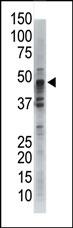
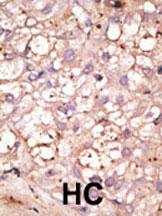
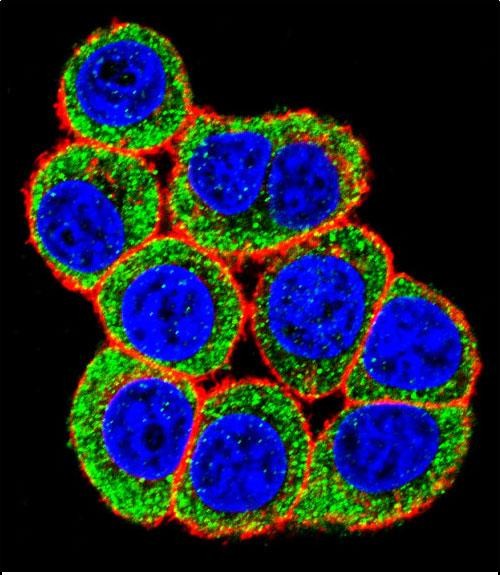
- 产品详情
- 实验流程
- 背景知识
Application 
| WB, IHC-P, IF, E |
|---|---|
| Primary Accession | P54727 |
| Other Accession | Q4KMA2, P54728, Q29RK4, P54726, P54725, A3KMV2 |
| Reactivity | Human |
| Predicted | Mouse, Rat, Bovine |
| Host | Rabbit |
| Clonality | Polyclonal |
| Isotype | Rabbit IgG |
| Calculated MW | 43171 Da |
| Antigen Region | 349-379 aa |
| Gene ID | 5887 |
|---|---|
| Other Names | UV excision repair protein RAD23 homolog B, HR23B, hHR23B, XP-C repair-complementing complex 58 kDa protein, p58, RAD23B |
| Target/Specificity | This RAD23B antibody is generated from rabbits immunized with a KLH conjugated synthetic peptide between 349-379 amino acids from the C-terminal region of human RAD23B. |
| Dilution | WB~~1:1000 IHC-P~~1:100~500 IF~~1:10~50 E~~Use at an assay dependent concentration. |
| Format | Purified polyclonal antibody supplied in PBS with 0.09% (W/V) sodium azide. This antibody is prepared by Saturated Ammonium Sulfate (SAS) precipitation followed by dialysis against PBS. |
| Storage | Maintain refrigerated at 2-8°C for up to 2 weeks. For long term storage store at -20°C in small aliquots to prevent freeze-thaw cycles. |
| Precautions | RAD23B Antibody (C-term) is for research use only and not for use in diagnostic or therapeutic procedures. |
For Research Use Only. Not For Use In Diagnostic Procedures.
| Name | RAD23B (HGNC:9813) |
|---|---|
| Function | Multifunctional protein that participates in histone H4K20 demethylation, DNA repair, ubiquitin-dependent protein degradation and transcriptional regulation (PubMed:10488153, PubMed:32209475, PubMed:9372924). Specifically demethylates mono-, di- and trimethylated 'Lys-20' of histone H4 (H4K20me1, H4K20me2, H4K20me3, respectively) into unmethylated forms. Activates the transcription of coding genes by demethylating H4K20me1 and the transcription of repetitive elements by demethylating H4K20me3 (PubMed:32209475). Multiubiquitin chain receptor involved in modulation of proteasomal degradation. Binds to polyubiquitin chains. Proposed to be capable to bind simultaneously to the 26S proteasome and to polyubiquitinated substrates and to deliver ubiquitinated proteins to the proteasome (PubMed:10488153, PubMed:19435460). May play a role in endoplasmic reticulum-associated degradation (ERAD) of misfolded glycoproteins by association with PNGase and delivering deglycosylated proteins to the proteasome (PubMed:15358861). Involved in global genome nucleotide excision repair (GG-NER) by acting as component of the XPC complex, a nucleotide- excision repair complex that is involved in damage sensing during global genome nucleotide excision repair. In vitro, the XPC:RAD23B dimer is sufficient to initiate NER; it preferentially binds to cisplatin and UV-damaged double-stranded DNA. Recognizes a wide spectrum of damaged DNA characterized by distortions of the DNA helix including single-stranded loops, mismatched bubbles or single-stranded overhangs. Cooperatively with CETN2 appears to stabilize XPC (PubMed:10873465, PubMed:12815074, PubMed:9372924). |
| Cellular Location | Nucleus. Cytoplasm Note=The intracellular distribution is cell cycle dependent. Localized to the nucleus and the cytoplasm during G1 phase. Nuclear levels decrease during S-phase; upon entering mitosis, relocalizes in the cytoplasm without association with chromatin |
| Tissue Location | [Isoform 2]: Highly expressed in the testis and in ejaculated spermatozoa. |
Provided below are standard protocols that you may find useful for product applications.
BACKGROUND
RAD23B is one of two human homologs of Saccharomyces cerevisiae Rad23, a protein involved in the nucleotide excision repair (NER). This protein was found to be a component of the protein complex that specifically complements the NER defect of xeroderma pigmentosum group C (XP-c) cell extracts in vitro. This protein was also shown to interact with, and elevate the nucleotide excision activity of 3-methyladenine-DNA glycosylase (MPG), which suggested a role in DNA damage recognition in base excision repair. This protein contains an N-terminal ubiquitin-like domain, which was reported to interact with 26S proteasome, and thus this protein may be involved in the ubiquitin mediated proteolytic pathway in cells.
REFERENCES
Mueller, T.D., et al., EMBO J. 22(18):4634-4645 (2003).
Mueller, T.D., et al., J. Mol. Biol. 319(5):1243-1255 (2002).
Elder, R.T., et al., Nucleic Acids Res. 30(2):581-591 (2002).
Chen, L., et al., EMBO Rep. 2(10):933-938 (2001).
Gaynor, E.M., et al., Exp. Cell Res. 267(2):243-257 (2001).

终于等到您。ABCEPTA(百远生物)抗体产品。
点击下方“我要评价 ”按钮提交您的反馈信息,您的反馈和评价是我们最宝贵的财富之一,
我们将在1-3个工作日内处理您的反馈信息。
如有疑问,联系:0512-88856768 tech-china@abcepta.com.


