


 癌症的基本特征包括细胞增殖、血管生成、迁移、凋亡逃避机制和细胞永生等。找到癌症发生过程中这些通路的关键标记物和对应的抗体用于检测至关重要。
 为您推荐一个泛素化位点预测神器——泛素化分析工具,可以为您的蛋白的泛素化位点作出预测和评分。
 细胞自噬受体图形绘图工具为你的蛋白的细胞受体结合位点作出预测和评分,识别结合到自噬通路中的蛋白是非常重要的,便于让我们理解自噬在正常生理、病理过程中的作用,如发育、细胞分化、神经退化性疾病、压力条件下、感染和癌症。
DMBT1 Antibody (C-Term) 精选
Purified Rabbit Polyclonal Antibody (Pab)
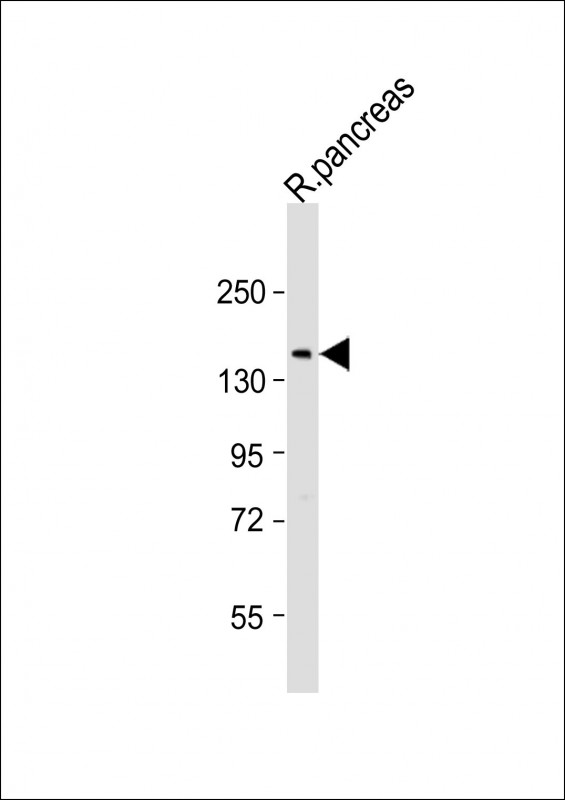
- 产品详情
- 实验流程
- 背景知识
Application 
| WB, E |
|---|---|
| Primary Accession | Q9UGM3 |
| Reactivity | Human, Rat |
| Predicted | Rabbit |
| Host | Rabbit |
| Clonality | polyclonal |
| Isotype | Rabbit IgG |
| Calculated MW | 260735 Da |
| Gene ID | 1755 |
|---|---|
| Other Names | Deleted in malignant brain tumors 1 protein, Glycoprotein 340, Gp-340, Hensin, Salivary agglutinin, SAG, Surfactant pulmonary-associated D-binding protein, DMBT1, GP340 |
| Target/Specificity | This DMBT1 antibody is generated from a rabbit immunized with a KLH conjugated synthetic peptide between 2160-2192 amino acids from human DMBT1. |
| Dilution | WB~~1:2000 E~~Use at an assay dependent concentration. |
| Format | Purified polyclonal antibody supplied in PBS with 0.09% (W/V) sodium azide. This antibody is purified through a protein A column, followed by peptide affinity purification. |
| Storage | Maintain refrigerated at 2-8°C for up to 2 weeks. For long term storage store at -20°C in small aliquots to prevent freeze-thaw cycles. |
| Precautions | DMBT1 Antibody (C-Term) is for research use only and not for use in diagnostic or therapeutic procedures. |
For Research Use Only. Not For Use In Diagnostic Procedures.
| Name | DMBT1 {ECO:0000303|PubMed:28397838, ECO:0000312|HGNC:HGNC:2926} |
|---|---|
| Function | May be considered as a candidate tumor suppressor gene for brain, lung, esophageal, gastric, and colorectal cancers. May play roles in mucosal defense system, cellular immune defense and epithelial differentiation. May play a role as an opsonin receptor for SFTPD and SPAR in macrophage tissues throughout the body, including epithelial cells lining the gastrointestinal tract. May play a role in liver regeneration. May be an important factor in fate decision and differentiation of transit-amplifying ductular (oval) cells within the hepatic lineage. Required for terminal differentiation of columnar epithelial cells during early embryogenesis. May function as a binding protein in saliva for the regulation of taste sensation. Binds to HIV-1 envelope protein and has been shown to both inhibit and facilitate viral transmission. Displays a broad calcium-dependent binding spectrum against both Gram-positive and Gram-negative bacteria, suggesting a role in defense against bacterial pathogens. Binds to a range of poly- sulfated and poly-phosphorylated ligands which may explain its broad bacterial-binding specificity. Inhibits cytoinvasion of S.enterica. Associates with the actin cytoskeleton and is involved in its remodeling during regulated exocytosis. Interacts with pancreatic zymogens in a pH-dependent manner and may act as a Golgi cargo receptor in the regulated secretory pathway of the pancreatic acinar cell. |
| Cellular Location | Secreted. Note=Some isoforms may be membrane-bound. Localized to the lumenal aspect of crypt cells in the small intestine. In the colon, seen in the lumenal aspect of surface epithelial cells. Formed in the ducts of von Ebner gland, and released into the fluid bathing the taste buds contained in the taste papillae (By similarity). |
| Tissue Location | Highly expressed in alveolar and macrophage tissues. In some macrophages, expression is seen on the membrane, and in other macrophages, strongly expressed in the phagosome/phagolysosome compartments. Expressed in lung, trachea, salivary gland, small intestine and stomach. In pancreas, expressed in certain cells of the islets of Langerhans. In digestive tract, confined to tissues with large epithelial surfaces. In intestinal tissue, moderately expressed in epithelial cells of the midcrypts and the crypt base. Expression is significantly elevated in intestinal tissue from patients with inflammatory bowel disease (IBD), particularly in surface epithelial and Paneth cells, but not in IBD patients with mutant NOD2. Present in crypt bases of the duodenum, in crypt tops of the colon, and in collecting ducts of the cortical kidney. Expressed in stratified squamous epithelium of vagina and in outer luminar surface and basilar region of columnar epithelial cells in cervix (at protein level) Isoform 1 is secreted to the lumen of the respiratory tract |
Provided below are standard protocols that you may find useful for product applications.
BACKGROUND
May be considered as a candidate tumor suppressor gene for brain, lung, esophageal, gastric, and colorectal cancers. May play roles in mucosal defense system, cellular immune defense and epithelial differentiation. May play a role as an opsonin receptor for SFTPD and SPAR in macrophage tissues throughout the body, including epithelial cells lining the gastrointestinal tract. May play a role in liver regeneration. May be an important factor in fate decision and differentiation of transit-amplifying ductular (oval) cells within the hepatic lineage. Required for terminal differentiation of columnar epithelial cells during early embryogenesis. May function as a binding protein in saliva for the regulation of taste sensation. Binds to HIV-1 envelope protein and has been shown to both inhibit and facilitate viral transmission. Displays a broad calcium-dependent binding spectrum against both Gram-positive and Gram-negative bacteria, suggesting a role in defense against bacterial pathogens. Binds to a range of poly- sulfated and poly-phosphorylated ligands which may explain its broad bacterial-binding specificity. Inhibits cytoinvasion of S.enterica. Associates with the actin cytoskeleton and is involved in its remodeling during regulated exocytosis. Interacts with pancreatic zymogens in a pH-dependent manner and may act as a Golgi cargo receptor in the regulated secretory pathway of the pancreatic acinar cell.
REFERENCES
Mollenhauer J.,et al.Nat. Genet. 17:32-39(1997).
Holmskov U.,et al.Proc. Natl. Acad. Sci. U.S.A. 96:10794-10799(1999).
Mollenhauer J.,et al.Oncogene 18:6233-6240(1999).
Takeshita H.,et al.Jpn. J. Cancer Res. 90:903-908(1999).
Mollenhauer J.,et al.Cancer Res. 61:8880-8886(2001).

终于等到您。ABCEPTA(百远生物)抗体产品。
点击下方“我要评价 ”按钮提交您的反馈信息,您的反馈和评价是我们最宝贵的财富之一,
我们将在1-3个工作日内处理您的反馈信息。
如有疑问,联系:0512-88856768 tech-china@abcepta.com.


