


 癌症的基本特征包括细胞增殖、血管生成、迁移、凋亡逃避机制和细胞永生等。找到癌症发生过程中这些通路的关键标记物和对应的抗体用于检测至关重要。
 为您推荐一个泛素化位点预测神器——泛素化分析工具,可以为您的蛋白的泛素化位点作出预测和评分。
 细胞自噬受体图形绘图工具为你的蛋白的细胞受体结合位点作出预测和评分,识别结合到自噬通路中的蛋白是非常重要的,便于让我们理解自噬在正常生理、病理过程中的作用,如发育、细胞分化、神经退化性疾病、压力条件下、感染和癌症。
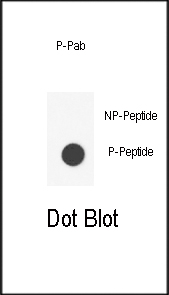
Phospho-IL6ST(Y905) Antibody 精选
Affinity Purified Rabbit Polyclonal Antibody (Pab)
- 产品详情
- 实验流程
- 背景知识
Application 
| DB, E |
|---|---|
| Primary Accession | P40189 |
| Reactivity | Human |
| Host | Rabbit |
| Clonality | Polyclonal |
| Isotype | Rabbit IgG |
| Calculated MW | 103537 Da |
| Gene ID | 3572 |
|---|---|
| Other Names | Interleukin-6 receptor subunit beta, IL-6 receptor subunit beta, IL-6R subunit beta, IL-6R-beta, IL-6RB, CDw130, Interleukin-6 signal transducer, Membrane glycoprotein 130, gp130, Oncostatin-M receptor subunit alpha, CD130, IL6ST |
| Target/Specificity | This IL6ST Antibody is generated from rabbits immunized with a KLH conjugated synthetic phosphopeptide corresponding to amino acid residues surrounding Y905 of human IL6ST. |
| Dilution | DB~~1:500 E~~Use at an assay dependent concentration. |
| Format | Purified polyclonal antibody supplied in PBS with 0.09% (W/V) sodium azide. This antibody is purified through a protein A column, followed by peptide affinity purification. |
| Storage | Maintain refrigerated at 2-8°C for up to 2 weeks. For long term storage store at -20°C in small aliquots to prevent freeze-thaw cycles. |
| Precautions | Phospho-IL6ST(Y905) Antibody is for research use only and not for use in diagnostic or therapeutic procedures. |
For Research Use Only. Not For Use In Diagnostic Procedures.
| Name | IL6ST (HGNC:6021) |
|---|---|
| Function | Functions as a shared signal-transducing subunit not only for IL6 but also for other cytokine receptor complexes, including IL6, LIF, OSM, CNTF, IL11, CTF1, BSF3, MT-RNR2/humanin, CLCF1 and the heterodimeric complex CRLF1-CLCF1 (PubMed:11285233, PubMed:11294841, PubMed:1542794, PubMed:19386761, PubMed:2261637, PubMed:27384491, PubMed:36930708, PubMed:39532904, PubMed:8272873, PubMed:8999038, PubMed:9030543, PubMed:9188471). Engages site 2 of CNTF, CLCF1, LIF, and IL-6, and site 3 of IL27 and IL6 (PubMed:36930708). Initiates signal transmission through three mechanisms (PubMed:11285233, PubMed:11294841, PubMed:1542794, PubMed:19386761, PubMed:19915009, PubMed:2261637, PubMed:23294003). Binding of cytokines, such as IL6 or IL11 to the alpha-chains of their specific cell surface receptor triggers homodimerization of IL6ST/gp130 (PubMed:19915009, PubMed:2261637, PubMed:23294003, PubMed:8637716). In contrast, binding of other IL-6 family cytokines can result in the formation of a IL6ST/gp130 heterodimer with another signal-transducing receptor, such as LIFR or OSMR (PubMed:1542794, PubMed:39532904, PubMed:8999038, PubMed:9030543, PubMed:9188471). Moreover, binding of CNTF or CLCF1 or the heterodimeric complex CRLF1-CLCF1 or MT-RNR2/humanin to the non- signaling receptor CNTFR induces heterodimerization of the IL6ST/gp130 with LIFR or IL27RA/WSX1 (in the case of MT-RNR2/humanin) (PubMed:11285233, PubMed:11294841, PubMed:19386761). Mechanistically, homodimerization or heterodimerization of IL6ST/gp130 activate JAK tyrosine kinases bound to their intracellular domains (PubMed:11294841, PubMed:19915009, PubMed:2261637, PubMed:23294003, PubMed:27384491, PubMed:8272873, PubMed:9030543, PubMed:9188471). These kinases subsequently phosphorylate the homodimer or heterodimer form of IL6ST/gp130 (PubMed:11285233, PubMed:11294841, PubMed:19915009, PubMed:23294003, PubMed:25731159, PubMed:9030543). The tyrosine phosphorylated signaling receptors serve in turn as docking sites for recruitment and activation of signal transducer and activators of transcription (STATs) (PubMed:11285233, PubMed:11294841, PubMed:19386761, PubMed:19915009, PubMed:23294003, PubMed:25731159, PubMed:27384491, PubMed:9030543, PubMed:9188471). The IL6 signaling pathway induces, in parallel, the expression of two cytokine receptor signaling inhibitors, SOCS1 and SOCS3, which inhibit JAK and terminate the activity of the IL6 signaling pathway as a negative feedback loop (By similarity). Also activates the yes-associated protein 1 (YAP) and NOTCH pathways to control inflammation-induced epithelial regeneration, independently of STAT3 (By similarity). Mediates signals which regulate immune response, hematopoiesis, pain control and bone metabolism (By similarity). Has a role in embryonic development (By similarity). Essential for survival of motor and sensory neurons and for differentiation of astrocytes (By similarity). Required for expression of TRPA1 in nociceptive neurons (By similarity). Required for the maintenance of PTH1R expression in the osteoblast lineage and for the stimulation of PTH-induced osteoblast differentiation (By similarity). Required for normal trabecular bone mass and cortical bone composition (By similarity). |
| Cellular Location | [Isoform 1]: Cell membrane; Single-pass type I membrane protein |
| Tissue Location | Found in all the tissues and cell lines examined (PubMed:2261637). Expression not restricted to IL6 responsive cells (PubMed:2261637). |
Provided below are standard protocols that you may find useful for product applications.
BACKGROUND
IL6ST is a signal transducer shared by many cytokines, including interleukin 6 (IL6), ciliary neurotrophic factor (CNTF), leukemia inhibitory factor (LIF), and oncostatin M (OSM). This protein functions as a part of the cytokine receptor complex. The activation of this protein is dependent upon the binding of cytokines to their receptors. vIL6, a protein related to IL6 and encoded by the Kaposi sarcoma-associated herpesvirus, can bypass the interleukin 6 receptor (IL6R) and directly activate this protein.
REFERENCES
Lehmann,U., et.al., J. Biol. Chem. 278 (1), 661-671 (2003)
Novotny-Diermayr,V., et.al., J. Biol. Chem. 277 (51), 49134-49142 (2002)

终于等到您。ABCEPTA(百远生物)抗体产品。
点击下方“我要评价 ”按钮提交您的反馈信息,您的反馈和评价是我们最宝贵的财富之一,
我们将在1-3个工作日内处理您的反馈信息。
如有疑问,联系:0512-88856768 tech-china@abcepta.com.


