


 癌症的基本特征包括细胞增殖、血管生成、迁移、凋亡逃避机制和细胞永生等。找到癌症发生过程中这些通路的关键标记物和对应的抗体用于检测至关重要。
 为您推荐一个泛素化位点预测神器——泛素化分析工具,可以为您的蛋白的泛素化位点作出预测和评分。
 细胞自噬受体图形绘图工具为你的蛋白的细胞受体结合位点作出预测和评分,识别结合到自噬通路中的蛋白是非常重要的,便于让我们理解自噬在正常生理、病理过程中的作用,如发育、细胞分化、神经退化性疾病、压力条件下、感染和癌症。
RANKL/CD254 Rabbit pAb
RANKL/CD254 Rabbit pAb
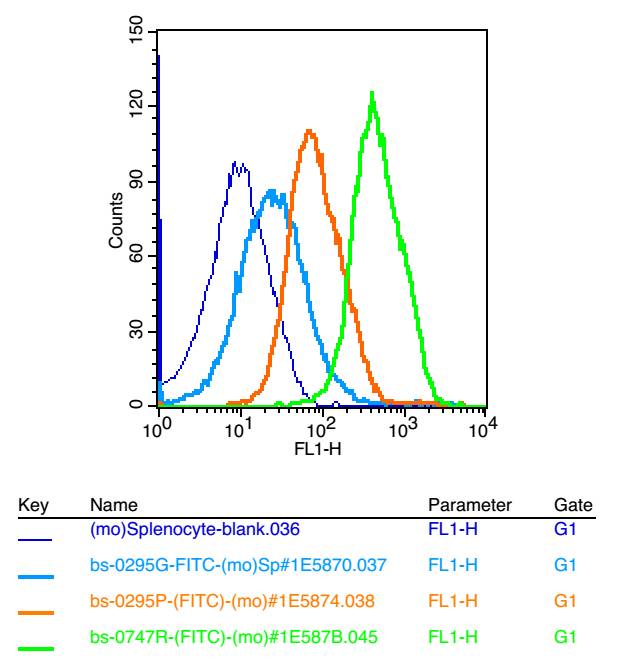
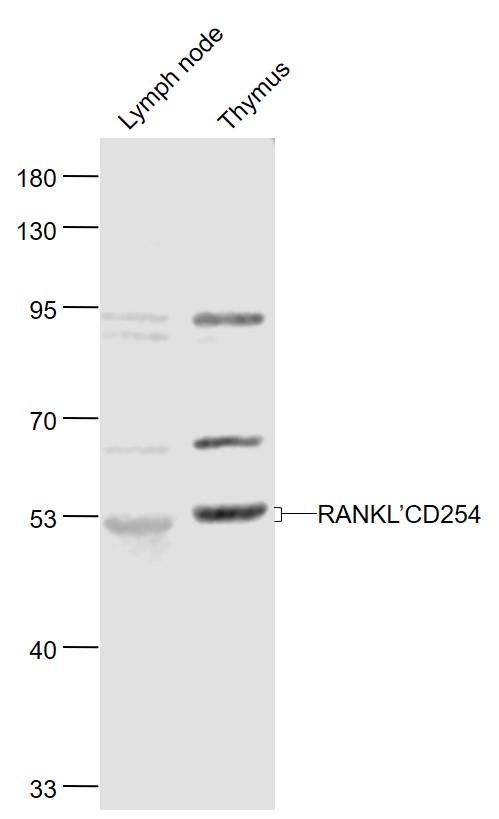
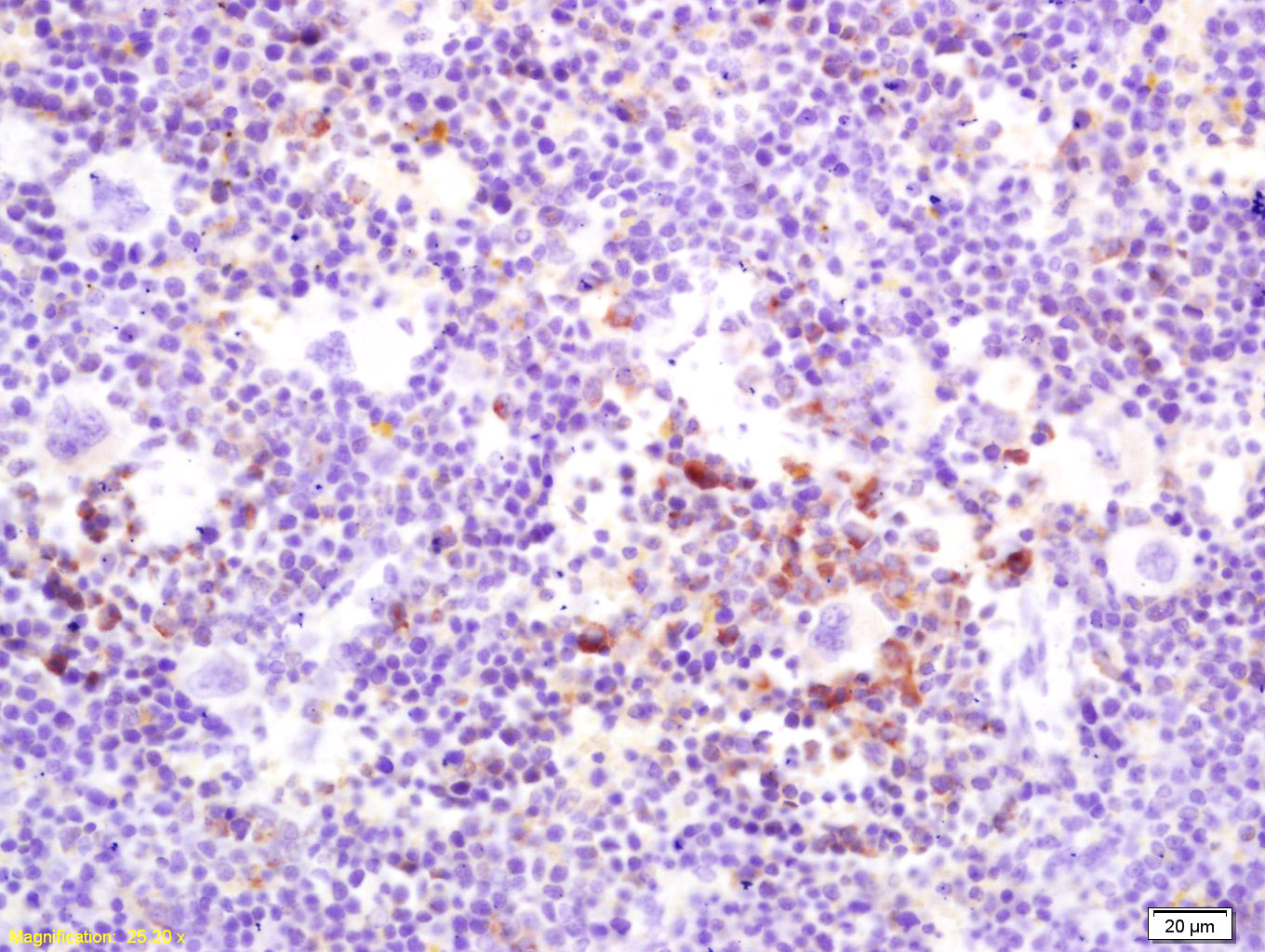
- 产品详情
- 实验流程
- 背景知识
Application 
| WB, IHC-P, IHC-F, IF |
|---|---|
| Primary Accession | O14788 |
| Reactivity | Human, Mouse |
| Predicted | Rat, Dog |
| Host | Rabbit |
| Clonality | Polyclonal |
| Calculated MW | 35478 Da |
| Physical State | Liquid |
| Immunogen | KLH conjugated synthetic peptide derived from human OPGL |
| Epitope Specificity | 210-317/317 |
| Isotype | IgG |
| Purity | affinity purified by Protein A |
| Buffer | 0.01M TBS (pH7.4) with 1% BSA, 0.02% Proclin300 and 50% Glycerol. |
| SUBCELLULAR LOCATION | Cytoplasm; Secreted and Cell membrane. |
| DISEASE | Defects in TNFSF11 are the cause of osteopetrosis autosomal recessive type 2 (OPTB2) [MIM:259710]; also known as osteoclast-poor osteopetrosis. Osteopetrosis is a rare genetic disease characterized by abnormally dense bone, due to defective resorption of immature bone. The disorder occurs in two forms: a severe autosomal recessive form occurring in utero, infancy, or childhood, and a benign autosomal dominant form occurring in adolescence or adulthood. Autosomal recessive osteopetrosis is usually associated with normal or elevated amount of non-functional osteoclasts. OPTB2 is characterized by paucity of osteoclasts, suggesting a molecular defect in osteoclast development. |
| Important Note | This product as supplied is intended for research use only, not for use in human, therapeutic or diagnostic applications. |
| Background Descriptions | This gene encodes a member of the tumor necrosis factor (TNF) cytokine family which is a ligand for osteoprotegerin and functions as a key factor for osteoclast differentiation and activation. This protein was shown to be a dentritic cell survival factor and is involved in the regulation of T cell-dependent immune response. T cell activation was reported to induce expression of this gene and lead to an increase of osteoclastogenesis and bone loss. This protein was shown to activate antiapoptotic kinase AKT/PKB through a signaling complex involving SRC kinase and tumor necrosis factor receptor-associated factor (TRAF) 6, which indicated this protein may have a role in the regulation of cell apoptosis. Targeted disruption of the related gene in mice led to severe osteopetrosis and a lack of osteoclasts. The deficient mice exhibited defects in early differentiation of T and B lymphocytes, and failed to form lobulo-alveolar mammary structures during pregnancy. Two alternatively spliced transcript variants have been found. [provided by RefSeq, Jul 2008]. |
| Gene ID | 8600 |
|---|---|
| Other Names | Tumor necrosis factor ligand superfamily member 11, Osteoclast differentiation factor, ODF, Osteoprotegerin ligand, OPGL, Receptor activator of nuclear factor kappa-B ligand, RANKL, TNF-related activation-induced cytokine, TRANCE, CD254, Tumor necrosis factor ligand superfamily member 11, membrane form, Tumor necrosis factor ligand superfamily member 11, soluble form, TNFSF11, OPGL, RANKL, TRANCE |
| Dilution | WB=1:500-2000,IHC-P=1:100-500,IHC-F=1:100-500,IF=1:100-500,Flow-Cyt=1 µg/Test |
| Storage | Store at -20 °C for one year. Avoid repeated freeze/thaw cycles. When reconstituted in sterile pH 7.4 0.01M PBS or diluent of antibody the antibody is stable for at least two weeks at 2-4 °C. |
For Research Use Only. Not For Use In Diagnostic Procedures.
| Name | TNFSF11 (HGNC:11926) |
|---|---|
| Synonyms | OPGL, RANKL, TRANCE |
| Function | Cytokine that binds to TNFRSF11B/OPG and to TNFRSF11A/RANK. Osteoclast differentiation and activation factor. Augments the ability of dendritic cells to stimulate naive T-cell proliferation. May be an important regulator of interactions between T-cells and dendritic cells and may play a role in the regulation of the T-cell-dependent immune response. May also play an important role in enhanced bone-resorption in humoral hypercalcemia of malignancy (PubMed:22664871). Induces osteoclastogenesis by activating multiple signaling pathways in osteoclast precursor cells, chief among which is induction of long lasting oscillations in the intracellular concentration of Ca (2+) resulting in the activation of NFATC1, which translocates to the nucleus and induces osteoclast-specific gene transcription to allow differentiation of osteoclasts. During osteoclast differentiation, in a TMEM64 and ATP2A2-dependent manner induces activation of CREB1 and mitochondrial ROS generation necessary for proper osteoclast generation (By similarity). |
| Cellular Location | [Isoform 1]: Cell membrane; Single-pass type II membrane protein [Isoform 2]: Cytoplasm. |
| Tissue Location | Highest in the peripheral lymph nodes, weak in spleen, peripheral blood Leukocytes, bone marrow, heart, placenta, skeletal muscle, stomach and thyroid |
Provided below are standard protocols that you may find useful for product applications.
BACKGROUND
This product as supplied is intended for research use only, not for use in human, therapeutic or diagnostic applications.
REFERENCES
Anderson D.M.,et al.Nature 390:175-179(1997).
Lacey D.L.,et al.Cell 93:165-176(1998).
Ikeda T.,et al.Submitted (JUN-2001) to the EMBL/GenBank/DDBJ databases.
Nagai M.,et al.Biochem. Biophys. Res. Commun. 269:532-536(2000).
Wong B.R.,et al.J. Biol. Chem. 272:25190-25194(1997).

终于等到您。ABCEPTA(百远生物)抗体产品。
点击下方“我要评价 ”按钮提交您的反馈信息,您的反馈和评价是我们最宝贵的财富之一,
我们将在1-3个工作日内处理您的反馈信息。
如有疑问,联系:0512-88856768 tech-china@abcepta.com.


