


 癌症的基本特征包括细胞增殖、血管生成、迁移、凋亡逃避机制和细胞永生等。找到癌症发生过程中这些通路的关键标记物和对应的抗体用于检测至关重要。
 为您推荐一个泛素化位点预测神器——泛素化分析工具,可以为您的蛋白的泛素化位点作出预测和评分。
 细胞自噬受体图形绘图工具为你的蛋白的细胞受体结合位点作出预测和评分,识别结合到自噬通路中的蛋白是非常重要的,便于让我们理解自噬在正常生理、病理过程中的作用,如发育、细胞分化、神经退化性疾病、压力条件下、感染和癌症。
Caspase-1 P10 Rabbit pAb
Caspase-1 P10 Rabbit pAb
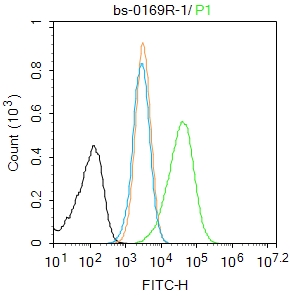
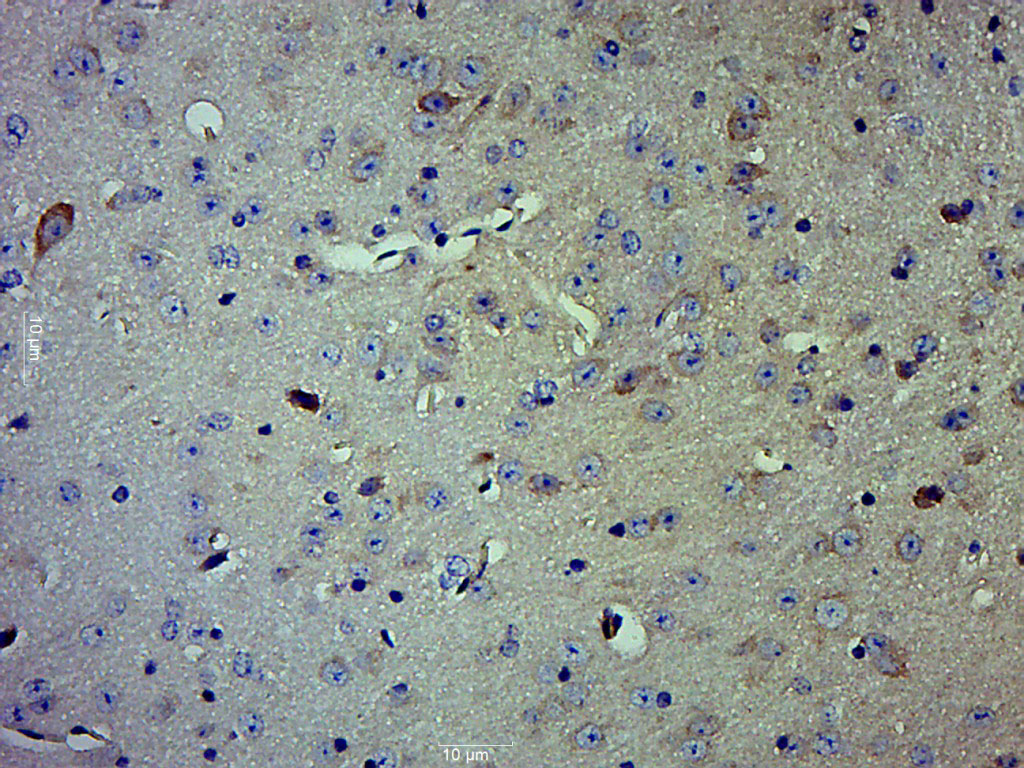
- 产品详情
- 实验流程
- 背景知识
Application 
| IHC-P, IHC-F, IF |
|---|---|
| Primary Accession | P29466 |
| Reactivity | Rat, Human, Mouse |
| Host | Rabbit |
| Clonality | Polyclonal |
| Calculated MW | 45159 Da |
| Physical State | Liquid |
| Immunogen | KLH conjugated synthetic peptide derived from human Caspase-1 |
| Epitope Specificity | 320-404/404 |
| Isotype | IgG |
| Purity | affinity purified by Protein A |
| Buffer | 0.01M TBS (pH7.4) with 1% BSA, 0.02% Proclin300 and 50% Glycerol. |
| SUBCELLULAR LOCATION | Cytoplasm. |
| Important Note | This product as supplied is intended for research use only, not for use in human, therapeutic or diagnostic applications. |
| Background Descriptions | This gene encodes a protein which is a member of the cysteine-aspartic acid protease (caspase) family. Sequential activation of caspases plays a central role in the execution-phase of cell apoptosis. Caspases exist as inactive proenzymes which undergo proteolytic processing at conserved aspartic residues to produce 2 subunits, large and small, that dimerize to form the active enzyme. This gene was identified by its ability to proteolytically cleave and activate the inactive precursor of interleukin-1, a cytokine involved in the processes such as inflammation, septic shock, and wound healing. This gene has been shown to induce cell apoptosis and may function in various developmental stages. Studies of a similar gene in mouse suggest a role in the pathogenesis of Huntington disease. Alternative splicing of this gene results in five transcript variants encoding distinct isoforms. [provided by RefSeq]. |
| Gene ID | 834 |
|---|---|
| Other Names | Caspase-1, CASP-1, 3.4.22.36, Interleukin-1 beta convertase, IL-1BC, Interleukin-1 beta-converting enzyme, ICE, IL-1 beta-converting enzyme, p45, Caspase-1 subunit p20, Caspase-1 subunit p10, CASP1, IL1BC, IL1BCE |
| Dilution | IHC-P=1:100-500,IHC-F=1:100-500,IF=1:100-500,Flow-Cyt=1ug/Test |
| Storage | Store at -20 °C for one year. Avoid repeated freeze/thaw cycles. When reconstituted in sterile pH 7.4 0.01M PBS or diluent of antibody the antibody is stable for at least two weeks at 2-4 °C. |
For Research Use Only. Not For Use In Diagnostic Procedures.
| Name | CASP1 |
|---|---|
| Synonyms | IL1BC, IL1BCE |
| Function | Thiol protease involved in a variety of inflammatory processes by proteolytically cleaving other proteins, such as the precursors of the inflammatory cytokines interleukin-1 beta (IL1B) and interleukin 18 (IL18) as well as the pyroptosis inducer Gasdermin-D (GSDMD), into active mature peptides (PubMed:15326478, PubMed:15498465, PubMed:1574116, PubMed:26375003, PubMed:32051255, PubMed:37993714, PubMed:7876192, PubMed:9334240). Plays a key role in cell immunity as an inflammatory response initiator: once activated through formation of an inflammasome complex, it initiates a pro-inflammatory response through the cleavage of the two inflammatory cytokines IL1B and IL18, releasing the mature cytokines which are involved in a variety of inflammatory processes (PubMed:15326478, PubMed:15498465, PubMed:1574116, PubMed:32051255, PubMed:7876192). Cleaves a tetrapeptide after an Asp residue at position P1 (PubMed:15498465, PubMed:1574116, PubMed:7876192). Also initiates pyroptosis, a programmed lytic cell death pathway, through cleavage of GSDMD (PubMed:26375003). In contrast to cleavage of interleukin IL1B, recognition and cleavage of GSDMD is not strictly dependent on the consensus cleavage site but depends on an exosite interface on CASP1 that recognizes and binds the Gasdermin-D, C-terminal (GSDMD-CT) part (PubMed:32051255, PubMed:32109412, PubMed:32553275). Cleaves and activates CASP7 in response to bacterial infection, promoting plasma membrane repair (PubMed:22464733). Upon inflammasome activation, during DNA virus infection but not RNA virus challenge, controls antiviral immunity through the cleavage of CGAS, rendering it inactive (PubMed:28314590). In apoptotic cells, cleaves SPHK2 which is released from cells and remains enzymatically active extracellularly (PubMed:20197547). |
| Cellular Location | Cytoplasm. Cell membrane |
| Tissue Location | Expressed in larger amounts in spleen and lung. Detected in liver, heart, small intestine, colon, thymus, prostate, skeletal muscle, peripheral blood leukocytes, kidney and testis. No expression in the brain. |
Provided below are standard protocols that you may find useful for product applications.
BACKGROUND
This product as supplied is intended for research use only, not for use in human, therapeutic or diagnostic applications.
REFERENCES
Thornberry N.A.,et al.Nature 356:768-774(1992).
Cerretti D.P.,et al.Science 256:97-100(1992).
Alnemri E.S.,et al.J. Biol. Chem. 270:4312-4317(1995).
Totoki Y.,et al.Submitted (APR-2005) to the EMBL/GenBank/DDBJ databases.
Taylor T.D.,et al.Nature 440:497-500(2006).

终于等到您。ABCEPTA(百远生物)抗体产品。
点击下方“我要评价 ”按钮提交您的反馈信息,您的反馈和评价是我们最宝贵的财富之一,
我们将在1-3个工作日内处理您的反馈信息。
如有疑问,联系:0512-88856768 tech-china@abcepta.com.


