


 癌症的基本特征包括细胞增殖、血管生成、迁移、凋亡逃避机制和细胞永生等。找到癌症发生过程中这些通路的关键标记物和对应的抗体用于检测至关重要。
 为您推荐一个泛素化位点预测神器——泛素化分析工具,可以为您的蛋白的泛素化位点作出预测和评分。
 细胞自噬受体图形绘图工具为你的蛋白的细胞受体结合位点作出预测和评分,识别结合到自噬通路中的蛋白是非常重要的,便于让我们理解自噬在正常生理、病理过程中的作用,如发育、细胞分化、神经退化性疾病、压力条件下、感染和癌症。
KAP1 / TIF1 beta Antibody
Purified Mouse Monoclonal Antibody (Mab)
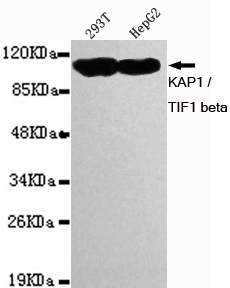
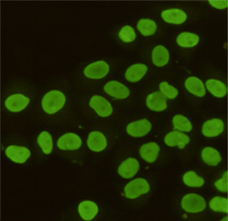
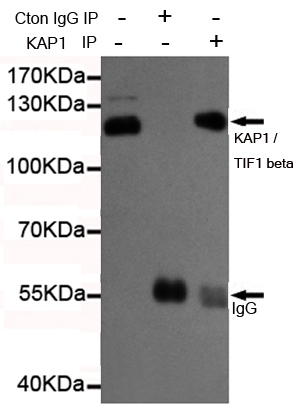
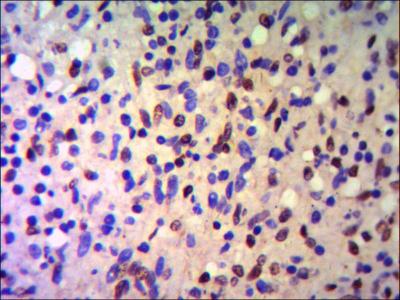
- 产品详情
- 实验流程
- 背景知识
| Primary Accession | Q13263 |
|---|---|
| Host | Mouse |
| Clonality | Monoclonal |
| Isotype | IgG1 |
| Calculated MW | 88550 Da |
| Gene ID | 10155 |
|---|---|
| Other Names | E3 SUMO protein ligase TRIM28;E3 SUMO-protein ligase TRIM28;FLJ29029;KAP 1;KAP-1;KRAB associated protein 1;KRAB interacting protein 1;KRAB-associated protein 1;KRAB-interacting protein 1;KRIP 1;KRIP-1;KRIP1;Nuclear corepressor KAP 1;Nuclear corepressor KAP-1;RING finger protein 96;RNF96;TF1B;TIF1 beta;TIF1-beta;TIF1B;TIF1B_HUMAN; Transcription intermediary factor 1 beta;Transcription intermediary factor 1-beta; TRIM28;Tripartite motif containing 28;tripartite motif containing protein 28;Tripartite motif-containing protein 28. |
| Format | Purified mouse monoclonal in buffer containing 0.1M Tris-Glycine (pH 7.4, 150 mM NaCl) with 0.09% (W/V) sodium azide, 50%,glycerol |
| Storage | Store at 4°C short term. Aliquot and store at -20°C long term. Avoid freeze/thaw cycles. |
For Research Use Only. Not For Use In Diagnostic Procedures.
| Name | TRIM28 (HGNC:16384) |
|---|---|
| Synonyms | KAP1, RNF96, TIF1B |
| Function | E3 SUMO and ubiquitin ligase that plays a pivotal role in embryonic development, genomic imprinting, and maintenance of genomic stability through repression of repetitive and retroviral elements. Also involved in DNA repair, regulation of innate immunity or cellular energy homeostasis. Acts as a scaffold for assembling transcriptional repression complexes containing methyltransferases, histone deacetylases, and chromatin remodelers. Serves as a nuclear corepressor for KRAB domain-containing zinc finger proteins (KRAB-ZFPs), mediating gene silencing by recruiting CHD3, a subunit of the nucleosome remodeling and deacetylation (NuRD) complex, and SETDB1, which methylates histone H3 at 'Lys-9' (H3K9me), leading to heterochromatin formation. In collaboration with SETDB1, is also required for H3K9me3 and silencing of endogenous and introduced retroviruses in a DNA- methylation independent-pathway (By similarity). Functions as a coactivator for CEBPB and NR3C1 (glucocorticoid receptor) in transcriptional activation of ORM1, and as a corepressor for ERBB4. Inhibits E2F1 activity by promoting E2F1-HDAC1 complex formation and preventing E2F1 acetylation. This contributes to CDKN1A/p21(CIP1) regulation and provides a partial backup to suppress E2F1-mediated apoptosis in the absence of RB1. Mediates the nuclear localization of several KRAB-ZFP transcription factors including KOX1, ZNF268, and ZNF300 among others. In association with isoform 2 of ZFP90, is required for the transcriptional repressor activity of FOXP3 and the suppressive function of regulatory T-cells (Treg) (PubMed:23543754). Required to maintain a transcriptionally repressive state of genes in undifferentiated embryonic stem cells (ESCs) (PubMed:24623306). Acts as a corepressor for ZFP568. Beyond its nuclear functions, acts as a positive regulator of type I interferon (IFN-I) signaling by promoting Lys-63-linked ubiquitination of TBK1, facilitating TBK1-IRF3 complex formation (PubMed:38495890). Mediates TRAF6 SUMOylation to regulate its nucleo-cytoplasmic shuttling and modulate activation of the canonical NF-kappa-B signaling pathway (PubMed:39920527). Facilitates SUMOylation of NLRP3, protecting it from 'Lys-48'-linked ubiquitination and proteasomal degradation and thereby enhancing inflammasome activation (PubMed:34373456). |
| Cellular Location | Nucleus. Note=Associated with centromeric heterochromatin during cell differentiation through CBX1 (By similarity). Localizes to sites of DNA damage (PubMed:25593309) {ECO:0000250|UniProtKB:Q62318, ECO:0000269|PubMed:25593309} |
| Tissue Location | Expressed in all tissues tested including spleen, thymus, prostate, testis, ovary, small intestine, colon and peripheral blood leukocytes. |
Provided below are standard protocols that you may find useful for product applications.
BACKGROUND
Nuclear corepressor for KRAB domain-containing zinc finger proteins (KRAB-ZFPs). Mediates gene silencing by recruiting CHD3, a subunit of the nucleosome remodeling and deacetylation (NuRD) complex, and SETDB1 (which specifically methylates histone H3 at 'Lys-9' (H3K9me)) to the promoter regions of KRAB target genes. Enhances transcriptional repression by coordinating the increase in H3K9me, the decrease in histone H3 'Lys-9 and 'Lys-14' acetylation (H3K9ac and H3K14ac, respectively) and the disposition of HP1 proteins to silence gene expression. Recruitment of SETDB1 induces heterochromatinization. May play a role as a coactivator for CEBPB and NR3C1 in the transcriptional activation of ORM1. Also corepressor for ERBB4. Inhibits E2F1 activity by stimulating E2F1-HDAC1 complex formation and inhibiting E2F1 acetylation. May serve as a partial backup to prevent E2F1-mediated apoptosis in the absence of RB1. Important regulator of CDKN1A/p21(CIP1). Has E3 SUMO-protein ligase activity toward itself via its PHD-type zinc finger. Also specifically sumoylates IRF7, thereby inhibiting its transactivation activity. Ubiquitinates p53/TP53 leading to its proteosomal degradation; the function is enhanced by MAGEC2 and MAGEA2, and possibly MAGEA3 and MAGEA6. Mediates the nuclear localization of KOX1, ZNF268 and ZNF300 transcription factors.
REFERENCES
Friedman J.R.,et al.Genes Dev. 10:2067-2078(1996).
Moosmann P.R.,et al.Nucleic Acids Res. 24:4859-4867(1996).
Emison E.S.,et al.Submitted (MAR-1997) to the EMBL/GenBank/DDBJ databases.
Bienvenut W.V.,et al.Submitted (MAY-2006) to UniProtKB.
Bienvenut W.V.,et al.Submitted (JAN-2010) to UniProtKB.

终于等到您。ABCEPTA(百远生物)抗体产品。
点击下方“我要评价 ”按钮提交您的反馈信息,您的反馈和评价是我们最宝贵的财富之一,
我们将在1-3个工作日内处理您的反馈信息。
如有疑问,联系:0512-88856768 tech-china@abcepta.com.


