


 癌症的基本特征包括细胞增殖、血管生成、迁移、凋亡逃避机制和细胞永生等。找到癌症发生过程中这些通路的关键标记物和对应的抗体用于检测至关重要。
 为您推荐一个泛素化位点预测神器——泛素化分析工具,可以为您的蛋白的泛素化位点作出预测和评分。
 细胞自噬受体图形绘图工具为你的蛋白的细胞受体结合位点作出预测和评分,识别结合到自噬通路中的蛋白是非常重要的,便于让我们理解自噬在正常生理、病理过程中的作用,如发育、细胞分化、神经退化性疾病、压力条件下、感染和癌症。
Anti-MC4 Receptor Antibody
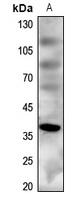
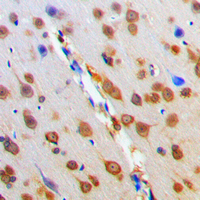
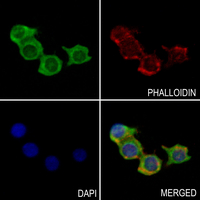
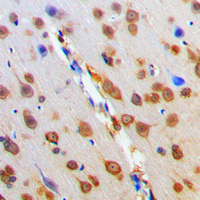
- 产品详情
- 实验流程
Application 
| WB, IHC, IF/IC |
|---|---|
| Primary Accession | P32245 |
| Reactivity | Human, Mouse, Rat, Rabbit, Pig, Bovine, Dog, Sheep, Mk |
| Host | Rabbit |
| Clonality | Polyclonal |
| Calculated MW | 36943 Da |
| Gene ID | 4160 |
|---|---|
| Other Names | Melanocortin receptor 4; MC4-R |
| Target/Specificity | KLH-conjugated synthetic peptide encompassing a sequence within the C-term region of human MC4 Receptor. The exact sequence is proprietary. |
| Dilution | WB~~WB (1/500 - 1/1000) IHC~~1/50 - 1/200 IF/IC~~N/A |
| Format | Liquid in 0.42% Potassium phosphate, 0.87% Sodium chloride, pH 7.3, 30% glycerol, and 0.01% sodium azide. |
| Storage | Store at -20 °C.Stable for 12 months from date of receipt |
For Research Use Only. Not For Use In Diagnostic Procedures.
| Name | MC4R {ECO:0000303|PubMed:29311635, ECO:0000312|HGNC:HGNC:6932} |
|---|---|
| Function | G protein-coupled receptor that binds melanocyte-stimulating hormones (alpha- and beta-MSH) and corticotropin/ACTH, which are peptide products of the POMC precursor (PubMed:12646665, PubMed:14764818, PubMed:25163632, PubMed:32327598, PubMed:33858992, PubMed:8392067). Functions as a central component of the leptin- melanocortin pathway, which is essential for maintaining energy homeostasis (PubMed:32327598, PubMed:33858992). Upon activation, couples to G(s) protein, stimulating adenylate cyclase and the cAMP- dependent signaling pathway, which promotes anorexogenic signaling in the hypothalamus and contributes to a negative energy balance (PubMed:12588803, PubMed:14764818, PubMed:25163632, PubMed:33858992). Regulates food intake: activation by agonists suppresses appetite, whereas the antagonist Agouti-related protein/AGRP precludes agonist- induced signaling, thereby stimulating appetite (PubMed:9311920, PubMed:29311635). Modulates the firing activity of neurons in paraventricular nucleus (PVN) of the hypothalamus via alpha-MSH and AGRP regulation of inwardly rectifying potassium channel KCNJ13 closure, independently of G(s) signaling (PubMed:32327598). In the PVN, also interacts with opsin 3/OPN3, which couples to G(i/o) proteins to inhibit MC4R-mediated cAMP signaling, thereby promoting food intake (PubMed:39951488). In intestinal epithelial cells, contributes to inhibition of hepatic glucose production via nesfatin-1/NUCB2, leading to increased cAMP levels and glucagon-like peptide 1 (GLP-1) secretion (PubMed:39562740). Interaction with MGRN1 displaces the G(s) protein, further decreasing MC4R signaling activity (PubMed:19737927). Also activated by gamma-MSH, though with low potency (PubMed:8392067). |
| Cellular Location | Cell membrane; Multi-pass membrane protein. Cell projection, cilium membrane; Multi-pass membrane protein |
| Tissue Location | Brain, placental, and gut tissues. |
Research Areas
Application Protocols
Provided below are standard protocols that you may find useful for product applications.

终于等到您。ABCEPTA(百远生物)抗体产品。
点击下方“我要评价 ”按钮提交您的反馈信息,您的反馈和评价是我们最宝贵的财富之一,
我们将在1-3个工作日内处理您的反馈信息。
如有疑问,联系:0512-88856768 tech-china@abcepta.com.
¥ 1,250.00
Cat# AP53688


