


 癌症的基本特征包括细胞增殖、血管生成、迁移、凋亡逃避机制和细胞永生等。找到癌症发生过程中这些通路的关键标记物和对应的抗体用于检测至关重要。
 为您推荐一个泛素化位点预测神器——泛素化分析工具,可以为您的蛋白的泛素化位点作出预测和评分。
 细胞自噬受体图形绘图工具为你的蛋白的细胞受体结合位点作出预测和评分,识别结合到自噬通路中的蛋白是非常重要的,便于让我们理解自噬在正常生理、病理过程中的作用,如发育、细胞分化、神经退化性疾病、压力条件下、感染和癌症。
KIBRA Rabbit pAb
KIBRA Rabbit pAb
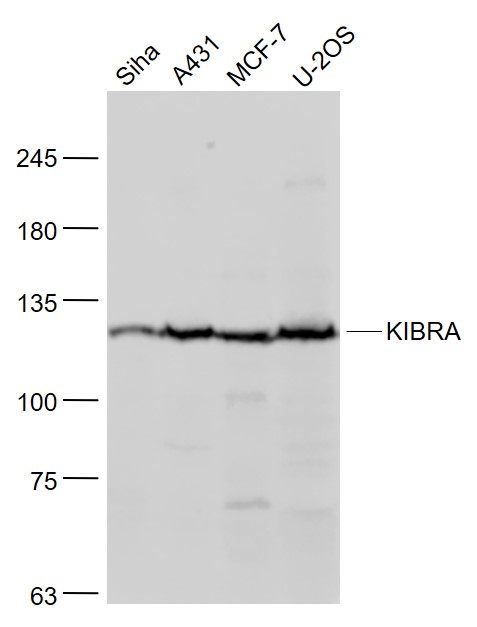
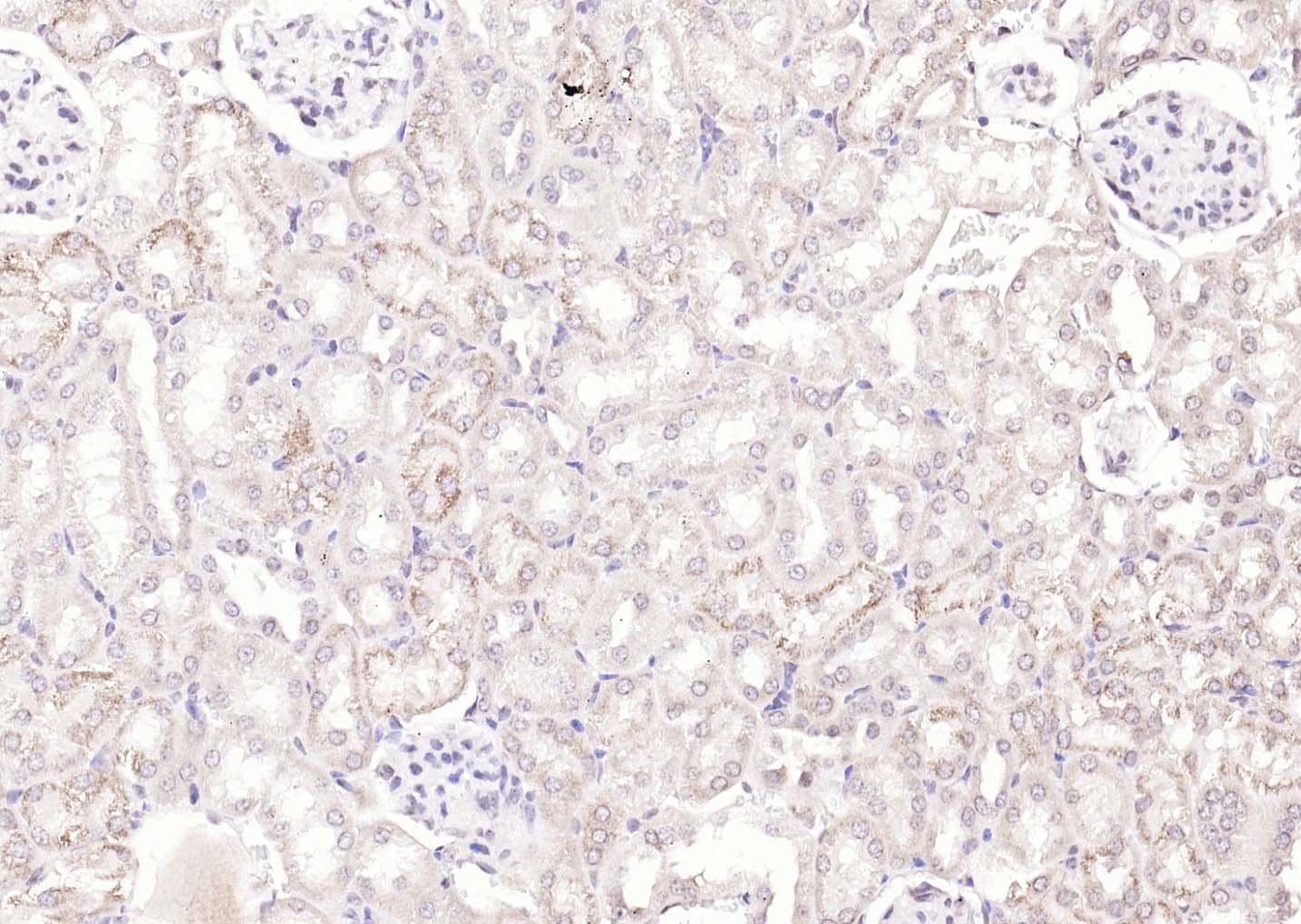
- 产品详情
- 实验流程
- 背景知识
Application 
| WB, IHC-P, IHC-F, IF |
|---|---|
| Primary Accession | Q8IX03 |
| Reactivity | Rat, Human, Mouse |
| Predicted | Dog, Rabbit, Sheep |
| Host | Rabbit |
| Clonality | Polyclonal |
| Calculated MW | 125301 Da |
| Physical State | Liquid |
| Immunogen | KLH conjugated synthetic peptide derived from human KIBRA |
| Epitope Specificity | 351-450/1113 |
| Isotype | IgG |
| Purity | affinity purified by Protein A |
| Buffer | 0.01M TBS (pH7.4) with 1% BSA, 0.02% Proclin300 and 50% Glycerol. |
| SUBCELLULAR LOCATION | Cytoplasm. Cytoplasm, perinuclear region. Nucleus. Cell projection, ruffle membrane. Note=Co-localizes with PRKCZ in the perinuclear region. |
| Important Note | This product as supplied is intended for research use only, not for use in human, therapeutic or diagnostic applications. |
| Background Descriptions | KIBRA is a 1,113 amino acid protein that localizes to the cytoplasm and contains one C2 domain and two WW domains. Expressed in colon, brain, kidney and heart tissue, KIBRA is thought to interact with dendrin and, via this interaction, may play a role in collagen-induced signaling. Additionally, KIBRA, which exists as multiple alternatively spliced isoforms, is involved in memory performance and in the pathogenesis of Alzheimer's disease. The gene encoding KIBRA maps to human chromosome 5, which contains 181 million base pairs and comprises nearly 6% of the human genome. Deletion of the p arm of chromosome 5 leads to Cri du chat syndrome, while deletion of the q arm or of chromosome 5 altogether is common in therapy-related acute myelogenous leukemias and myelodysplastic syndrome. |
| Gene ID | 23286 |
|---|---|
| Other Names | Protein KIBRA, HBeAg-binding protein 3, Kidney and brain protein, KIBRA, WW domain-containing protein 1, WWC1 (HGNC:29435), KIAA0869, KIBRA |
| Dilution | WB=1:500-2000,IHC-P=1:100-500,IHC-F=1:100-500,IF=1:100-500 |
| Storage | Store at -20 °C for one year. Avoid repeated freeze/thaw cycles. When reconstituted in sterile pH 7.4 0.01M PBS or diluent of antibody the antibody is stable for at least two weeks at 2-4 °C. |
For Research Use Only. Not For Use In Diagnostic Procedures.
| Name | WWC1 (HGNC:29435) |
|---|---|
| Synonyms | KIAA0869, KIBRA |
| Function | Regulator of the Hippo signaling pathway, also known as the Salvador-Warts-Hippo (SWH) pathway (PubMed:24682284). Enhances phosphorylation of LATS1 and YAP1 and negatively regulates cell proliferation and organ growth due to a suppression of the transcriptional activity of YAP1, the major effector of the Hippo pathway (PubMed:24682284). Along with NF2 can synergistically induce the phosphorylation of LATS1 and LATS2 and function in the regulation of Hippo signaling pathway (PubMed:20159598). Acts as a transcriptional coactivator of ESR1 which plays an essential role in DYNLL1-mediated ESR1 transactivation (PubMed:16684779). Regulates collagen-stimulated activation of the ERK/MAPK cascade (PubMed:18190796). Modulates directional migration of podocytes (PubMed:18596123). Plays a role in cognition and memory performance (PubMed:18672031). Plays an important role in regulating AMPA-selective glutamate receptors (AMPARs) trafficking underlying synaptic plasticity and learning (By similarity). |
| Cellular Location | Cytoplasm, perinuclear region. Nucleus. Cell projection, ruffle membrane. Cytoplasm, cytosol. Note=Colocalizes with PRKCZ in the perinuclear region |
| Tissue Location | Expressed in mammary epithelial cells and breast cancer cell lines. Found in the luminal epithelium surrounding the ducts in the normal breast. In the brain, expressed in somatodendritic compartment of neurons in the cortex and hippocampus and in the cerebellum it is found in the Purkinje cells and some granule cells (at protein level). Detected in brain, heart, colon and kidney. In the kidney, expressed in glomerular podocytes, in some tubules and in the collecting duct. |
Research Areas
Application Protocols
Provided below are standard protocols that you may find useful for product applications.
BACKGROUND
This product as supplied is intended for research use only, not for use in human, therapeutic or diagnostic applications.

终于等到您。ABCEPTA(百远生物)抗体产品。
点击下方“我要评价 ”按钮提交您的反馈信息,您的反馈和评价是我们最宝贵的财富之一,
我们将在1-3个工作日内处理您的反馈信息。
如有疑问,联系:0512-88856768 tech-china@abcepta.com.


