


 癌症的基本特征包括细胞增殖、血管生成、迁移、凋亡逃避机制和细胞永生等。找到癌症发生过程中这些通路的关键标记物和对应的抗体用于检测至关重要。
 为您推荐一个泛素化位点预测神器——泛素化分析工具,可以为您的蛋白的泛素化位点作出预测和评分。
 细胞自噬受体图形绘图工具为你的蛋白的细胞受体结合位点作出预测和评分,识别结合到自噬通路中的蛋白是非常重要的,便于让我们理解自噬在正常生理、病理过程中的作用,如发育、细胞分化、神经退化性疾病、压力条件下、感染和癌症。
KCNQ2 Rabbit pAb
KCNQ2 Rabbit pAb
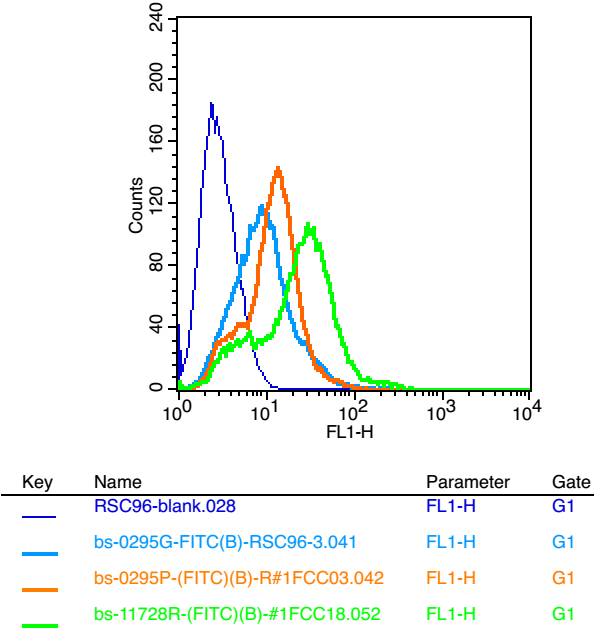
- 产品详情
- 实验流程
- 背景知识
| Primary Accession | O43526 |
|---|---|
| Reactivity | Rat |
| Predicted | Dog, Human, Mouse, Horse, Sheep |
| Host | Rabbit |
| Clonality | Polyclonal |
| Calculated MW | 95848 Da |
| Physical State | Liquid |
| Immunogen | KLH conjugated synthetic peptide derived from human KCNQ2 |
| Epitope Specificity | 91-150/872 |
| Isotype | IgG |
| Purity | affinity purified by Protein A |
| Buffer | 0.01M TBS (pH7.4) with 1% BSA, 0.02% Proclin300 and 50% Glycerol. |
| SUBCELLULAR LOCATION | Membrane; Multi-pass membrane protein. |
| DISEASE | Defects in KCNQ2 are the cause of benign familial neonatal seizures type 1 (BFNS1) [MIM:121200]. A disorder characterized by clusters of seizures occurring in the first days of life. Most patients have spontaneous remission by 12 months of age and show normal psychomotor development. Some rare cases manifest an atypical severe phenotype associated with epileptic encephalopathy and psychomotor retardation. The disorder is distinguished from benign familial infantile seizures by an earlier age at onset. In some patients, neonatal convulsions are followed later in life by myokymia, a benign condition characterized by spontaneous involuntary contractions of skeletal muscles fiber groups that can be observed as vermiform movement of the overlying skin. Electromyography typically shows continuous motor unit activity with spontaneous oligo- and multiplet-discharges of high intraburst frequency (myokymic discharges). Some patients may have isolated myokymia. Defects in KCNQ2 are the cause of epileptic encephalopathy early infantile type 7 (EIEE7) [MIM:613720]. EIEE7 is an autosomal dominant seizure disorder characterized by infantile onset of refractory seizures with resultant delayed neurologic development and persistent neurologic abnormalities. |
| Important Note | This product as supplied is intended for research use only, not for use in human, therapeutic or diagnostic applications. |
| Background Descriptions | Epilepsy affects about 0.5% of the world’s population and has a large genetic component. Epilepsy results from an electrical hyperexcitability in the central nervous system. Potassium channels are important regulators of electrical signaling, determining the firing properties and responsiveness of a variety of neurons. Benign familial neonatal convulsions (BFNC), an autosomal dominant epilepsy of infancy, has been shown to be caused by mutations in the KCNQ2 or the KCNQ3 potassium channel genes. KCNQ2 and KCNQ3 are voltage-gated potassium channel proteins with six putative transmembrane domains. Both proteins display a broad distribution within the brain, with expression patterns that largely overlap. |
| Gene ID | 3785 |
|---|---|
| Other Names | Potassium voltage-gated channel subfamily KQT member 2, KQT-like 2, Neuroblastoma-specific potassium channel subunit alpha KvLQT2, Voltage-gated potassium channel subunit Kv7.2, KCNQ2 (HGNC:6296) |
| Dilution | Flow-Cyt=3 µg/Test |
| Storage | Store at -20 °C for one year. Avoid repeated freeze/thaw cycles. When reconstituted in sterile pH 7.4 0.01M PBS or diluent of antibody the antibody is stable for at least two weeks at 2-4 °C. |
For Research Use Only. Not For Use In Diagnostic Procedures.
| Name | KCNQ2 (HGNC:6296) |
|---|---|
| Function | Pore-forming subunit of the voltage-gated potassium (Kv) M- channel which is responsible for the M-current, a key controller of neuronal excitability (PubMed:24277843, PubMed:28793216, PubMed:9836639). M-channel is composed of pore-forming subunits KCNQ2 and KCNQ3 assembled as heterotetramers (PubMed:10781098, PubMed:14534157, PubMed:32884139, PubMed:37857637, PubMed:9836639). The native M-current has a slowly activating and deactivating potassium conductance which plays a critical role in determining the subthreshold electrical excitability of neurons as well as the responsiveness to synaptic inputs (PubMed:14534157, PubMed:28793216, PubMed:9836639). KCNQ2-KCNQ3 M-channel is selectively permeable in vitro to other cations besides potassium, in decreasing order of affinity K(+) > Rb(+) > Cs(+) > Na(+) (PubMed:28793216). M-channel association with SLC5A3/SMIT1 alters channel ion selectivity, increasing Na(+) and Cs(+) permeation relative to K(+) (PubMed:28793216). Suppressed by activation of the muscarinic acetylcholine receptor CHRM1 (PubMed:10684873, PubMed:10713961). |
| Cellular Location | Cell membrane; Multi-pass membrane protein |
| Tissue Location | In adult and fetal brain. Highly expressed in areas containing neuronal cell bodies, low in spinal cord and corpus callosum. Isoform 2 is preferentially expressed in differentiated neurons. Isoform 6 is prominent in fetal brain, undifferentiated neuroblastoma cells and brain tumors. |
Research Areas
Application Protocols
Provided below are standard protocols that you may find useful for product applications.
BACKGROUND
This product as supplied is intended for research use only, not for use in human, therapeutic or diagnostic applications.

终于等到您。ABCEPTA(百远生物)抗体产品。
点击下方“我要评价 ”按钮提交您的反馈信息,您的反馈和评价是我们最宝贵的财富之一,
我们将在1-3个工作日内处理您的反馈信息。
如有疑问,联系:0512-88856768 tech-china@abcepta.com.


