


 癌症的基本特征包括细胞增殖、血管生成、迁移、凋亡逃避机制和细胞永生等。找到癌症发生过程中这些通路的关键标记物和对应的抗体用于检测至关重要。
 为您推荐一个泛素化位点预测神器——泛素化分析工具,可以为您的蛋白的泛素化位点作出预测和评分。
 细胞自噬受体图形绘图工具为你的蛋白的细胞受体结合位点作出预测和评分,识别结合到自噬通路中的蛋白是非常重要的,便于让我们理解自噬在正常生理、病理过程中的作用,如发育、细胞分化、神经退化性疾病、压力条件下、感染和癌症。
C17orf87 Rabbit pAb
C17orf87 Rabbit pAb
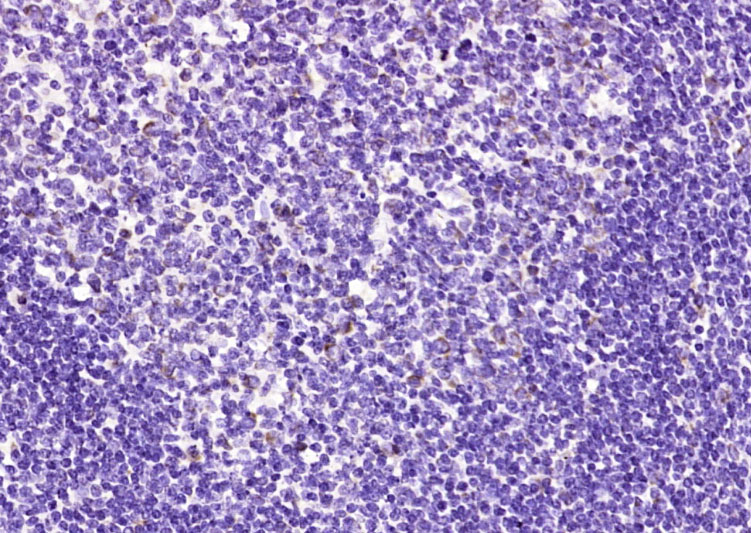
- 产品详情
- 实验流程
- 背景知识
Application 
| IHC-P, IHC-F, IF |
|---|---|
| Primary Accession | Q6UWF3 |
| Reactivity | Human |
| Host | Rabbit |
| Clonality | Polyclonal |
| Calculated MW | 16618 Da |
| Physical State | Liquid |
| Immunogen | KLH conjugated synthetic peptide derived from human C17orf87 |
| Epitope Specificity | 1-100/145 |
| Isotype | IgG |
| Purity | affinity purified by Protein A |
| Buffer | 0.01M TBS (pH7.4) with 1% BSA, 0.02% Proclin300 and 50% Glycerol. |
| SUBCELLULAR LOCATION | Membrane. |
| Important Note | This product as supplied is intended for research use only, not for use in human, therapeutic or diagnostic applications. |
| Background Descriptions | C17orf87 (chromosome 17 open reading frame 87) is a 145 amino acid protein that is encoded by a gene mapping to human chromosome 17. Chromosome 17 makes up over 2.5% of the human genome with about 81 million bases encoding over 1,200 genes. Two key tumor suppressor genes are associated with chromosome 17, namely, p53 and BRCA1. Tumor suppressor p53 is necessary for maintenance of cellular genetic integrity by moderating cell fate through DNA repair versus cell death. Malfunction or loss of p53 expression is associated with malignant cell growth and Li-Fraumeni syndrome. Like p53, BRCA1 is directly involved in DNA repair, specifically it is recognized as a genetic determinant of early onset breast cancer and predisposition to cancers of the ovary, colon, prostate gland and fallopian tubes. Chromosome 17 is also linked to neurofibromatosis, a condition characterized by neural and epidermal lesions, and dysregulated Schwann cell growth. Alexander disease, Birt-Hogg-Dube syndrome and Canavan disease are also associated with chromosome 17. |
| Gene ID | 388325 |
|---|---|
| Other Names | SLP adapter and CSK-interacting membrane protein, SLP65/SLP76, Csk-interacting membrane protein, SCIMP, C17orf87 |
| Dilution | IHC-P=1:100-500,IHC-F=1:100-500,IF=1:100-500 |
| Storage | Store at -20 °C for one year. Avoid repeated freeze/thaw cycles. When reconstituted in sterile pH 7.4 0.01M PBS or diluent of antibody the antibody is stable for at least two weeks at 2-4 °C. |
For Research Use Only. Not For Use In Diagnostic Procedures.
| Name | SCIMP |
|---|---|
| Synonyms | C17orf87 |
| Function | Lipid tetraspanin-associated transmembrane adapter/mediator that acts as a scaffold for Src-family kinases and other signaling proteins in immune cells (PubMed:21930792). It is involved in major histocompatibility complex class II (MHC-II) signaling transduction in B cells, where it is required in generating the calcium response and enhancing ERK activity upon MHC-II stimulation (PubMed:21930792). In dendritic cells, it is involved in sustaining CLEC7A/DECTIN1 signaling after CLEC7A activation by fungal beta-glucans (By similarity). It also acts as an agonist-inducible signaling adapter for TLR1, TLR2, TLR3, TLR4, and TLR7 by selectively enabling the expression of pro- inflammatory cytokines IL6 and IL12B in macrophages and acting as a scaffold for phosphorylation of Toll-like receptors by Src-family kinases (By similarity). |
| Cellular Location | Cell membrane; Single-pass membrane protein. Cell membrane; Lipid-anchor. Cytoplasmic vesicle, phagosome {ECO:0000250|UniProtKB:Q3UU41}. Cell projection, ruffle {ECO:0000250|UniProtKB:Q3UU41}. Cell projection, filopodium {ECO:0000250|UniProtKB:Q3UU41}. Note=Together with MHC-II, associates with lipid-enriched microdomains called tetraspanin-enriched microdomains (TEMs) (PubMed:21930792). Rapidly translocates into immunological synapse (IS) at cell-cell contacts between antigen- presenting cells (APCs) and T-cells (PubMed:21930792). Colocalized with tetraspanins CD37, CD53, and CD81 at the uropod (PubMed:21930792) Present at regions of cell-cell contacts but also at the leading edge of migrating cells (PubMed:21930792). Localizes to phagosomes in dendritic cells after exposure to particulate beta-glucan (By similarity). {ECO:0000250|UniProtKB:Q3UU41, ECO:0000269|PubMed:21930792} |
| Tissue Location | Expressed in antigen-presenting cells, like peripheral blood leukocytes and monocyte-derived dendritic cells (MDDC) (at protein level) (PubMed:21930792). Highly expressed in lymph nodes and spleen. Expressed in antigen-presenting cells (PubMed:21930792) Faintly expressed in the majority of nonimmune system tissues (PubMed:21930792). |
Research Areas
Application Protocols
Provided below are standard protocols that you may find useful for product applications.
BACKGROUND
This product as supplied is intended for research use only, not for use in human, therapeutic or diagnostic applications.

终于等到您。ABCEPTA(百远生物)抗体产品。
点击下方“我要评价 ”按钮提交您的反馈信息,您的反馈和评价是我们最宝贵的财富之一,
我们将在1-3个工作日内处理您的反馈信息。
如有疑问,联系:0512-88856768 tech-china@abcepta.com.


