


 癌症的基本特征包括细胞增殖、血管生成、迁移、凋亡逃避机制和细胞永生等。找到癌症发生过程中这些通路的关键标记物和对应的抗体用于检测至关重要。
 为您推荐一个泛素化位点预测神器——泛素化分析工具,可以为您的蛋白的泛素化位点作出预测和评分。
 细胞自噬受体图形绘图工具为你的蛋白的细胞受体结合位点作出预测和评分,识别结合到自噬通路中的蛋白是非常重要的,便于让我们理解自噬在正常生理、病理过程中的作用,如发育、细胞分化、神经退化性疾病、压力条件下、感染和癌症。
C19orf57 Rabbit pAb
C19orf57 Rabbit pAb
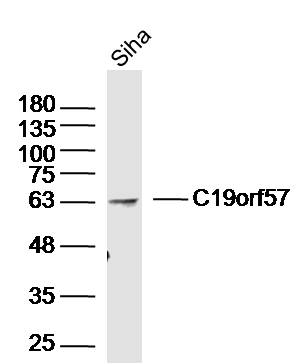
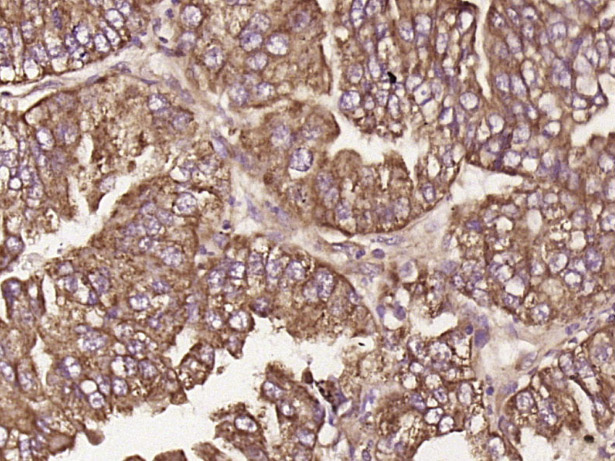
- 产品详情
- 实验流程
- 背景知识
Application 
| WB, IHC-P, IHC-F, IF |
|---|---|
| Primary Accession | Q0VDD7 |
| Reactivity | Human |
| Host | Rabbit |
| Clonality | Polyclonal |
| Calculated MW | 69556 Da |
| Physical State | Liquid |
| Immunogen | KLH conjugated synthetic peptide derived from human C19orf57 |
| Epitope Specificity | 1-100/668 |
| Isotype | IgG |
| Purity | affinity purified by Protein A |
| Buffer | 0.01M TBS (pH7.4) with 1% BSA, 0.02% Proclin300 and 50% Glycerol. |
| Important Note | This product as supplied is intended for research use only, not for use in human, therapeutic or diagnostic applications. |
| Background Descriptions | C19orf57 is a 668 amino acid protein that exists as two alternatively spliced isoforms and are encoded by a gene located on human chromosome 19. Chromosome 19 consists of approximately 63 million bases and makes up over 2% of human genomic DNA. Chromosome 19 includes a diversity of interesting genes and is recognized for having the greatest gene density of the human chromosomes. It is the genetic home for a number of immunoglobulin superfamily members including the killer cell and leukocyte Ig-like receptors, a number of ICAMs, the CEACAM and PSG family, and Fcα receptors. Key genes for eye color and hair color also map to chromosome 19. Peutz-Jeghers syndrome, spinocerebellar ataxia type 6, the stroke disorder CADASIL, hypercholesterolemia and insulin-dependent diabetes have been linked to chromosome 19. Translocations with chromosome 19 and chromosome 14 can be seen in some lymphoproliferative disorders and typically involve the proto-oncogene BCL3. |
| Gene ID | 79173 |
|---|---|
| Other Names | Break repair meiotic recombinase recruitment factor 1, Pre-T/NK cell-associated protein 3B3, BRME1 (HGNC:28153), C19orf57 |
| Dilution | WB=1:500-2000,IHC-P=1:100-500,IHC-F=1:100-500,IF=1:100-500 |
| Storage | Store at -20 °C for one year. Avoid repeated freeze/thaw cycles. When reconstituted in sterile pH 7.4 0.01M PBS or diluent of antibody the antibody is stable for at least two weeks at 2-4 °C. |
For Research Use Only. Not For Use In Diagnostic Procedures.
| Name | BRME1 (HGNC:28153) |
|---|---|
| Synonyms | C19orf57 |
| Function | Meiotic recombination factor component of recombination bridges involved in meiotic double-strand break repair. Modulates the localization of recombinases DMC1:RAD51 to meiotic double-strand break (DSB) sites through the interaction with and stabilization of the BRCA2:HSF2BP complex during meiotic recombination. Indispensable for the DSB repair, homologous synapsis, and crossover formation that are needed for progression past metaphase I, is essential for spermatogenesis and male fertility. |
| Cellular Location | Chromosome {ECO:0000250|UniProtKB:Q6DIA7}. Note=During meiosis, recruited to chromosomes and localizes on recombination sites in a double-strand break-dependent manner. First appears on the chromosome axis at leptotene. Along with the progression of meiotic recombination, released from the axis to form bridge-like structures linking homolog axes before they are synapsed. Finally, located between synapsed homolog axes and on the synaptonemal complex (SC). {ECO:0000250|UniProtKB:Q6DIA7} |
Research Areas
Application Protocols
Provided below are standard protocols that you may find useful for product applications.
BACKGROUND
This product as supplied is intended for research use only, not for use in human, therapeutic or diagnostic applications.

终于等到您。ABCEPTA(百远生物)抗体产品。
点击下方“我要评价 ”按钮提交您的反馈信息,您的反馈和评价是我们最宝贵的财富之一,
我们将在1-3个工作日内处理您的反馈信息。
如有疑问,联系:0512-88856768 tech-china@abcepta.com.


