


 癌症的基本特征包括细胞增殖、血管生成、迁移、凋亡逃避机制和细胞永生等。找到癌症发生过程中这些通路的关键标记物和对应的抗体用于检测至关重要。
 为您推荐一个泛素化位点预测神器——泛素化分析工具,可以为您的蛋白的泛素化位点作出预测和评分。
 细胞自噬受体图形绘图工具为你的蛋白的细胞受体结合位点作出预测和评分,识别结合到自噬通路中的蛋白是非常重要的,便于让我们理解自噬在正常生理、病理过程中的作用,如发育、细胞分化、神经退化性疾病、压力条件下、感染和癌症。
UMOD Rabbit pAb
UMOD Rabbit pAb
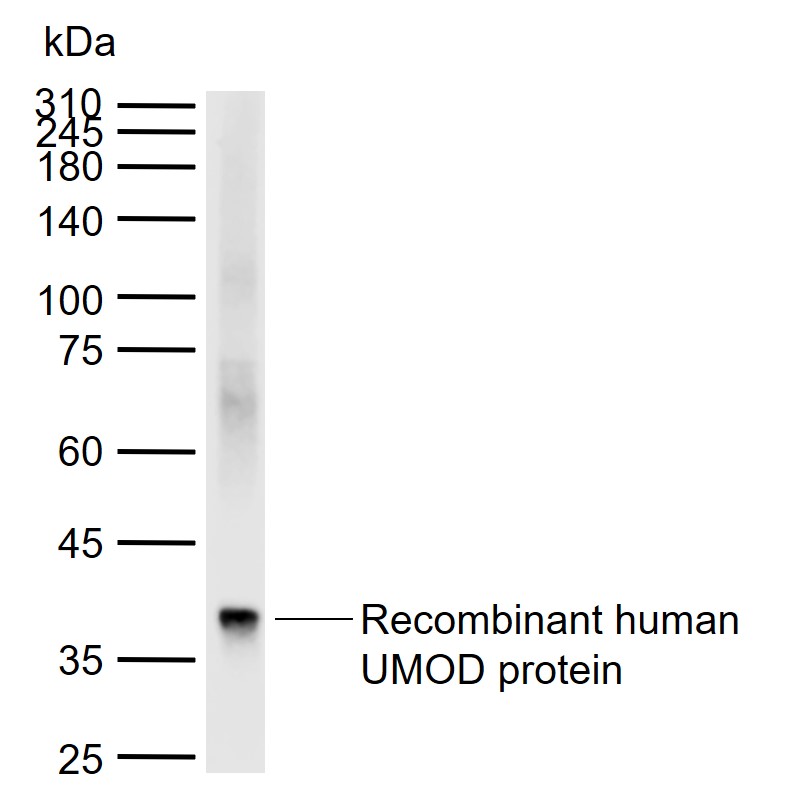
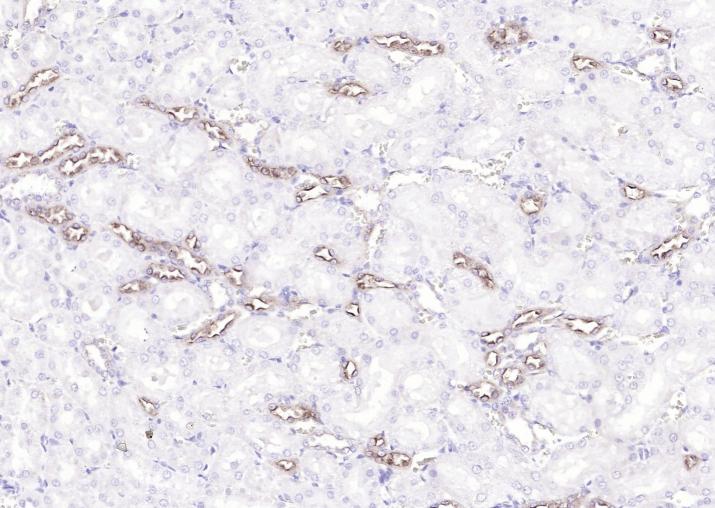
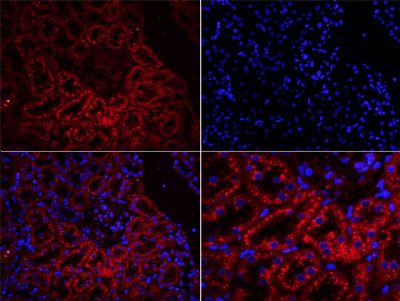
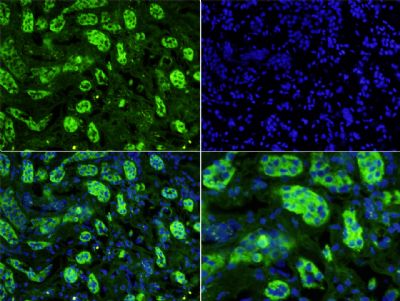
- 产品详情
- 实验流程
- 背景知识
Application 
| WB, IHC-P, IHC-F, IF |
|---|---|
| Reactivity | Rat, Human, Mouse |
| Host | Rabbit |
| Clonality | Polyclonal |
| Physical State | Liquid |
| Immunogen | KLH conjugated synthetic peptide derived from mouse UMOD |
| Epitope Specificity | 351-450/642 |
| Isotype | IgG |
| Purity | affinity purified by Protein A |
| Buffer | 0.01M TBS (pH7.4) with 1% BSA, 0.02% Proclin300 and 50% Glycerol. |
| SUBCELLULAR LOCATION | Apical cell membrane; Lipid-anchor, GPI-anchor (By similarity). Basolateral cell membrane; Lipid-anchor, GPI-anchor (By similarity). Cell projection, cilium membrane (By similarity). Note=Only a small fraction is sorts to the basolateral pole of tubular epithelial cells compared to apical localization (By similarity).Uromodulin, secreted form: Secreted (By similarity). |
| DISEASE | Defects in UMOD are the cause of familial juvenilehyperuricemic nephropathy type 1 (HNFJ1) [MIM:162000]. HNFJ1 is arenal disease characterized by juvenil onset of hyperuricemia,polyuria, progressive renal failure, and gout. The disease isassociated with interstitial pathological changes resulting infibrosis.Defects in UMOD are the cause of medullary cystic kidneydisease type 2 (MCKD2) [MIM:603860]. MCKD2 is a form oftubulointerstitial nephropathy characterized by formation of renalcysts at the corticomedullary junction. It is characterized byadult onset of impaired renal function and salt wasting resultingin end-stage renal failure by the sixth decade.Defects in UMOD are the cause of glomerulocystic kidneydisease with hyperuricemia and isosthenuria (GCKDHI) [MIM:609886].GCKDHI is a renal disorder characterized by a cystic dilation ofBowman space, a collapse of glomerular tuft, and hyperuricemia dueto low fractional excretion of uric acid and severe impairment ofurine concentrating ability. |
| Important Note | This product as supplied is intended for research use only, not for use in human, therapeutic or diagnostic applications. |
| Background Descriptions | The protein encoded by this gene is the most abundant protein in mammalian urine under physiological conditions. Its excretion in urine follows proteolytic cleavage of the ectodomain of its glycosyl phosphatidylinosital-anchored counterpart that is situated on the luminal cell surface of the loop of Henle. This protein may act as a constitutive inhibitor of calcium crystallization in renal fluids. Excretion of this protein in urine may provide defense against urinary tract infections caused by uropathogenic bacteria. Defects in this gene are associated with the renal disorders medullary cystic kidney disease-2 (MCKD2), glomerulocystic kidney disease with hyperuricemia and isosthenuria (GCKDHI), and familial juvenile hyperuricemic nephropathy (FJHN). Alternative splicing of this gene results in multiple transcript variants. [provided by RefSeq, Jul 2013]. |
| Other Names | Uromodulin, Tamm-Horsfall urinary glycoprotein, THP, Uromodulin, secreted form, Umod |
|---|---|
| Dilution | WB=1:500-2000,IHC-P=1:400-800,IHC-F=1:400-800,IF=1:100-500 |
| Storage | Store at -20 °C for one year. Avoid repeated freeze/thaw cycles. When reconstituted in sterile pH 7.4 0.01M PBS or diluent of antibody the antibody is stable for at least two weeks at 2-4 °C. |
For Research Use Only. Not For Use In Diagnostic Procedures.
Research Areas
Application Protocols
Provided below are standard protocols that you may find useful for product applications.
BACKGROUND
This product as supplied is intended for research use only, not for use in human, therapeutic or diagnostic applications.

终于等到您。ABCEPTA(百远生物)抗体产品。
点击下方“我要评价 ”按钮提交您的反馈信息,您的反馈和评价是我们最宝贵的财富之一,
我们将在1-3个工作日内处理您的反馈信息。
如有疑问,联系:0512-88856768 tech-china@abcepta.com.


