


 癌症的基本特征包括细胞增殖、血管生成、迁移、凋亡逃避机制和细胞永生等。找到癌症发生过程中这些通路的关键标记物和对应的抗体用于检测至关重要。
 为您推荐一个泛素化位点预测神器——泛素化分析工具,可以为您的蛋白的泛素化位点作出预测和评分。
 细胞自噬受体图形绘图工具为你的蛋白的细胞受体结合位点作出预测和评分,识别结合到自噬通路中的蛋白是非常重要的,便于让我们理解自噬在正常生理、病理过程中的作用,如发育、细胞分化、神经退化性疾病、压力条件下、感染和癌症。
CHMP1A Rabbit pAb
CHMP1A Rabbit pAb
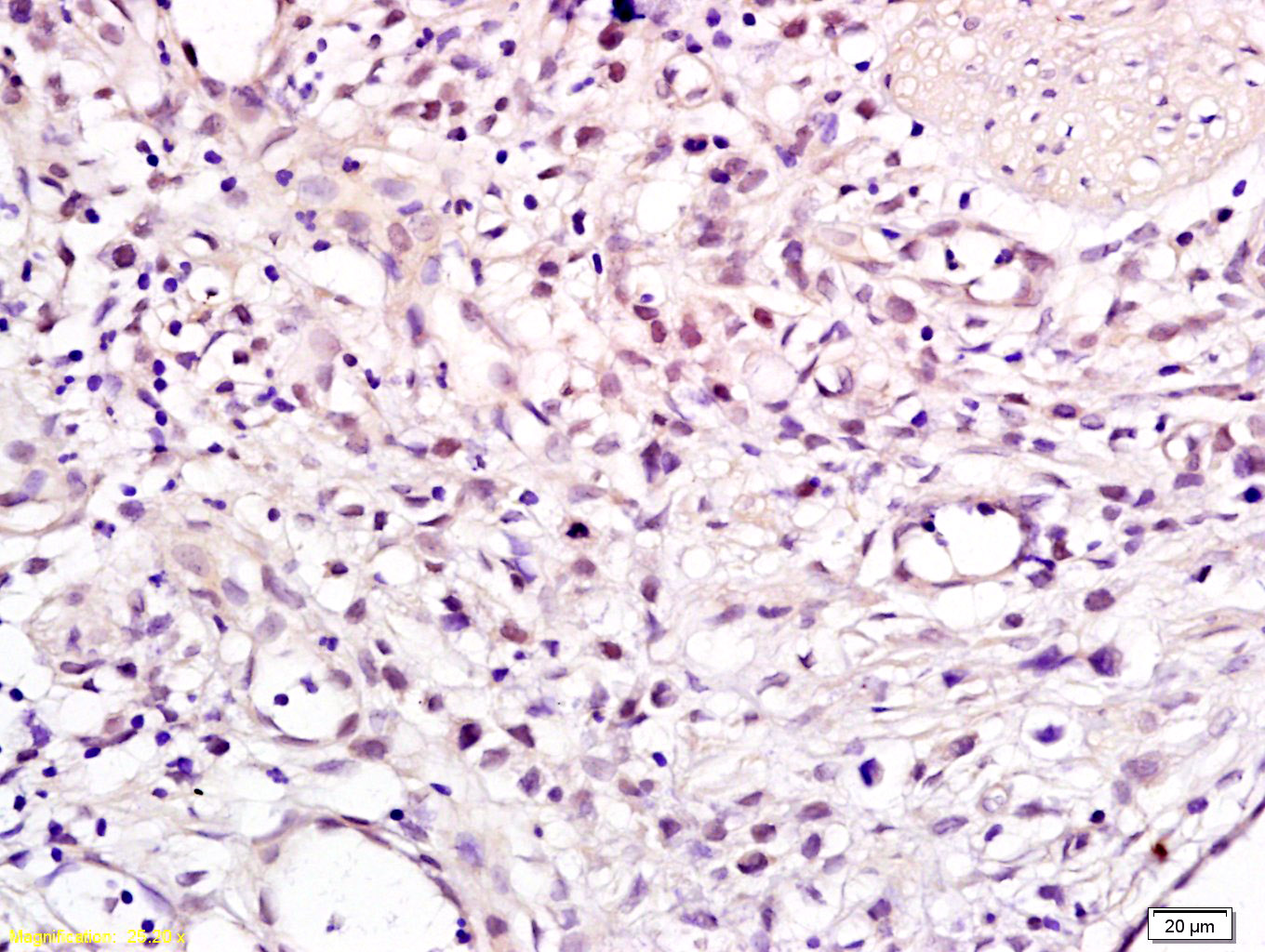
- 产品详情
- 实验流程
- 背景知识
Application 
| IHC-P, IHC-F, IF |
|---|---|
| Primary Accession | Q9HD42 |
| Reactivity | Human, Mouse |
| Predicted | Rat, Pig, Dog, Rabbit, Chicken, Horse |
| Host | Rabbit |
| Clonality | Polyclonal |
| Calculated MW | 21703 Da |
| Physical State | Liquid |
| Immunogen | KLH conjugated synthetic peptide derived from human CHMP1A |
| Epitope Specificity | 51-150/196 |
| Isotype | IgG |
| Purity | affinity purified by Protein A |
| Buffer | 0.01M TBS (pH7.4) with 1% BSA, 0.02% Proclin300 and 50% Glycerol. |
| SUBCELLULAR LOCATION | Cytoplasm. Endosome membrane; Peripheral membrane protein. Nucleus matrix. |
| Important Note | This product as supplied is intended for research use only, not for use in human, therapeutic or diagnostic applications. |
| Background Descriptions | Component of the ESCRT-III complex, which is required for multivesicular bodies (MVBs) formation and sorting of endosomal cargo proteins into MVBs. The MVB pathway mediates delivery of transmembrane proteins into the lumen of the lysosome for degradation. The ESCRT-III complex is probably involved in the concentration of MVB cargo. May also be involved in chromosome condensation. Targets the Polycomb group (PcG) protein PCGF4/BMI1 to regions of condensed chromatin. May play a role in stable cell cycle progression and in PcG gene silencing. In case of infection, the HIV-1 virus takes advantage of the ESCRT-III complex for budding and exocytic cargoes of viral proteins. |
| Gene ID | 5119 |
|---|---|
| Other Names | Charged multivesicular body protein 1a, Chromatin-modifying protein 1a, CHMP1a, Vacuolar protein sorting-associated protein 46-1, Vps46-1, hVps46-1, CHMP1A |
| Dilution | IHC-P=1:100-500,IHC-F=1:100-500,IF=1:100-500 |
| Storage | Store at -20 °C for one year. Avoid repeated freeze/thaw cycles. When reconstituted in sterile pH 7.4 0.01M PBS or diluent of antibody the antibody is stable for at least two weeks at 2-4 °C. |
For Research Use Only. Not For Use In Diagnostic Procedures.
| Name | CHMP1A |
|---|---|
| Function | Probable peripherally associated component of the endosomal sorting required for transport complex III (ESCRT-III) which is involved in multivesicular bodies (MVBs) formation and sorting of endosomal cargo proteins into MVBs. MVBs contain intraluminal vesicles (ILVs) that are generated by invagination and scission from the limiting membrane of the endosome and mostly are delivered to lysosomes enabling degradation of membrane proteins, such as stimulated growth factor receptors, lysosomal enzymes and lipids. The MVB pathway appears to require the sequential function of ESCRT-O, -I,-II and -III complexes. ESCRT-III proteins mostly dissociate from the invaginating membrane before the ILV is released. The ESCRT machinery also functions in topologically equivalent membrane fission events, such as the terminal stages of cytokinesis and the budding of enveloped viruses (HIV-1 and other lentiviruses). ESCRT-III proteins are believed to mediate the necessary vesicle extrusion and/or membrane fission activities, possibly in conjunction with the AAA ATPase VPS4. Involved in cytokinesis. Involved in recruiting VPS4A and/or VPS4B to the midbody of dividing cells. May also be involved in chromosome condensation. Targets the Polycomb group (PcG) protein BMI1/PCGF4 to regions of condensed chromatin. May play a role in stable cell cycle progression and in PcG gene silencing. |
| Cellular Location | Cytoplasm. Endosome membrane; Peripheral membrane protein. Nucleus matrix. Note=The cytoplasmic form is partially membrane-associated and localizes to early endosomes. The nuclear form remains associated with the chromosome scaffold during mitosis. On overexpression, it localizes to nuclear bodies characterized by nuclease-resistant condensed chromatin |
| Tissue Location | Expressed in placenta, cultured skin fibroblasts and in osteoblast cell line MG-63. |
Research Areas
Application Protocols
Provided below are standard protocols that you may find useful for product applications.
BACKGROUND
This product as supplied is intended for research use only, not for use in human, therapeutic or diagnostic applications.

终于等到您。ABCEPTA(百远生物)抗体产品。
点击下方“我要评价 ”按钮提交您的反馈信息,您的反馈和评价是我们最宝贵的财富之一,
我们将在1-3个工作日内处理您的反馈信息。
如有疑问,联系:0512-88856768 tech-china@abcepta.com.


