


 癌症的基本特征包括细胞增殖、血管生成、迁移、凋亡逃避机制和细胞永生等。找到癌症发生过程中这些通路的关键标记物和对应的抗体用于检测至关重要。
 为您推荐一个泛素化位点预测神器——泛素化分析工具,可以为您的蛋白的泛素化位点作出预测和评分。
 细胞自噬受体图形绘图工具为你的蛋白的细胞受体结合位点作出预测和评分,识别结合到自噬通路中的蛋白是非常重要的,便于让我们理解自噬在正常生理、病理过程中的作用,如发育、细胞分化、神经退化性疾病、压力条件下、感染和癌症。
Anti-Aldose Reductase Antibody
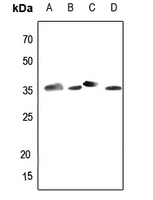
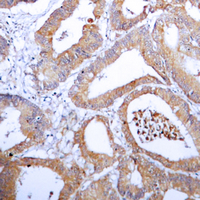
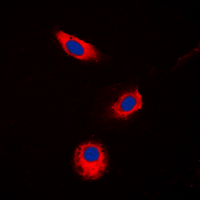
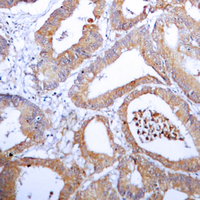
- 产品详情
- 实验流程
Application 
| WB, IHC, IF/IC |
|---|---|
| Primary Accession | P15121 |
| Reactivity | Human, Mouse, Rat, Mk |
| Host | Rabbit |
| Clonality | Polyclonal |
| Calculated MW | 35853 Da |
| Gene ID | 231 |
|---|---|
| Other Names | ALDR1; Aldose reductase; AR; Aldehyde reductase; Aldo-keto reductase family 1 member B1 |
| Target/Specificity | KLH-conjugated synthetic peptide encompassing a sequence within the C-term region of human Aldose Reductase. The exact sequence is proprietary. |
| Dilution | WB~~WB (1/500 - 1/1000) IHC~~WB (1/500 - 1/1000), IHC (1/100 - 1/200), IF/IC (1/100 - 1/500) IF/IC~~N/A |
| Format | Liquid in 0.42% Potassium phosphate, 0.87% Sodium chloride, pH 7.3, 30% glycerol, and 0.01% sodium azide. |
| Storage | Store at -20 °C.Stable for 12 months from date of receipt |
For Research Use Only. Not For Use In Diagnostic Procedures.
| Name | AKR1B1 |
|---|---|
| Synonyms | ALDR1, ALR2 {ECO:0000303|PubMed:17368668 |
| Function | Catalyzes the NADPH-dependent reduction of a wide variety of carbonyl-containing compounds to their corresponding alcohols. Displays enzymatic activity towards endogenous metabolites such as aromatic and aliphatic aldehydes, ketones, monosaccharides, bile acids and xenobiotics substrates (PubMed:10510318, PubMed:12732097, PubMed:1332968, PubMed:21329684, PubMed:8245005, PubMed:4402695, PubMed:1936586). It catalyzes the reduction of glucose to sorbitol, the first step of the polyol pathway, an alternative route of glucose metabolism that converts glucose to fructose (PubMed:4402695, PubMed:1936586). This pathway becomes highly active under elevated glucose levels, such as during hyperglycemia (PubMed:1936586). Reduces steroids and their derivatives and prostaglandins. Displays low enzymatic activity toward all-trans-retinal, 9-cis-retinal, and 13-cis- retinal (PubMed:12732097, PubMed:19010934, PubMed:8343525). Catalyzes the reduction of diverse phospholipid aldehydes such as 1-palmitoyl-2- (5-oxovaleroyl)-sn -glycero-3-phosphoethanolamin (POVPC) and related phospholipid aldehydes that are generated from the oxydation of phosphotidylcholine and phosphatdyleethanolamides (PubMed:17381426). Plays a role in detoxifying dietary and lipid-derived unsaturated carbonyls, such as crotonaldehyde, 4-hydroxynonenal, trans-2-hexenal, trans-2,4-hexadienal and their glutathione-conjugates carbonyls (GS- carbonyls) (PubMed:21329684). |
| Cellular Location | Cytoplasm. |
| Tissue Location | Highly expressed in embryonic epithelial cells (EUE) in response to osmotic stress. |
Research Areas
Application Protocols
Provided below are standard protocols that you may find useful for product applications.

终于等到您。ABCEPTA(百远生物)抗体产品。
点击下方“我要评价 ”按钮提交您的反馈信息,您的反馈和评价是我们最宝贵的财富之一,
我们将在1-3个工作日内处理您的反馈信息。
如有疑问,联系:0512-88856768 tech-china@abcepta.com.
¥ 1,250.00
Cat# AP59964


