


 癌症的基本特征包括细胞增殖、血管生成、迁移、凋亡逃避机制和细胞永生等。找到癌症发生过程中这些通路的关键标记物和对应的抗体用于检测至关重要。
 为您推荐一个泛素化位点预测神器——泛素化分析工具,可以为您的蛋白的泛素化位点作出预测和评分。
 细胞自噬受体图形绘图工具为你的蛋白的细胞受体结合位点作出预测和评分,识别结合到自噬通路中的蛋白是非常重要的,便于让我们理解自噬在正常生理、病理过程中的作用,如发育、细胞分化、神经退化性疾病、压力条件下、感染和癌症。
CD284 Polyclonal Antibody
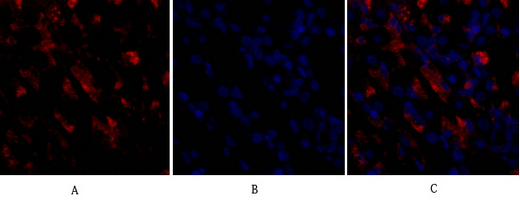
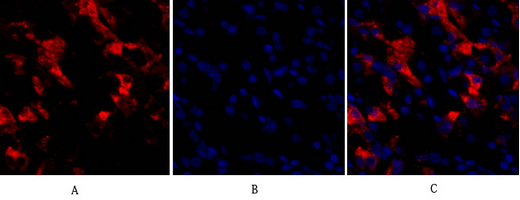
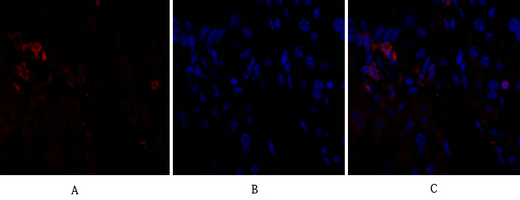
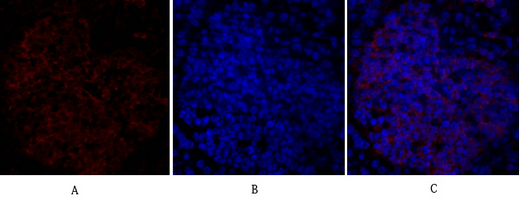
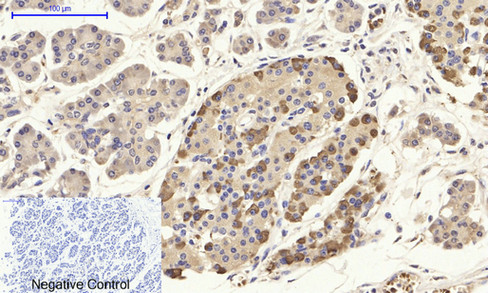
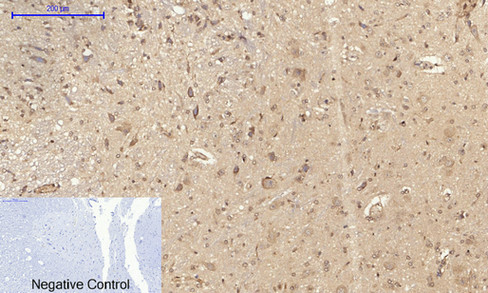
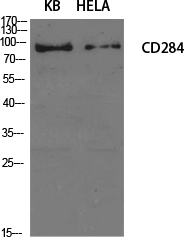
.jpg)
- 产品详情
- 实验流程
- 背景知识
Application 
| IF, ICC, WB, IHC-P, E |
|---|---|
| Primary Accession | O00206 |
| Reactivity | Human, Mouse |
| Host | Rabbit |
| Clonality | Polyclonal |
| Calculated MW | 95680 Da |
| Gene ID | 7099 |
|---|---|
| Other Names | TLR4; Toll-like receptor 4; hToll; CD antigen CD284 |
| Dilution | IF~~IF: 1:50-200 Western Blot: 1/500 - 1/2000. Immunohistochemistry: 1/100 - 1/300. ELISA: 1/40000. Not yet tested in other applications. ICC~~N/A WB~~IF: 1:50-200 Western Blot: 1/500 - 1/2000. Immunohistochemistry: 1/100 - 1/300. ELISA: 1/40000. Not yet tested in other applications. IHC-P~~IF: 1:50-200 Western Blot: 1/500 - 1/2000. Immunohistochemistry: 1/100 - 1/300. ELISA: 1/40000. Not yet tested in other applications. E~~N/A |
| Format | Liquid in PBS containing 50% glycerol, 0.5% BSA and 0.09% (W/V) sodium azide. |
| Storage Conditions | -20℃ |
For Research Use Only. Not For Use In Diagnostic Procedures.
| Name | TLR4 |
|---|---|
| Function | Transmembrane receptor that functions as a pattern recognition receptor recognizing pathogen- and damage-associated molecular patterns (PAMPs and DAMPs) to induce innate immune responses via downstream signaling pathways (PubMed:10835634, PubMed:15809303, PubMed:16622205, PubMed:17292937, PubMed:17478729, PubMed:20037584, PubMed:20711192, PubMed:23880187, PubMed:27022195, PubMed:29038465, PubMed:17803912, PubMed:15852007). At the plasma membrane, cooperates with LY96 to mediate the innate immune response to bacterial lipopolysaccharide (LPS) (PubMed:27022195). Also involved in LPS- independent inflammatory responses triggered by free fatty acids, such as palmitate, and Ni(2+) (PubMed:20711192). Mechanistically, acts via MYD88, TIRAP and TRAF6, leading to NF-kappa-B activation, cytokine secretion and the inflammatory response (PubMed:10835634, PubMed:21393102, PubMed:27022195, PubMed:36945827, PubMed:9237759). Alternatively, CD14-mediated TLR4 internalization via endocytosis is associated with the initiation of a MYD88-independent signaling via the TICAM1-TBK1-IRF3 axis leading to type I interferon production (PubMed:14517278). In addition to the secretion of proinflammatory cytokines, initiates the activation of NLRP3 inflammasome and formation of a positive feedback loop between autophagy and NF-kappa-B signaling cascade (PubMed:32894580). In complex with TLR6, promotes inflammation in monocytes/macrophages by associating with TLR6 and the receptor CD86 (PubMed:23880187). Upon ligand binding, such as oxLDL or amyloid-beta 42, the TLR4:TLR6 complex is internalized and triggers inflammatory response, leading to NF-kappa-B-dependent production of CXCL1, CXCL2 and CCL9 cytokines, via MYD88 signaling pathway, and CCL5 cytokine, via TICAM1 signaling pathway (PubMed:23880187). In myeloid dendritic cells, vesicular stomatitis virus glycoprotein G but not LPS promotes the activation of IRF7, leading to type I IFN production in a CD14- dependent manner (PubMed:15265881, PubMed:23880187). Required for the migration-promoting effects of ZG16B/PAUF on pancreatic cancer cells. |
| Cellular Location | Cell membrane; Single-pass type I membrane protein. Early endosome. Cell projection, ruffle {ECO:0000250|UniProtKB:Q9QUK6}. Note=Upon complex formation with CD36 and TLR6, internalized through dynamin-dependent endocytosis (PubMed:20037584). Colocalizes with RFTN1 at cell membrane and then together with RFTN1 moves to endosomes, upon lipopolysaccharide stimulation. Co-localizes with ZG16B/PAUF at the cell membrane of pancreatic cancer cells (PubMed:36232715) |
| Tissue Location | Highly expressed in placenta, spleen and peripheral blood leukocytes (PubMed:9237759, PubMed:9435236). Detected in monocytes, macrophages, dendritic cells and several types of T-cells (PubMed:27022195, PubMed:9237759). Expressed in pancreatic cancer cells but not in normal pancreatic cells (at protein level) (PubMed:36232715). |
Provided below are standard protocols that you may find useful for product applications.
BACKGROUND
Cooperates with LY96 and CD14 to mediate the innate immune response to bacterial lipopolysaccharide (LPS) (PubMed:27022195). Acts via MYD88, TIRAP and TRAF6, leading to NF- kappa-B activation, cytokine secretion and the inflammatory response (PubMed:9237759, PubMed:10835634, PubMed:27022195). Also involved in LPS-independent inflammatory responses triggered by free fatty acids, such as palmitate, and Ni(2+). Responses triggered by Ni(2+) require non-conserved histidines and are, therefore, species-specific (PubMed:20711192). Both M.tuberculosis HSP70 (dnaK) and HSP65 (groEL-2) act via this protein to stimulate NF-kappa-B expression (PubMed:15809303). In complex with TLR6, promotes sterile inflammation in monocytes/macrophages in response to oxidized low-density lipoprotein (oxLDL) or amyloid-beta 42. In this context, the initial signal is provided by oxLDL- or amyloid- beta 42-binding to CD36. This event induces the formation of a heterodimer of TLR4 and TLR6, which is rapidly internalized and triggers inflammatory response, leading to the NF-kappa-B- dependent production of CXCL1, CXCL2 and CCL9 cytokines, via MYD88 signaling pathway, and CCL5 cytokine, via TICAM1 signaling pathway, as well as IL1B secretion. Binds electronegative LDL (LDL(-)) and mediates the cytokine release induced by LDL(-) (PubMed:23880187). Stimulation of monocytes in vitro with M.tuberculosis PstS1 induces p38 MAPK and ERK1/2 activation primarily via TLR2, but also partially via this receptor (PubMed:16622205).

终于等到您。ABCEPTA(百远生物)抗体产品。
点击下方“我要评价 ”按钮提交您的反馈信息,您的反馈和评价是我们最宝贵的财富之一,
我们将在1-3个工作日内处理您的反馈信息。
如有疑问,联系:0512-88856768 tech-china@abcepta.com.


