


 癌症的基本特征包括细胞增殖、血管生成、迁移、凋亡逃避机制和细胞永生等。找到癌症发生过程中这些通路的关键标记物和对应的抗体用于检测至关重要。
 为您推荐一个泛素化位点预测神器——泛素化分析工具,可以为您的蛋白的泛素化位点作出预测和评分。
 细胞自噬受体图形绘图工具为你的蛋白的细胞受体结合位点作出预测和评分,识别结合到自噬通路中的蛋白是非常重要的,便于让我们理解自噬在正常生理、病理过程中的作用,如发育、细胞分化、神经退化性疾病、压力条件下、感染和癌症。
ERK 8 Polyclonal Antibody
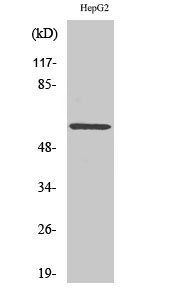
- 产品详情
- 实验流程
- 背景知识
Application 
| WB, IHC-P, IF, ICC, E |
|---|---|
| Primary Accession | Q8TD08 |
| Reactivity | Human, Mouse |
| Host | Rabbit |
| Clonality | Polyclonal |
| Calculated MW | 59832 Da |
| Gene ID | 225689 |
|---|---|
| Other Names | MAPK15; ERK7; ERK8; Mitogen-activated protein kinase 15; MAP kinase 15; MAPK 15; Extracellular signal-regulated kinase 7; ERK-7; Extracellular signal-regulated kinase 8; ERK-8 |
| Dilution | WB~~Western Blot: 1/500 - 1/2000. Immunohistochemistry: 1/100 - 1/300. Immunofluorescence: 1/200 - 1/1000. ELISA: 1/10000. Not yet tested in other applications. IHC-P~~1:50~200 IF~~1:50~200 ICC~~N/A E~~N/A |
| Format | Liquid in PBS containing 50% glycerol, 0.5% BSA and 0.09% (W/V) sodium azide. |
| Storage Conditions | -20℃ |
For Research Use Only. Not For Use In Diagnostic Procedures.
| Name | MAPK15 (HGNC:24667) |
|---|---|
| Function | Atypical MAPK protein that regulates several process such as autophagy, ciliogenesis, protein trafficking/secretion and genome integrity, in a kinase activity-dependent manner (PubMed:20733054, PubMed:21847093, PubMed:22948227, PubMed:24618899, PubMed:29021280). Controls both, basal and starvation-induced autophagy throught its interaction with GABARAP, MAP1LC3B and GABARAPL1 leading to autophagosome formation, SQSTM1 degradation and reduced MAP1LC3B inhibitory phosphorylation (PubMed:22948227). Regulates primary cilium formation and the localization of ciliary proteins involved in cilium structure, transport, and signaling (PubMed:29021280). Prevents the relocation of the sugar-adding enzymes from the Golgi to the endoplasmic reticulum, thereby restricting the production of sugar- coated proteins (PubMed:24618899). Upon amino-acid starvation, mediates transitional endoplasmic reticulum site disassembly and inhibition of secretion (PubMed:21847093). Binds to chromatin leading to MAPK15 activation and interaction with PCNA, that which protects genomic integrity by inhibiting MDM2-mediated degradation of PCNA (PubMed:20733054). Regulates DA transporter (DAT) activity and protein expression via activation of RhoA (PubMed:28842414). In response to H(2)O(2) treatment phosphorylates ELAVL1, thus preventing it from binding to the PDCD4 3'UTR and rendering the PDCD4 mRNA accessible to miR-21 and leading to its degradation and loss of protein expression (PubMed:26595526). Also functions in a kinase activity-independent manner as a negative regulator of growth (By similarity). Phosphorylates in vitro FOS and MBP (PubMed:11875070, PubMed:16484222, PubMed:19166846, PubMed:20638370). During oocyte maturation, plays a key role in the microtubule organization and meiotic cell cycle progression in oocytes, fertilized eggs, and early embryos (By similarity). Interacts with ESRRA promoting its re-localization from the nucleus to the cytoplasm and then prevents its transcriptional activity (PubMed:21190936). |
| Cellular Location | Cytoplasm, cytoskeleton, cilium basal body. Cell junction, tight junction. Cytoplasm, cytoskeleton, microtubule organizing center, centrosome, centriole Cytoplasmic vesicle, autophagosome. Golgi apparatus. Nucleus. Cytoplasm. Cytoplasm, cytoskeleton, spindle {ECO:0000250|UniProtKB:Q80Y86}. Note=Co-localizes to the cytoplasm only in presence of ESRRA (PubMed:21190936) Translocates to the nucleus upon activation (PubMed:20638370). At prometaphase I, metaphase I (MI), anaphase I, telophase I, and metaphase II (MII) stages, is stably detected at the spindle (By similarity). {ECO:0000250|UniProtKB:Q80Y86, ECO:0000269|PubMed:20638370, ECO:0000269|PubMed:21190936} |
| Tissue Location | Widely expressed with a maximal expression in lung and kidney. |
Provided below are standard protocols that you may find useful for product applications.
BACKGROUND
Atypical MAPK protein that regulates several process such as autophagy, ciliogenesis, protein trafficking/secretion and genome integrity, in a kinase activity-dependent manner (PubMed:22948227, PubMed:24618899, PubMed:29021280, PubMed:21847093, PubMed:20733054). Controls both, basal and starvation-induced autophagy throught its interaction with GABARAP, MAP1LC3B and GABARAPL1 leading to autophagosome formation, SQSTM1 degradation and reduced MAP1LC3B inhibitory phosphorylation (PubMed:22948227). Regulates primary cilium formation and the localization of ciliary proteins involved in cilium structure, transport, and signaling (PubMed:29021280). Prevents the relocation of the sugar-adding enzymes from the Golgi to the endoplasmic reticulum, thereby restricting the production of sugar-coated proteins (PubMed:24618899). Upon amino-acid starvation, mediates transitional endoplasmic reticulum site disassembly and inhibition of secretion (PubMed:21847093). Binds to chromatin leading to MAPK15 activation and interaction with PCNA, that which protects genomic integrity by inhibiting MDM2- mediated degradation of PCNA (PubMed:20733054). Regulates DA transporter (DAT) activity and protein expression via activation of RhoA (PubMed:28842414). In response to H(2)O(2) treatment phosphorylates ELAVL1, thus preventing it from binding to the PDCD4 3'UTR and rendering the PDCD4 mRNA accessible to miR-21 and leading to its degradation and loss of protein expression (PubMed:26595526). Also functions in a kinase activity-independent manner as a negative regulator of growth (By similarity). Phosphorylates in vitro FOS and MBP (PubMed:11875070, PubMed:16484222, PubMed:20638370, PubMed:19166846). During oocyte maturation, plays a key role in the microtubule organization and meiotic cell cycle progression in oocytes, fertilized eggs, and early embryos (By similarity). Interacts with ESRRA promoting its re-localization from the nucleus to the cytoplasm and then prevents its transcriptional activity (PubMed:21190936).

终于等到您。ABCEPTA(百远生物)抗体产品。
点击下方“我要评价 ”按钮提交您的反馈信息,您的反馈和评价是我们最宝贵的财富之一,
我们将在1-3个工作日内处理您的反馈信息。
如有疑问,联系:0512-88856768 tech-china@abcepta.com.


