


 癌症的基本特征包括细胞增殖、血管生成、迁移、凋亡逃避机制和细胞永生等。找到癌症发生过程中这些通路的关键标记物和对应的抗体用于检测至关重要。
 为您推荐一个泛素化位点预测神器——泛素化分析工具,可以为您的蛋白的泛素化位点作出预测和评分。
 细胞自噬受体图形绘图工具为你的蛋白的细胞受体结合位点作出预测和评分,识别结合到自噬通路中的蛋白是非常重要的,便于让我们理解自噬在正常生理、病理过程中的作用,如发育、细胞分化、神经退化性疾病、压力条件下、感染和癌症。
ASAH3L Polyclonal Antibody
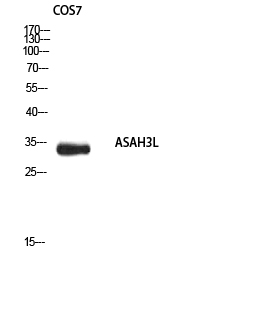
.jpg)

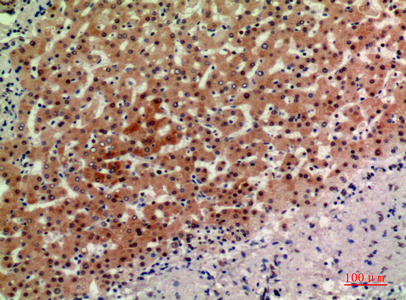
- 产品详情
- 实验流程
- 背景知识
Application 
| WB, IHC-P, IF, ICC, E |
|---|---|
| Primary Accession | Q5QJU3 |
| Reactivity | Human, Mouse, Monkey |
| Host | Rabbit |
| Clonality | Polyclonal |
| Calculated MW | 31309 Da |
| Gene ID | 340485 |
|---|---|
| Other Names | ACER2; ASAH3L; PP11646; Alkaline ceramidase 2; AlkCDase 2; Alkaline CDase 2; haCER2; Acylsphingosine deacylase 3-like; N-acylsphingosine amidohydrolase 3-like |
| Dilution | WB~~Western Blot: 1/500 - 1/2000. IHC-p: 1:100-1:300. ELISA: 1/10000. Not yet tested in other applications. IHC-P~~Western Blot: 1/500 - 1/2000. IHC-p: 1:100-1:300. ELISA: 1/10000. Not yet tested in other applications. IF~~1:50~200 ICC~~N/A E~~N/A |
| Format | Liquid in PBS containing 50% glycerol, 0.5% BSA and 0.09% (W/V) sodium azide. |
| Storage Conditions | -20℃ |
For Research Use Only. Not For Use In Diagnostic Procedures.
| Name | ACER2 (HGNC:23675) |
|---|---|
| Synonyms | ASAH3L |
| Function | Golgi ceramidase that catalyzes the hydrolysis of ceramides into sphingoid bases like sphingosine and free fatty acids at alkaline pH (PubMed:16940153, PubMed:18945876, PubMed:20089856, PubMed:20207939). Ceramides, sphingosine, and its phosphorylated form sphingosine-1-phosphate are bioactive lipids that mediate cellular signaling pathways regulating several biological processes including cell proliferation, apoptosis and differentiation (PubMed:20207939). Has a better catalytic efficiency towards unsaturated long-chain ceramides, including C18:1-, C20:1- and C24:1-ceramides (PubMed:16940153, PubMed:18945876, PubMed:20089856, PubMed:20207939). Saturated long-chain ceramides and unsaturated very long-chain ceramides are also good substrates, whereas saturated very long-chain ceramides and short-chain ceramides are poor substrates (PubMed:20089856). Also hydrolyzes dihydroceramides to produce dihydrosphingosine (PubMed:20207939, PubMed:20628055). It is the ceramidase that controls the levels of circulating sphingosine-1- phosphate and dihydrosphingosine-1-phosphate in plasma through their production by hematopoietic cells (By similarity). Regulates cell proliferation, autophagy and apoptosis by the production of sphingosine and sphingosine-1-phosphate (PubMed:16940153, PubMed:26943039, PubMed:28294157, PubMed:29229990). As part of a p53/TP53-dependent pathway, promotes for instance autophagy and apoptosis in response to DNA damage (PubMed:26943039, PubMed:28294157, PubMed:29229990). Through the production of sphingosine, may also regulate the function of the Golgi complex and regulate the glycosylation of proteins (PubMed:18945876). |
| Cellular Location | Golgi apparatus membrane; Multi-pass membrane protein |
| Tissue Location | Highly expressed in placenta. |
Provided below are standard protocols that you may find useful for product applications.
BACKGROUND
Golgi ceramidase that catalyzes the hydrolysis of ceramides into sphingoid bases like sphingosine and free fatty acids at alkaline pH (PubMed:16940153, PubMed:18945876, PubMed:20207939, PubMed:20089856). Ceramides, sphingosine, and its phosphorylated form sphingosine-1-phosphate are bioactive lipids that mediate cellular signaling pathways regulating several biological processes including cell proliferation, apoptosis and differentiation (PubMed:20207939). Has a better catalytic efficiency towards unsaturated long-chain ceramides, including C18:1-, C20:1- and C24:1-ceramides (PubMed:16940153, PubMed:18945876, PubMed:20207939, PubMed:20089856). Saturated long-chain ceramides and unsaturated very long-chain ceramides are also good substrates, whereas saturated very long-chain ceramides and short-chain ceramides are poor substrates (PubMed:20089856). Also hydrolyzes dihydroceramides to produce dihydrosphingosine (PubMed:20207939, PubMed:20628055). It is the ceramidase that controls the levels of circulating sphingosine-1-phosphate and dihydrosphingosine-1-phosphate in plasma through their production by hematopoietic cells (By similarity). Regulates cell proliferation, autophagy and apoptosis by the production of sphingosine and sphingosine-1-phosphate (PubMed:16940153, PubMed:26943039, PubMed:28294157, PubMed:29229990). As part of a p53/TP53-dependent pathway, promotes for instance autophagy and apoptosis in response to DNA damage (PubMed:26943039, PubMed:28294157, PubMed:29229990). Through the production of sphingosine, may also regulate the function of the Golgi complex and regulate the glycosylation of proteins (PubMed:18945876).

终于等到您。ABCEPTA(百远生物)抗体产品。
点击下方“我要评价 ”按钮提交您的反馈信息,您的反馈和评价是我们最宝贵的财富之一,
我们将在1-3个工作日内处理您的反馈信息。
如有疑问,联系:0512-88856768 tech-china@abcepta.com.


