


 癌症的基本特征包括细胞增殖、血管生成、迁移、凋亡逃避机制和细胞永生等。找到癌症发生过程中这些通路的关键标记物和对应的抗体用于检测至关重要。
 为您推荐一个泛素化位点预测神器——泛素化分析工具,可以为您的蛋白的泛素化位点作出预测和评分。
 细胞自噬受体图形绘图工具为你的蛋白的细胞受体结合位点作出预测和评分,识别结合到自噬通路中的蛋白是非常重要的,便于让我们理解自噬在正常生理、病理过程中的作用,如发育、细胞分化、神经退化性疾病、压力条件下、感染和癌症。
PHD3 Rabbit mAb
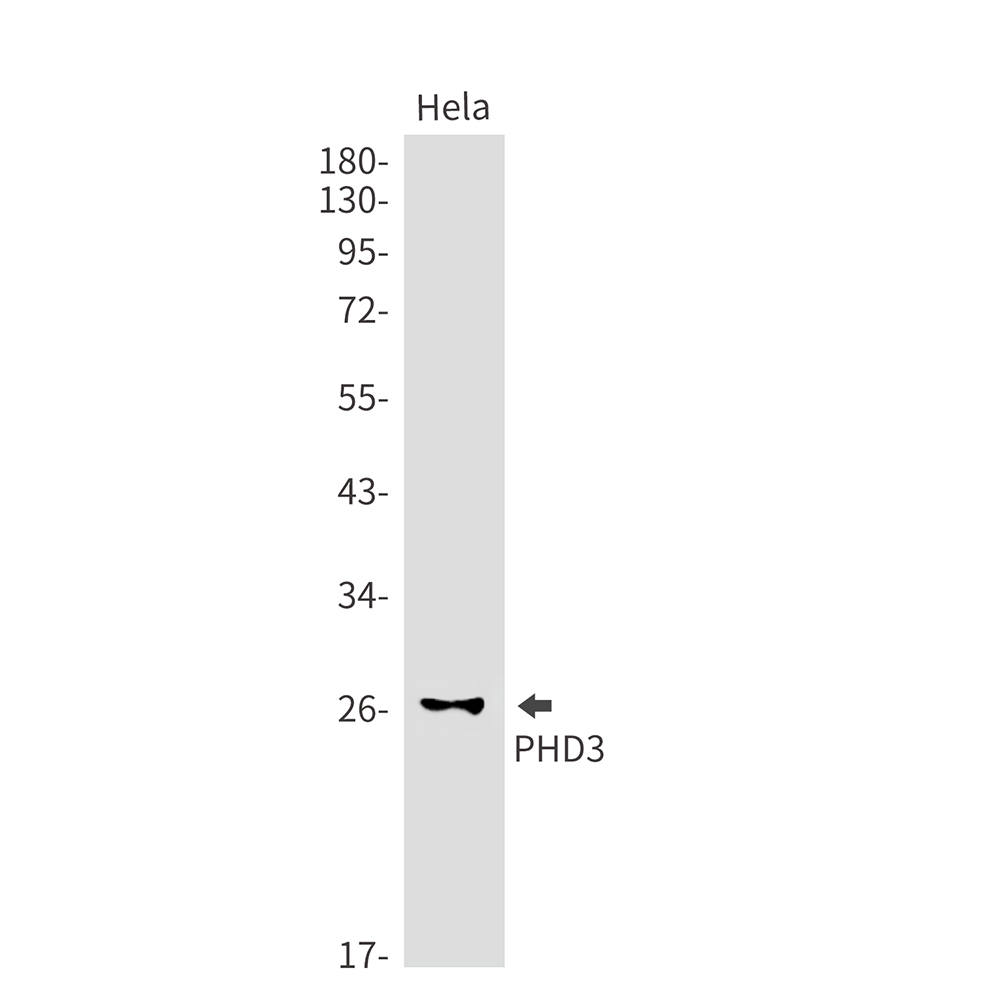
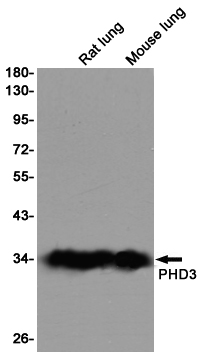
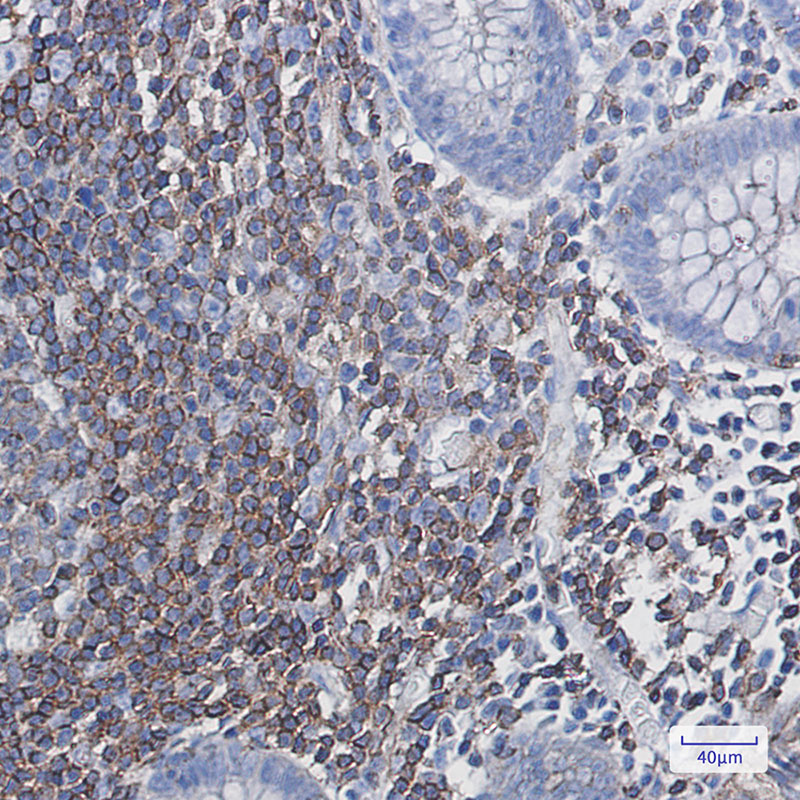
- 产品详情
- 实验流程
- 背景知识
Application 
| WB, IHC-P, IP |
|---|---|
| Primary Accession | Q9H6Z9 |
| Reactivity | Rat, Human, Mouse |
| Host | Rabbit |
| Clonality | Monoclonal Antibody |
| Isotype | IgG |
| Conjugate | Unconjugated |
| Purification | Affinity Purified |
| Calculated MW | 27261 Da |
| Gene ID | 112399 |
|---|---|
| Other Names | EGLN3 |
| Dilution | WB~~1:500-1:1000 IHC-P~~1:50~200 IP~~1:50-1:100 |
| Format | Liquid in 50mM Tris-Glycine(pH 7.4), 0.15M NaCl, 40%Glycerol, 0.01% sodium azide and 0.05% BSA. |
| Storage | Store at 4°C short term. Aliquot and store at -20°C long term. Avoid freeze/thaw cycles. |
For Research Use Only. Not For Use In Diagnostic Procedures.
| Name | EGLN3 {ECO:0000303|PubMed:16098468, ECO:0000312|HGNC:HGNC:14661} |
|---|---|
| Function | Prolyl hydroxylase that mediates hydroxylation of proline residues in target proteins, such as PKM, TELO2, ATF4, GPX4 and HIF1A (PubMed:19584355, PubMed:20978507, PubMed:21483450, PubMed:21575608, PubMed:21620138, PubMed:22797300, PubMed:40281343). Target proteins are preferentially recognized via a LXXLAP motif. Cellular oxygen sensor that catalyzes, under normoxic conditions, the post-translational formation of 4-hydroxyproline in hypoxia-inducible factor (HIF) alpha proteins (PubMed:11595184, PubMed:12181324). Hydroxylates a specific proline found in each of the oxygen-dependent degradation (ODD) domains (N-terminal, NODD, and C-terminal, CODD) of HIF1A (PubMed:11595184, PubMed:12181324). Also hydroxylates HIF2A (PubMed:11595184, PubMed:12181324). Has a preference for the CODD site for both HIF1A and HIF2A (PubMed:11595184, PubMed:12181324). Hydroxylation on the NODD site by EGLN3 appears to require prior hydroxylation on the CODD site (PubMed:11595184, PubMed:12181324). Hydroxylated HIFs are then targeted for proteasomal degradation via the von Hippel-Lindau ubiquitination complex (PubMed:11595184, PubMed:12181324). Under hypoxic conditions, the hydroxylation reaction is attenuated allowing HIFs to escape degradation resulting in their translocation to the nucleus, heterodimerization with HIF1B, and increased expression of hypoxy- inducible genes (PubMed:11595184, PubMed:12181324). Acts as an inhibitor of ferroptosis by mediating hydroxylation of GPX4, thereby preventing GPX4 degradation via chaperone-mediated autophagy (PubMed:40281343). GPX4 hydroxylation is promoted by PSAT1, which provides 2-oxoglutarate substrate to EGLN3 (PubMed:40281343). ELGN3 is the most important isozyme in limiting physiological activation of HIFs (particularly HIF2A) in hypoxia. Also hydroxylates PKM in hypoxia, limiting glycolysis (PubMed:21483450, PubMed:21620138). Under normoxia, hydroxylates and regulates the stability of ADRB2 (PubMed:19584355). Regulator of cardiomyocyte and neuronal apoptosis. In cardiomyocytes, inhibits the anti-apoptotic effect of BCL2 by disrupting the BAX-BCL2 complex (PubMed:20849813). In neurons, has a NGF-induced proapoptotic effect, probably through regulating CASP3 activity (PubMed:16098468). Also essential for hypoxic regulation of neutrophilic inflammation (PubMed:21317538). Plays a crucial role in DNA damage response (DDR) by hydroxylating TELO2, promoting its interaction with ATR which is required for activation of the ATR/CHK1/p53 pathway (PubMed:22797300). Also mediates hydroxylation of ATF4, leading to decreased protein stability of ATF4 (Probable). |
| Cellular Location | Nucleus. Cytoplasm Note=Colocalizes with WDR83 in the cytoplasm {ECO:0000250|UniProtKB:Q62630} |
| Tissue Location | Widely expressed at low levels. Expressed at higher levels in adult heart (cardiac myocytes, aortic endothelial cells and coronary artery smooth muscle), lung and placenta, and in fetal spleen, heart and skeletal muscle. Also expressed in pancreas. Localized to pancreatic acini and islet cells. |
Provided below are standard protocols that you may find useful for product applications.
BACKGROUND
Cellular oxygen sensor that catalyzes, under normoxic conditions, the post-translational formation of 4-hydroxyproline in hypoxia-inducible factor (HIF) alpha proteins. Hydroxylates a specific proline found in each of the oxygen-dependent degradation (ODD) domains (N-terminal, NODD, and C-terminal, CODD) of HIF1A. Also hydroxylates HIF2A. Has a preference for the CODD site for both HIF1A and HIF2A. Hydroxylation on the NODD site by EGLN3 appears to require prior hydroxylation on the CODD site. Hydroxylated HIFs are then targeted for proteasomal degradation via the von Hippel-Lindau ubiquitination complex. Under hypoxic conditions, the hydroxylation reaction is attenuated allowing HIFs to escape degradation resulting in their translocation to the nucleus, heterodimerization with HIF1B, and increased expression of hypoxy-inducible genes. EGLN3 is the most important isozyme in limiting physiological activation of HIFs (particularly HIF2A) in hypoxia. Also hydroxylates PKM in hypoxia, limiting glycolysis. Under normoxia, hydroxylates and regulates the stability of ADRB2. Regulator of cardiomyocyte and neuronal apoptosis. In cardiomyocytes, inhibits the anti-apoptotic effect of BCL2 by disrupting the BAX-BCL2 complex. In neurons, has a NGF-induced proapoptotic effect, probably through regulating CASP3 activity. Also essential for hypoxic regulation of neutrophilic inflammation. Plays a crucial role in DNA damage response (DDR) by hydroxylating TELO2, promoting its interaction with ATR which is required for activation of the ATR/CHK1/p53 pathway. Target proteins are preferentially recognized via a LXXLAP motif.

终于等到您。ABCEPTA(百远生物)抗体产品。
点击下方“我要评价 ”按钮提交您的反馈信息,您的反馈和评价是我们最宝贵的财富之一,
我们将在1-3个工作日内处理您的反馈信息。
如有疑问,联系:0512-88856768 tech-china@abcepta.com.


