


 癌症的基本特征包括细胞增殖、血管生成、迁移、凋亡逃避机制和细胞永生等。找到癌症发生过程中这些通路的关键标记物和对应的抗体用于检测至关重要。
 为您推荐一个泛素化位点预测神器——泛素化分析工具,可以为您的蛋白的泛素化位点作出预测和评分。
 细胞自噬受体图形绘图工具为你的蛋白的细胞受体结合位点作出预测和评分,识别结合到自噬通路中的蛋白是非常重要的,便于让我们理解自噬在正常生理、病理过程中的作用,如发育、细胞分化、神经退化性疾病、压力条件下、感染和癌症。
Pumilio 1 Rabbit mAb
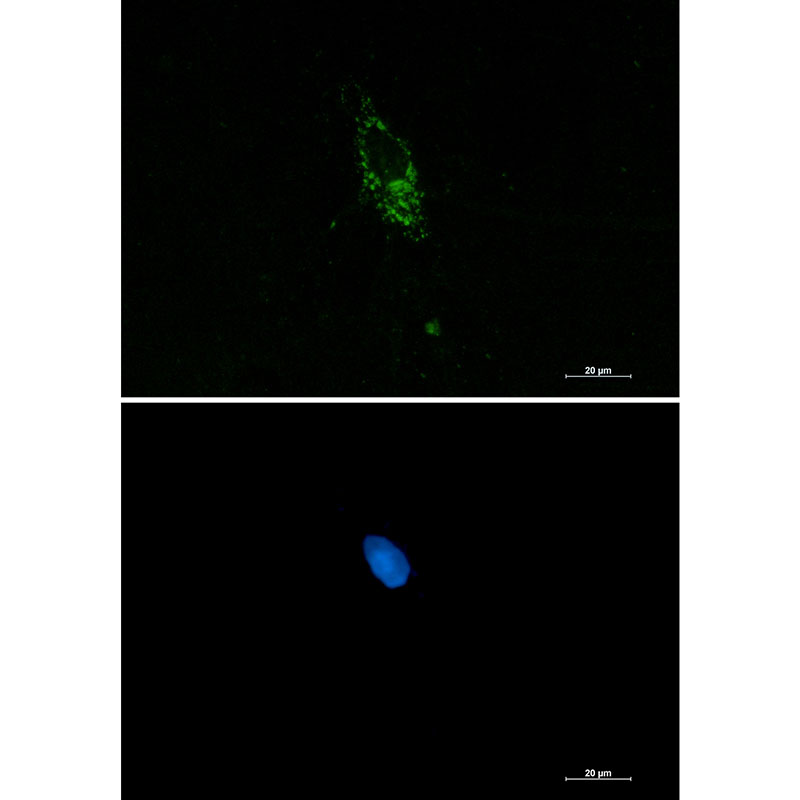
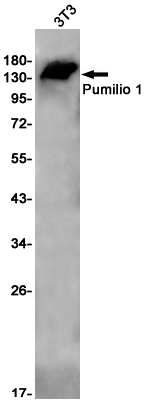
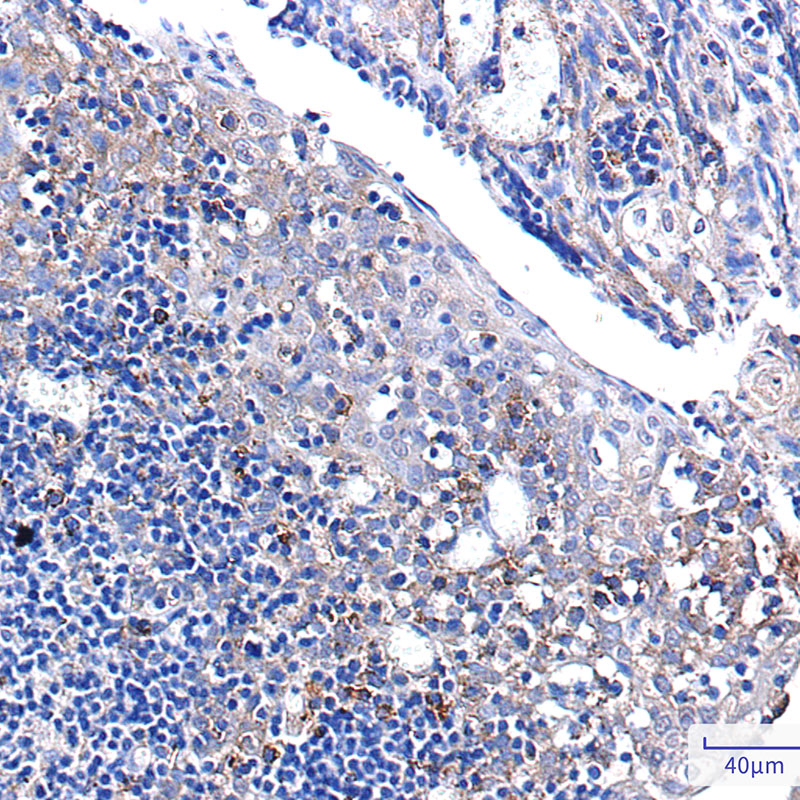
- 产品详情
- 实验流程
- 背景知识
Application 
| WB, IHC-P, FC |
|---|---|
| Primary Accession | Q14671 |
| Reactivity | Rat, Human, Mouse |
| Host | Rabbit |
| Clonality | Monoclonal Antibody |
| Isotype | IgG |
| Conjugate | Unconjugated |
| Purification | Affinity Purified |
| Calculated MW | 126473 Da |
| Gene ID | 9698 |
|---|---|
| Other Names | PUM1 |
| Dilution | WB~~1:1000-1:5000 IHC-P~~1:50~200 FC~~1:20-1:50 |
| Format | Liquid in 50mM Tris-Glycine(pH 7.4), 0.15M NaCl, 40%Glycerol, 0.01% sodium azide and 0.05% BSA. |
| Storage | Store at 4°C short term. Aliquot and store at -20°C long term. Avoid freeze/thaw cycles. |
For Research Use Only. Not For Use In Diagnostic Procedures.
| Name | PUM1 (HGNC:14957) |
|---|---|
| Function | Sequence-specific RNA-binding protein that acts as a post- transcriptional repressor by binding the 3'-UTR of mRNA targets. Binds to an RNA consensus sequence, the Pumilio Response Element (PRE), 5'- UGUANAUA-3', that is related to the Nanos Response Element (NRE) (PubMed:18328718, PubMed:21397187, PubMed:21572425, PubMed:21653694). Mediates post-transcriptional repression of transcripts via different mechanisms: acts via direct recruitment of the CCR4-POP2-NOT deadenylase leading to translational inhibition and mRNA degradation (PubMed:22955276). Also mediates deadenylation-independent repression by promoting accessibility of miRNAs (PubMed:18776931, PubMed:20818387, PubMed:20860814, PubMed:22345517). Following growth factor stimulation, phosphorylated and binds to the 3'-UTR of CDKN1B/p27 mRNA, inducing a local conformational change that exposes miRNA-binding sites, promoting association of miR-221 and miR-222, efficient suppression of CDKN1B/p27 expression, and rapid entry to the cell cycle (PubMed:20818387). Acts as a post-transcriptional repressor of E2F3 mRNAs by binding to its 3'- UTR and facilitating miRNA regulation (PubMed:22345517, PubMed:29474920). Represses a program of genes necessary to maintain genomic stability such as key mitotic, DNA repair and DNA replication factors. Its ability to repress those target mRNAs is regulated by the lncRNA NORAD (non-coding RNA activated by DNA damage) which, due to its high abundance and multitude of PUMILIO binding sites, is able to sequester a significant fraction of PUM1 and PUM2 in the cytoplasm (PubMed:26724866). Involved in neuronal functions by regulating ATXN1 mRNA levels: acts by binding to the 3'-UTR of ATXN1 transcripts, leading to their down-regulation independently of the miRNA machinery (PubMed:25768905, PubMed:29474920). Plays a role in cytoplasmic sensing of viral infection (PubMed:25340845). In testis, acts as a post- transcriptional regulator of spermatogenesis by binding to the 3'-UTR of mRNAs coding for regulators of p53/TP53. Involved in embryonic stem cell renewal by facilitating the exit from the ground state: acts by targeting mRNAs coding for naive pluripotency transcription factors and accelerates their down-regulation at the onset of differentiation (By similarity). Binds specifically to miRNA MIR199A precursor, with PUM2, regulates miRNA MIR199A expression at a postranscriptional level (PubMed:28431233). |
| Cellular Location | Cytoplasm. Cytoplasm, P-body. Cytoplasmic granule. Note=Recruited to cytoplasmic stress granules upon viral infection. |
| Tissue Location | Expressed in brain, heart, kidney, muscle, intestine and stomach. Not expressed in cerebellum, corpus callosum, caudate nucleus, hippocampus, medulla oblongata and putamen. Expressed in all fetal tissues tested. |
Research Areas
Application Protocols
Provided below are standard protocols that you may find useful for product applications.
BACKGROUND
Mediates post-transcriptional repression of transcripts via different mechanisms: acts via direct recruitment of the CCR4-POP2-NOT deadenylase leading to translational inhibition and mRNA degradation.

终于等到您。ABCEPTA(百远生物)抗体产品。
点击下方“我要评价 ”按钮提交您的反馈信息,您的反馈和评价是我们最宝贵的财富之一,
我们将在1-3个工作日内处理您的反馈信息。
如有疑问,联系:0512-88856768 tech-china@abcepta.com.
¥ 1,250.00
Cat# AP75978


