


 癌症的基本特征包括细胞增殖、血管生成、迁移、凋亡逃避机制和细胞永生等。找到癌症发生过程中这些通路的关键标记物和对应的抗体用于检测至关重要。
 为您推荐一个泛素化位点预测神器——泛素化分析工具,可以为您的蛋白的泛素化位点作出预测和评分。
 细胞自噬受体图形绘图工具为你的蛋白的细胞受体结合位点作出预测和评分,识别结合到自噬通路中的蛋白是非常重要的,便于让我们理解自噬在正常生理、病理过程中的作用,如发育、细胞分化、神经退化性疾病、压力条件下、感染和癌症。
Retinoid X Receptor alpha Rabbit mAb
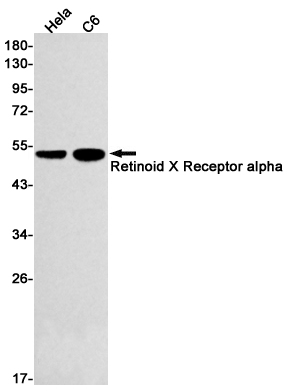
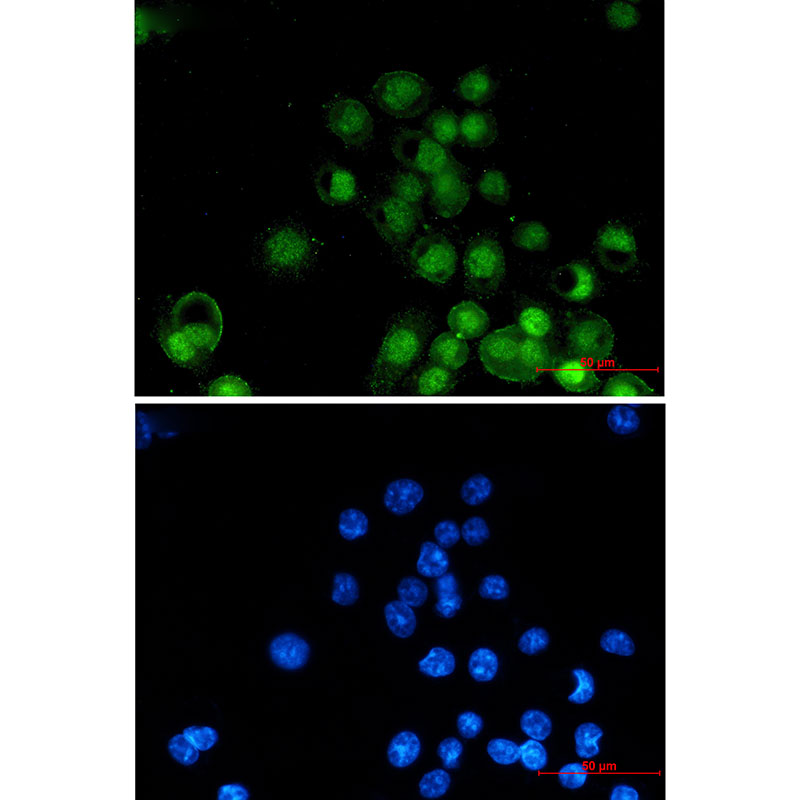
- 产品详情
- 实验流程
- 背景知识
Application 
| WB, IP |
|---|---|
| Primary Accession | P19793 |
| Reactivity | Rat, Human, Mouse |
| Host | Rabbit |
| Clonality | Monoclonal Antibody |
| Isotype | IgG |
| Conjugate | Unconjugated |
| Purification | Affinity Purified |
| Calculated MW | 50811 Da |
| Gene ID | 6256 |
|---|---|
| Other Names | RXRA |
| Dilution | WB~~1:1000-1:2000 IP~~1:20-1:50 |
| Format | Liquid in 50mM Tris-Glycine(pH 7.4), 0.15M NaCl, 40%Glycerol, 0.01% sodium azide and 0.05% BSA. |
| Storage | Store at 4°C short term. Aliquot and store at -20°C long term. Avoid freeze/thaw cycles. |
For Research Use Only. Not For Use In Diagnostic Procedures.
| Name | RXRA |
|---|---|
| Synonyms | NR2B1 |
| Function | Receptor for retinoic acid that acts as a transcription factor (PubMed:10874028, PubMed:11162439, PubMed:11915042, PubMed:37478846). Forms homo- or heterodimers with retinoic acid receptors (RARs) and binds to target response elements in response to their ligands, all-trans or 9-cis retinoic acid, to regulate gene expression in various biological processes (PubMed:10195690, PubMed:11162439, PubMed:11915042, PubMed:16107141, PubMed:17761950, PubMed:18800767, PubMed:19167885, PubMed:28167758, PubMed:37478846). The RAR/RXR heterodimers bind to the retinoic acid response elements (RARE) composed of tandem 5'-AGGTCA-3' sites known as DR1-DR5 to regulate transcription (PubMed:10195690, PubMed:11162439, PubMed:11915042, PubMed:17761950, PubMed:28167758). The high affinity ligand for retinoid X receptors (RXRs) is 9-cis retinoic acid (PubMed:1310260). In the absence of ligand, the RXR-RAR heterodimers associate with a multiprotein complex containing transcription corepressors that induce histone deacetylation, chromatin condensation and transcriptional suppression (PubMed:20215566). On ligand binding, the corepressors dissociate from the receptors and coactivators are recruited leading to transcriptional activation (PubMed:20215566, PubMed:37478846, PubMed:9267036). Serves as a common heterodimeric partner for a number of nuclear receptors, such as RARA, RARB and PPARA (PubMed:10195690, PubMed:11915042, PubMed:28167758, PubMed:29021580). The RXRA/RARB heterodimer can act as a transcriptional repressor or transcriptional activator, depending on the RARE DNA element context (PubMed:29021580). The RXRA/PPARA heterodimer is required for PPARA transcriptional activity on fatty acid oxidation genes such as ACOX1 and the P450 system genes (PubMed:10195690). Together with RARA, positively regulates microRNA-10a expression, thereby inhibiting the GATA6/VCAM1 signaling response to pulsatile shear stress in vascular endothelial cells (PubMed:28167758). Acts as an enhancer of RARA binding to RARE DNA element (PubMed:28167758). May facilitate the nuclear import of heterodimerization partners such as VDR and NR4A1 (PubMed:12145331, PubMed:15509776). Promotes myelin debris phagocytosis and remyelination by macrophages (PubMed:26463675). Plays a role in the attenuation of the innate immune system in response to viral infections, possibly by negatively regulating the transcription of antiviral genes such as type I IFN genes (PubMed:25417649). Involved in the regulation of calcium signaling by repressing ITPR2 gene expression, thereby controlling cellular senescence (PubMed:30216632). |
| Cellular Location | Nucleus {ECO:0000255|PROSITE-ProRule:PRU00407, ECO:0000269|PubMed:10874028, ECO:0000269|PubMed:11915042, ECO:0000269|PubMed:12145331, ECO:0000269|PubMed:15509776, ECO:0000269|PubMed:17761950, ECO:0000269|PubMed:28167758}. Cytoplasm Mitochondrion. Note=Localization to the nucleus is enhanced by vitamin D3 (PubMed:15509776). Nuclear localization may be enhanced by the interaction with heterodimerization partner VDR (PubMed:12145331). Translocation to the mitochondrion upon interaction with NR4A1 (PubMed:15509776, PubMed:17761950). Increased nuclear localization upon pulsatile shear stress (PubMed:28167758) |
| Tissue Location | Expressed in lung fibroblasts (at protein level) (PubMed:30216632). Expressed in monocytes (PubMed:26463675). Highly expressed in liver, also found in kidney and brain (PubMed:14702039, PubMed:2159111, PubMed:24275569). |
Research Areas
Application Protocols
Provided below are standard protocols that you may find useful for product applications.
BACKGROUND
Receptor for retinoic acid. Retinoic acid receptors bind as heterodimers to their target response elements in response to their ligands, all-trans or 9-cis retinoic acid, and regulate gene expression in various biological processes.

终于等到您。ABCEPTA(百远生物)抗体产品。
点击下方“我要评价 ”按钮提交您的反馈信息,您的反馈和评价是我们最宝贵的财富之一,
我们将在1-3个工作日内处理您的反馈信息。
如有疑问,联系:0512-88856768 tech-china@abcepta.com.
¥ 1,250.00
Cat# AP76021


