


 癌症的基本特征包括细胞增殖、血管生成、迁移、凋亡逃避机制和细胞永生等。找到癌症发生过程中这些通路的关键标记物和对应的抗体用于检测至关重要。
 为您推荐一个泛素化位点预测神器——泛素化分析工具,可以为您的蛋白的泛素化位点作出预测和评分。
 细胞自噬受体图形绘图工具为你的蛋白的细胞受体结合位点作出预测和评分,识别结合到自噬通路中的蛋白是非常重要的,便于让我们理解自噬在正常生理、病理过程中的作用,如发育、细胞分化、神经退化性疾病、压力条件下、感染和癌症。
MFSD2A Rabbit pAb
Rabbit Polyclonal Antibody
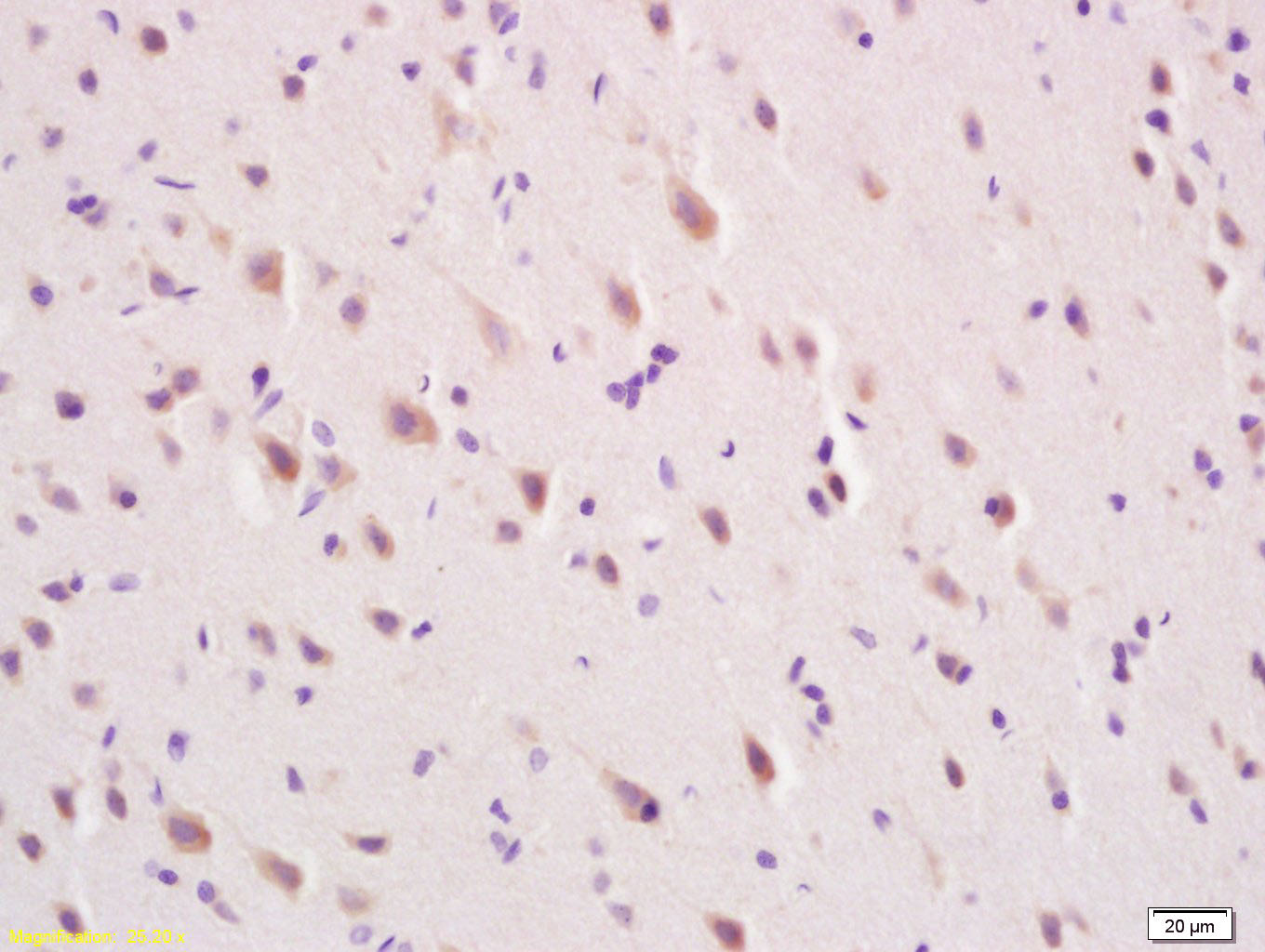
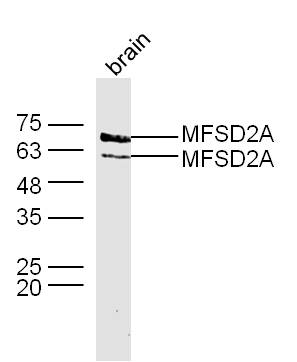

- 产品详情
- 实验流程
- 背景知识
Application 
| WB, IHC-P, IHC-F, IF, FC, E |
|---|---|
| Primary Accession | Q8NA29 |
| Reactivity | Human, Mouse, Rat |
| Predicted | Rabbit, Pig, Chicken |
| Host | Rabbit |
| Clonality | Polyclonal |
| Calculated MW | 60170 Da |
| Physical State | Liquid |
| Immunogen | KLH conjugated synthetic peptide derived from human MFSD2A |
| Epitope Specificity | 331-430/543 |
| Isotype | IgG |
| Purity | affinity purified by Protein A |
| Buffer | 0.01M TBS (pH7.4) with 1% BSA, 0.02% Proclin300 and 50% Glycerol. |
| SUBCELLULAR LOCATION | Endoplasmic reticulum membrane. |
| SIMILARITY | Belongs to the major facilitator superfamily. |
| Important Note | This product as supplied is intended for research use only, not for use in human, therapeutic or diagnostic applications. |
| Background Descriptions | MFSD2 is a 543 amino acid multi-pass membrane protein of the endoplasmic reticulum that is involved in beta-adrenergic signaling during thermogenesis. Existing as three alternatively spliced isoforms, MFSD2 plays a role in G1 regulation and is encoded by a gene that maps to human chromosome 1p34.2. Human chromosome 1 spans 260 million base pairs, contains over 3,000 genes, comprises nearly 8% of the human genome and houses a large number of disease-associated genes, including those that are involved in familial adenomatous polyposis, Stickler syndrome, Parkinson’s disease, Gaucher disease, schizophrenia and Usher syndrome. |
| Gene ID | 84879 |
|---|---|
| Other Names | Major facilitator superfamily domain containing 2; Major facilitator superfamily domain containing 2A; Major facilitator superfamily domain-containing protein 2A; MFS2A_HUMAN; MFSD2; MFSD2A. |
| Dilution | WB 1:500-2000 IHC-P 1:100-500 IHC-F 1:100-500 Flow-Cyt 0.2ug/test IF 1:100-500 ELISA 1:5000-10000 |
| Storage | Store at -20 °C for one year. Avoid repeated freeze/thaw cycles. When reconstituted in sterile pH 7.4 0.01M PBS or diluent of antibody the antibody is stable for at least two weeks at 2-4 °C. |
For Research Use Only. Not For Use In Diagnostic Procedures.
| Name | MFSD2A {ECO:0000303|PubMed:18694395, ECO:0000312|HGNC:HGNC:25897} |
|---|---|
| Function | Sodium-dependent lysophosphatidylcholine (LPC) symporter, which plays an essential role for blood-brain barrier formation and function (PubMed:24828040, PubMed:32572202, PubMed:34135507). Specifically expressed in endothelium of the blood-brain barrier of micro-vessels and transports LPC into the brain (By similarity). Transport of LPC is essential because it constitutes the major mechanism by which docosahexaenoic acid (DHA), an omega-3 fatty acid that is essential for normal brain growth and cognitive function, enters the brain (PubMed:26005868, PubMed:34135507). Transports LPC carrying long-chain fatty acids such LPC oleate and LPC palmitate with a minimum acyl chain length of 14 carbons (By similarity). Does not transport docosahexaenoic acid in unesterified fatty acid (By similarity). Specifically required for blood-brain barrier formation and function, probably by mediating lipid transport (By similarity). Not required for central nervous system vascular morphogenesis (By similarity). Acts as a transporter for tunicamycin, an inhibitor of asparagine-linked glycosylation (PubMed:21677192). In placenta, acts as a receptor for ERVFRD-1/syncytin-2 and is required for trophoblast fusion (PubMed:18988732, PubMed:23177091). |
| Cellular Location | Cell membrane; Multi-pass membrane protein. Endoplasmic reticulum membrane {ECO:0000250|UniProtKB:Q9DA75}; Multi-pass membrane protein. Note=Cytoplasmic punctae that may represent vesicles shuttling between the endoplasmic reticulum and the plasma membrane (PubMed:21677192). |
| Tissue Location | In placenta, associated with trophoblast cells. |
Provided below are standard protocols that you may find useful for product applications.
BACKGROUND
MFSD2 is a 543 amino acid multi-pass membrane protein of the endoplasmic reticulum that is involved in beta-adrenergic signaling during thermogenesis. Existing as three alternatively spliced isoforms, MFSD2 plays a role in G1 regulation and is encoded by a gene that maps to human chromosome 1p34.2. Human chromosome 1 spans 260 million base pairs, contains over 3,000 genes, comprises nearly 8% of the human genome and houses a large number of disease-associated genes, including those that are involved in familial adenomatous polyposis, Stickler syndrome, Parkinson’s disease, Gaucher disease, schizophrenia and Usher syndrome.

终于等到您。ABCEPTA(百远生物)抗体产品。
点击下方“我要评价 ”按钮提交您的反馈信息,您的反馈和评价是我们最宝贵的财富之一,
我们将在1-3个工作日内处理您的反馈信息。
如有疑问,联系:0512-88856768 tech-china@abcepta.com.


