


 癌症的基本特征包括细胞增殖、血管生成、迁移、凋亡逃避机制和细胞永生等。找到癌症发生过程中这些通路的关键标记物和对应的抗体用于检测至关重要。
 为您推荐一个泛素化位点预测神器——泛素化分析工具,可以为您的蛋白的泛素化位点作出预测和评分。
 细胞自噬受体图形绘图工具为你的蛋白的细胞受体结合位点作出预测和评分,识别结合到自噬通路中的蛋白是非常重要的,便于让我们理解自噬在正常生理、病理过程中的作用,如发育、细胞分化、神经退化性疾病、压力条件下、感染和癌症。
FoxP1 Rabbit pAb
FoxP1 Rabbit pAb
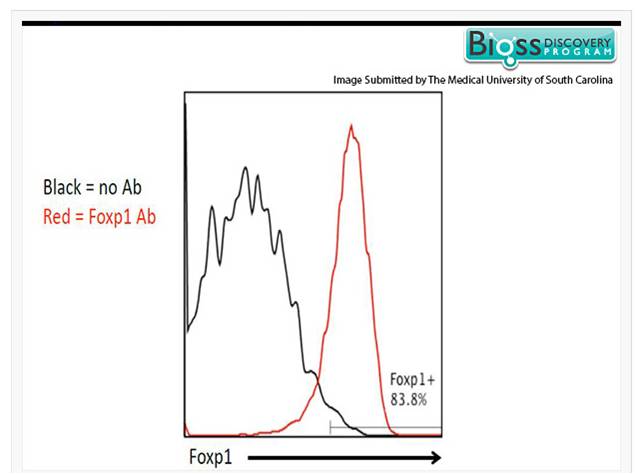
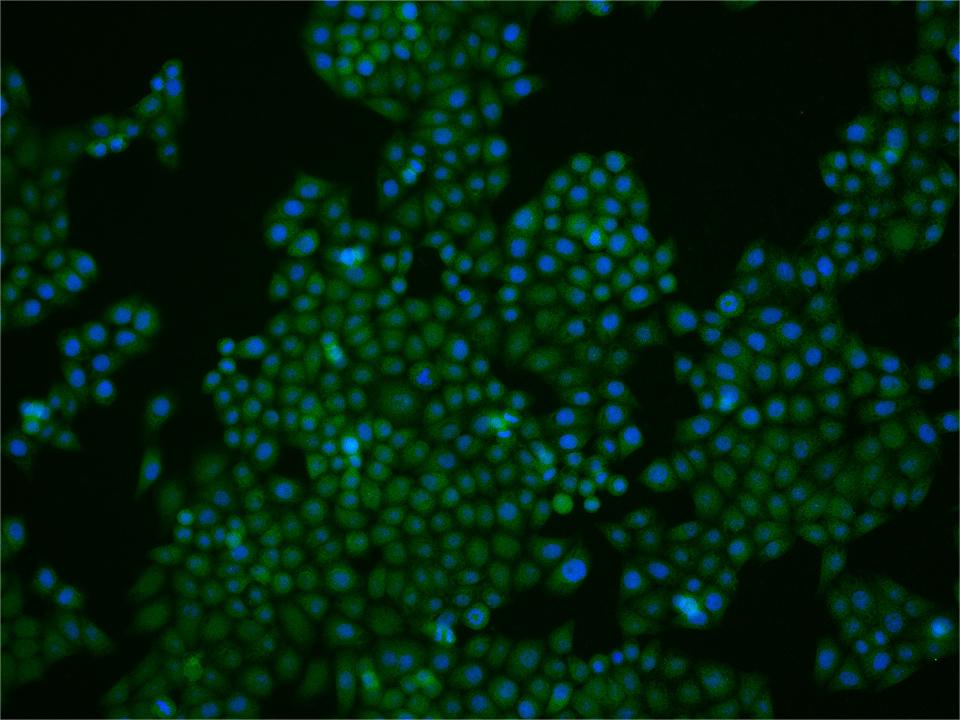
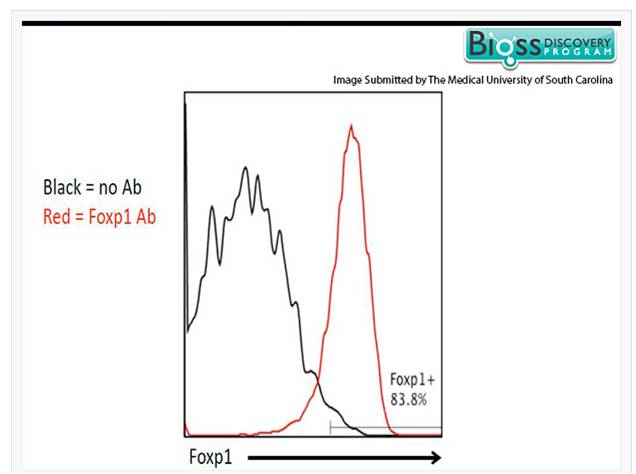
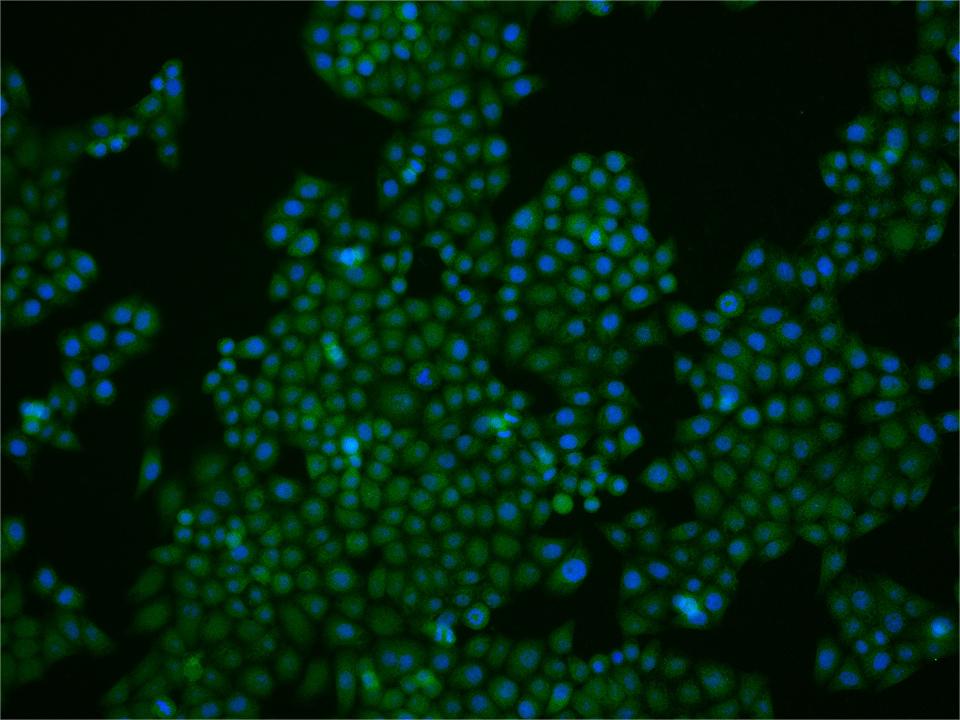
- 产品详情
- 实验流程
- 背景知识
| Primary Accession | P58462 |
|---|---|
| Reactivity | Human, Mouse |
| Predicted | Rat, Dog, Chicken |
| Host | Rabbit |
| Clonality | Polyclonal |
| Calculated MW | 78833 Da |
| Physical State | Liquid |
| Immunogen | KLH conjugated synthetic peptide derived from mouse FoxP1 |
| Epitope Specificity | 581-705/705 |
| Isotype | IgG |
| Purity | affinity purified by Protein A |
| Buffer | 0.01M TBS (pH7.4) with 1% BSA, 0.02% Proclin300 and 50% Glycerol. |
| SUBCELLULAR LOCATION | Nucleus. |
| Important Note | This product as supplied is intended for research use only, not for use in human, therapeutic or diagnostic applications. |
| Background Descriptions | This gene belongs to subfamily P of the forkhead box (FOX) transcription factor family. Forkhead box transcription factors play important roles in the regulation of tissue- and cell type-specific gene transcription during both development and adulthood. Forkhead box P1 protein contains both DNA-binding- and protein-protein binding-domains. This gene may act as a tumor suppressor as it is lost in several tumor types and maps to a chromosomal region (3p14.1) reported to contain a tumor suppressor gene(s). Alternative splicing results in multiple transcript variants encoding different isoforms. [provided by RefSeq, Jul 2008] |
| Gene ID | 108655 |
|---|---|
| Other Names | Forkhead box protein P1, Forkhead-related transcription factor 1, Foxp1 |
| Dilution | ICC/IF=1:100-500,Flow-Cyt=1 µg/Test |
| Storage | Store at -20 °C for one year. Avoid repeated freeze/thaw cycles. When reconstituted in sterile pH 7.4 0.01M PBS or diluent of antibody the antibody is stable for at least two weeks at 2-4 °C. |
For Research Use Only. Not For Use In Diagnostic Procedures.
| Name | Foxp1 |
|---|---|
| Function | Transcriptional repressor. Can act with CTBP1 to synergistically repress transcription but CTPBP1 is not essential (PubMed:11358962, PubMed:14701752). Plays an important role in the specification and differentiation of lung epithelium. Acts cooperatively with FOXP4 to regulate lung secretory epithelial cell fate and regeneration by restricting the goblet cell lineage program; the function may involve regulation of AGR2 (PubMed:11358962, PubMed:22675208). Essential transcriptional regulator of B-cell development (PubMed:16819554). Involved in regulation of cardiac muscle cell proliferation (PubMed:20713518). Involved in the columnar organization of spinal motor neurons. Promotes the formation of the lateral motor neuron column (LMC) and the preganglionic motor column (PGC) and is required for respective appropriate motor axon projections. The segment-appropriate generation of spinal cord motor columns requires cooperation with other Hox proteins (PubMed:18662545, PubMed:18667151). Can regulate PITX3 promoter activity; may promote midbrain identity in embryonic stem cell-derived dopamine neurons by regulating PITX3 (PubMed:20175877). Negatively regulates the differentiation of T follicular helper cells T(FH)s (PubMed:24859450). Involved in maintenance of hair follicle stem cell quiescence; the function probably involves regulation of FGF18 (PubMed:23946441). Represses transcription of various pro-apoptotic genes and cooperates with NF-kappa B-signaling in promoting B-cell expansion by inhibition of caspase-dependent apoptosis. Binds to CSF1R promoter elements and is involved in regulation of monocyte differentiation and macrophage functions; repression of CSF1R in monocytes seems to involve NCOR2 as corepressor. Involved in endothelial cell proliferation, tube formation and migration indicative for a role in angiogenesis; the role in neovascularization seems to implicate suppression of SEMA5B. Can negatively regulate androgen receptor signaling (By similarity). Acts as a transcriptional activator of the FBXL7 promoter; this activity is regulated by AURKA (By similarity). |
| Cellular Location | Nucleus {ECO:0000250|UniProtKB:Q9H334}. Note=Not found in the nucleolus. {ECO:0000250|UniProtKB:Q9H334} |
| Tissue Location | Isoform 5 is specifically expressed in embryonic stem cells (PubMed:21924763). Highest expression in the lung, brain, and spleen. Lower expression in heart, skeletal muscle, kidney, small intestine (isoform 3 not present) and liver |
Research Areas
Application Protocols
Provided below are standard protocols that you may find useful for product applications.
BACKGROUND
This product as supplied is intended for research use only, not for use in human, therapeutic or diagnostic applications.

终于等到您。ABCEPTA(百远生物)抗体产品。
点击下方“我要评价 ”按钮提交您的反馈信息,您的反馈和评价是我们最宝贵的财富之一,
我们将在1-3个工作日内处理您的反馈信息。
如有疑问,联系:0512-88856768 tech-china@abcepta.com.


