


 癌症的基本特征包括细胞增殖、血管生成、迁移、凋亡逃避机制和细胞永生等。找到癌症发生过程中这些通路的关键标记物和对应的抗体用于检测至关重要。
 为您推荐一个泛素化位点预测神器——泛素化分析工具,可以为您的蛋白的泛素化位点作出预测和评分。
 细胞自噬受体图形绘图工具为你的蛋白的细胞受体结合位点作出预测和评分,识别结合到自噬通路中的蛋白是非常重要的,便于让我们理解自噬在正常生理、病理过程中的作用,如发育、细胞分化、神经退化性疾病、压力条件下、感染和癌症。
BRCA1 Rabbit pAb
BRCA1 Rabbit pAb
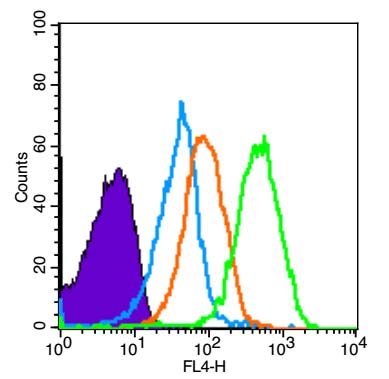
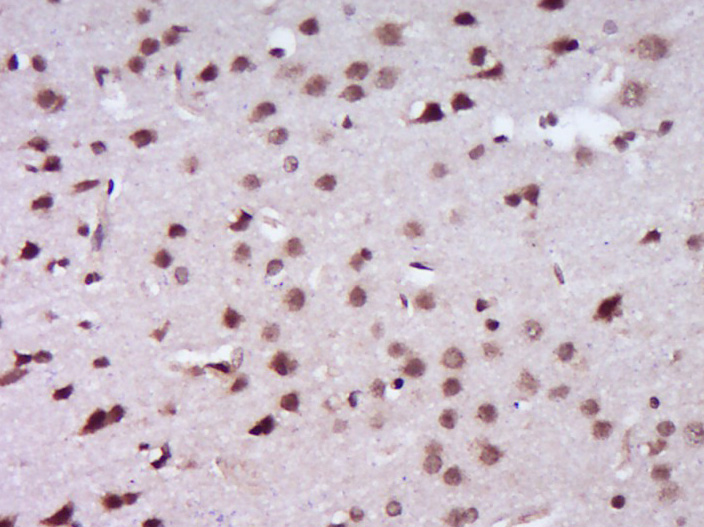
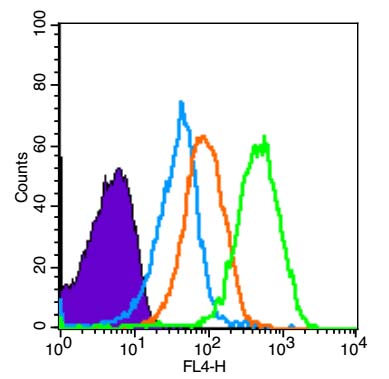
- 产品详情
- 实验流程
- 背景知识
Application 
| IHC-P, IHC-F, IF |
|---|---|
| Reactivity | Rat, Mouse |
| Host | Rabbit |
| Clonality | Polyclonal |
| Physical State | Liquid |
| Immunogen | KLH conjugated synthetic peptide derived from mouse BRCA1 |
| Epitope Specificity | 64-160/1812 |
| Isotype | IgG |
| Purity | affinity purified by Protein A |
| Buffer | 0.01M TBS (pH7.4) with 1% BSA, 0.02% Proclin300 and 50% Glycerol. |
| SUBCELLULAR LOCATION | Cytoplasm; Nucleus. Localizes at sites of DNA damage at double-strand breaks (DSBs) and recruitment to DNA damage sites is mediated by the BRCA1-A complex. |
| DISEASE | Defects in BRCA1 are a cause of susceptibility to breastcancer (BC) [MIM:114480]. A common malignancy originating frombreast epithelial tissue. Breast neoplasms can be distinguished bytheir histologic pattern. Invasive ductal carcinoma is by far themost common type. Breast cancer is etiologically and geneticallyheterogeneous. Important genetic factors have been indicated byfamilial occurrence and bilateral involvement. Mutations at morethan one locus can be involved in different families or even in thesame case. Note=Mutations in BRCA1 are thought to be responsiblefor 45% of inherited breast cancer. Moreover, BRCA1 carriers have a4-fold increased risk of colon cancer, whereas male carriers face a3-fold increased risk of prostate cancer. Cells lacking BRCA1 showdefects in DNA repair by homologous recombination.Defects in BRCA1 are a cause of susceptibility tofamilial breast-ovarian cancer type 1 (BROVCA1) [MIM:604370]. Acondition associated with familial predisposition to cancer of thebreast and ovaries. Characteristic features in affected familiesare an early age of onset of breast cancer (often before age 50),increased chance of bilateral cancers (cancer that develop in bothbreasts, or both ovaries, independently), frequent occurrence ofbreast cancer among men, increased incidence of tumors of otherspecific organs, such as the prostate. Note=Mutations in BRCA1 arethought to be responsible for more than 80% of inheritedbreast-ovarian cancer.Defects in BRCA1 are a cause of susceptibility to ovariancancer (OC) [MIM:167000]. The term ovarian cancer definesmalignancies originating from ovarian tissue. Although manyhistologic types of ovarian tumors have been described, epithelialovarian carcinoma is the most common form. Ovarian cancers areoften asymptomatic and the recognized signs and symptoms, even oflate-stage disease, are vague. Consequently, most patients arediagnosed with advanced disease.Defects in BRCA1 are a cause of susceptibility topancreatic cancer type 4 (PNCA4) |
| Important Note | This product as supplied is intended for research use only, not for use in human, therapeutic or diagnostic applications. |
| Background Descriptions | This gene encodes a nuclear phosphoprotein that plays a role in maintaining genomic stability, and it also acts as a tumor suppressor. The encoded protein combines with other tumor suppressors, DNA damage sensors, and signal transducers to form a large multi-subunit protein complex known as the BRCA1-associated genome surveillance complex (BASC). This gene product associates with RNA polymerase II, and through the C-terminal domain, also interacts with histone deacetylase complexes. This protein thus plays a role in transcription, DNA repair of double-stranded breaks, and recombination. Mutations in this gene are responsible for approximately 40% of inherited breast cancers and more than 80% of inherited breast and ovarian cancers. Alternative splicing plays a role in modulating the subcellular localization and physiological function of this gene. Many alternatively spliced transcript variants, some of which are disease-associated mutations, have been described for this gene, but the full-length natures of only some of these variants has been described. A related pseudogene, which is also located on chromosome 17, has been identified. [provided by RefSeq, May 2009]. |
| Dilution | IHC-P=1:100-500,IHC-F=1:100-500,IF=1:100-500,Flow-Cyt=3ug/Test |
|---|---|
| Storage | Store at -20 °C for one year. Avoid repeated freeze/thaw cycles. When reconstituted in sterile pH 7.4 0.01M PBS or diluent of antibody the antibody is stable for at least two weeks at 2-4 °C. |
For Research Use Only. Not For Use In Diagnostic Procedures.
Research Areas
Application Protocols
Provided below are standard protocols that you may find useful for product applications.
BACKGROUND
This product as supplied is intended for research use only, not for use in human, therapeutic or diagnostic applications.

终于等到您。ABCEPTA(百远生物)抗体产品。
点击下方“我要评价 ”按钮提交您的反馈信息,您的反馈和评价是我们最宝贵的财富之一,
我们将在1-3个工作日内处理您的反馈信息。
如有疑问,联系:0512-88856768 tech-china@abcepta.com.


