


 癌症的基本特征包括细胞增殖、血管生成、迁移、凋亡逃避机制和细胞永生等。找到癌症发生过程中这些通路的关键标记物和对应的抗体用于检测至关重要。
 为您推荐一个泛素化位点预测神器——泛素化分析工具,可以为您的蛋白的泛素化位点作出预测和评分。
 细胞自噬受体图形绘图工具为你的蛋白的细胞受体结合位点作出预测和评分,识别结合到自噬通路中的蛋白是非常重要的,便于让我们理解自噬在正常生理、病理过程中的作用,如发育、细胞分化、神经退化性疾病、压力条件下、感染和癌症。
Recombinant Anti-LOXL2 Rabbit mAb
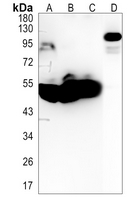
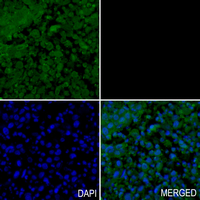
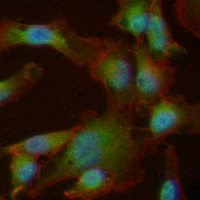
- 产品详情
- 实验流程
Application 
| WB, IHC, FC, IF/IC |
|---|---|
| Primary Accession | Q9Y4K0 |
| Reactivity | Human, Mouse, Rat |
| Host | Rabbit |
| Clonality | Monoclonal |
| Calculated MW | 86725 Da |
| Gene ID | 4017 |
|---|---|
| Other Names | Lysyl oxidase homolog 2; Lysyl oxidase-like protein 2; Lysyl oxidase-related protein 2; Lysyl oxidase-related protein WS9-14 |
| Target/Specificity | KLH-conjugated synthetic peptide encompassing a sequence within human LOXL2 protein. The exact sequence is proprietary. |
| Dilution | WB~~WB (1/500 - 1/1000) IHC~~1:100~500 FC~~1:10~50 IF/IC~~N/A |
| Format | Liquid in PBS, pH 7.4, containing 50% glycerol, 0.2% BSA and 0.01% sodium azide. |
| Storage | Store at -20 °C.Stable for 12 months from date of receipt |
For Research Use Only. Not For Use In Diagnostic Procedures.
| Name | LOXL2 |
|---|---|
| Function | Mediates the post-translational oxidative deamination of lysine residues on target proteins leading to the formation of deaminated lysine (allysine) (PubMed:27735137). Acts as a transcription corepressor and specifically mediates deamination of trimethylated 'Lys-4' of histone H3 (H3K4me3), a specific tag for epigenetic transcriptional activation (PubMed:27735137). Shows no activity against histone H3 when it is trimethylated on 'Lys-9' (H3K9me3) or 'Lys-27' (H3K27me3) or when 'Lys-4' is monomethylated (H3K4me1) or dimethylated (H3K4me2) (PubMed:27735137). Also mediates deamination of methylated TAF10, a member of the transcription factor IID (TFIID) complex, which induces release of TAF10 from promoters, leading to inhibition of TFIID-dependent transcription (PubMed:25959397). LOXL2-mediated deamination of TAF10 results in transcriptional repression of genes required for embryonic stem cell pluripotency including POU5F1/OCT4, NANOG, KLF4 and SOX2 (By similarity). Involved in epithelial to mesenchymal transition (EMT) via interaction with SNAI1 and participates in repression of E-cadherin CDH1, probably by mediating deamination of histone H3 (PubMed:16096638, PubMed:24414204, PubMed:27735137). During EMT, involved with SNAI1 in negatively regulating pericentromeric heterochromatin transcription (PubMed:24239292). SNAI1 recruits LOXL2 to pericentromeric regions to oxidize histone H3 and repress transcription which leads to release of heterochromatin component CBX5/HP1A, enabling chromatin reorganization and acquisition of mesenchymal traits (PubMed:24239292). Interacts with the endoplasmic reticulum protein HSPA5 which activates the IRE1-XBP1 pathway of the unfolded protein response, leading to expression of several transcription factors involved in EMT and subsequent EMT induction (PubMed:28332555). Involved in E-cadherin repression following hypoxia, a hallmark of EMT believed to amplify tumor aggressiveness, suggesting that it may play a role in tumor progression (PubMed:20026874). When secreted into the extracellular matrix, promotes cross-linking of extracellular matrix proteins by mediating oxidative deamination of peptidyl lysine residues in precursors to fibrous collagen and elastin (PubMed:20306300). Acts as a regulator of sprouting angiogenesis, probably via collagen IV scaffolding (PubMed:21835952). Acts as a regulator of chondrocyte differentiation, probably by regulating expression of factors that control chondrocyte differentiation (By similarity). |
| Cellular Location | Secreted, extracellular space, extracellular matrix, basement membrane. Nucleus. Chromosome. Endoplasmic reticulum. Note=Associated with chromatin (PubMed:27735137). It is unclear how LOXL2 is nuclear as it contains a signal sequence and has been shown to be secreted (PubMed:23319596) However, a number of reports confirm its intracellular location and its key role in transcription regulation (PubMed:22204712, PubMed:22483618). |
| Tissue Location | Expressed in many tissues (PubMed:10212285). Highest expression in reproductive tissues, placenta, uterus and prostate (PubMed:10212285). In esophageal epithelium, expressed in the basal, prickle and granular cell layers (PubMed:22204712). Up-regulated in a number of cancers cells and tissues. |
Research Areas
Application Protocols
Provided below are standard protocols that you may find useful for product applications.

终于等到您。ABCEPTA(百远生物)抗体产品。
点击下方“我要评价 ”按钮提交您的反馈信息,您的反馈和评价是我们最宝贵的财富之一,
我们将在1-3个工作日内处理您的反馈信息。
如有疑问,联系:0512-88856768 tech-china@abcepta.com.
¥ 1,250.00
Cat# AP94855


