


 癌症的基本特征包括细胞增殖、血管生成、迁移、凋亡逃避机制和细胞永生等。找到癌症发生过程中这些通路的关键标记物和对应的抗体用于检测至关重要。
 为您推荐一个泛素化位点预测神器——泛素化分析工具,可以为您的蛋白的泛素化位点作出预测和评分。
 细胞自噬受体图形绘图工具为你的蛋白的细胞受体结合位点作出预测和评分,识别结合到自噬通路中的蛋白是非常重要的,便于让我们理解自噬在正常生理、病理过程中的作用,如发育、细胞分化、神经退化性疾病、压力条件下、感染和癌症。
Recombinant Anti-PAR2 Rabbit mAb
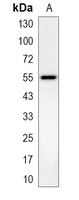
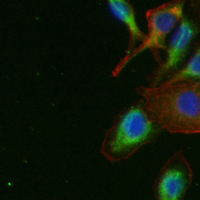
- 产品详情
- 实验流程
Application 
| WB, IHC, FC, IF/IC |
|---|---|
| Primary Accession | P55085 |
| Reactivity | Human, Mouse, Rat |
| Host | Rabbit |
| Clonality | Monoclonal |
| Calculated MW | 44126 Da |
| Gene ID | 2150 |
|---|---|
| Other Names | GPR11; PAR2; Proteinase-activated receptor 2; PAR-2; Coagulation factor II receptor-like 1; G-protein coupled receptor 11; Thrombin receptor-like 1 |
| Target/Specificity | KLH-conjugated synthetic peptide encompassing a sequence within human PAR2 protein. The exact sequence is proprietary. |
| Dilution | WB~~WB (1/500 - 1/1000) IHC~~1:100~500 FC~~1:10~50 IF/IC~~N/A |
| Format | Liquid in PBS, pH 7.3, 50% glycerol, 0.05% BSA, and 0.05% Proclin300. |
| Storage | Store at -20 °C.Stable for 12 months from date of receipt |
For Research Use Only. Not For Use In Diagnostic Procedures.
| Name | F2RL1 |
|---|---|
| Synonyms | GPR11, PAR2 |
| Function | Receptor for trypsin and trypsin-like enzymes coupled to G proteins (PubMed:28445455). Its function is mediated through the activation of several signaling pathways including phospholipase C (PLC), intracellular calcium, mitogen-activated protein kinase (MAPK), I-kappaB kinase/NF-kappaB and Rho (PubMed:28445455). Can also be transactivated by cleaved F2R/PAR1. Involved in modulation of inflammatory responses and regulation of innate and adaptive immunity, and acts as a sensor for proteolytic enzymes generated during infection. Generally is promoting inflammation. Can signal synergistically with TLR4 and probably TLR2 in inflammatory responses and modulates TLR3 signaling. Has a protective role in establishing the endothelial barrier; the activity involves coagulation factor X. Regulates endothelial cell barrier integrity during neutrophil extravasation, probably following proteolytic cleavage by PRTN3 (PubMed:23202369). Proposed to have a bronchoprotective role in airway epithelium, but also shown to compromise the airway epithelial barrier by interrupting E-cadherin adhesion (PubMed:10086357). Involved in the regulation of vascular tone; activation results in hypotension presumably mediated by vasodilation. Associates with a subset of G proteins alpha subunits such as GNAQ, GNA11, GNA14, GNA12 and GNA13, but probably not with G(o)-alpha, G(i) subunit alpha-1 and G(i) subunit alpha-2. However, according to PubMed:21627585 can signal through G(i) subunit alpha. Believed to be a class B receptor which internalizes as a complex with arrestin and traffic with it to endosomal vesicles, presumably as desensitized receptor, for extended periods of time. Mediates inhibition of TNF stimulated JNK phosphorylation via coupling to GNAQ and GNA11; the function involves dissociation of RIPK1 and TRADD from TNFR1. Mediates phosphorylation of nuclear factor NF-kappa-B RELA subunit at 'Ser-536'; the function involves IKBKB and is predominantly independent of G proteins. Involved in cellular migration. Involved in cytoskeletal rearrangement and chemotaxis through beta-arrestin-promoted scaffolds; the function is independent of GNAQ and GNA11 and involves promotion of cofilin dephosphorylation and actin filament severing. Induces redistribution of COPS5 from the plasma membrane to the cytosol and activation of the JNK cascade is mediated by COPS5. Involved in the recruitment of leukocytes to the sites of inflammation and is the major PAR receptor capable of modulating eosinophil function such as pro-inflammatory cytokine secretion, superoxide production and degranulation. During inflammation promotes dendritic cell maturation, trafficking to the lymph nodes and subsequent T-cell activation. Involved in antimicrobial response of innate immune cells; activation enhances phagocytosis of Gram-positive and killing of Gram-negative bacteria. Acts synergistically with interferon-gamma in enhancing antiviral responses. Implicated in a number of acute and chronic inflammatory diseases such as of the joints, lungs, brain, gastrointestinal tract, periodontium, skin, and vascular systems, and in autoimmune disorders. Probably mediates activation of pro-inflammatory and pro-fibrotic responses in fibroblasts, triggered by coagulation factor Xa (F10) (By similarity). Mediates activation of barrier protective signaling responses in endothelial cells, triggered by coagulation factor Xa (F10) (PubMed:22409427). |
| Cellular Location | Cell membrane; Multi-pass membrane protein. |
| Tissue Location | Widely expressed in tissues with especially high levels in pancreas, liver, kidney, small intestine, and colon (PubMed:7556175, PubMed:8615752). Moderate expression is detected in many organs, but none in brain or skeletal muscle (PubMed:7556175, PubMed:8615752). Expressed in endothelial cells (PubMed:23202369) |
Research Areas
Application Protocols
Provided below are standard protocols that you may find useful for product applications.

终于等到您。ABCEPTA(百远生物)抗体产品。
点击下方“我要评价 ”按钮提交您的反馈信息,您的反馈和评价是我们最宝贵的财富之一,
我们将在1-3个工作日内处理您的反馈信息。
如有疑问,联系:0512-88856768 tech-china@abcepta.com.
¥ 1,250.00
Cat# AP95178


