


 癌症的基本特征包括细胞增殖、血管生成、迁移、凋亡逃避机制和细胞永生等。找到癌症发生过程中这些通路的关键标记物和对应的抗体用于检测至关重要。
 为您推荐一个泛素化位点预测神器——泛素化分析工具,可以为您的蛋白的泛素化位点作出预测和评分。
 细胞自噬受体图形绘图工具为你的蛋白的细胞受体结合位点作出预测和评分,识别结合到自噬通路中的蛋白是非常重要的,便于让我们理解自噬在正常生理、病理过程中的作用,如发育、细胞分化、神经退化性疾病、压力条件下、感染和癌症。
Anti-FcgR3a / CD16a Reference Antibody (3G8)
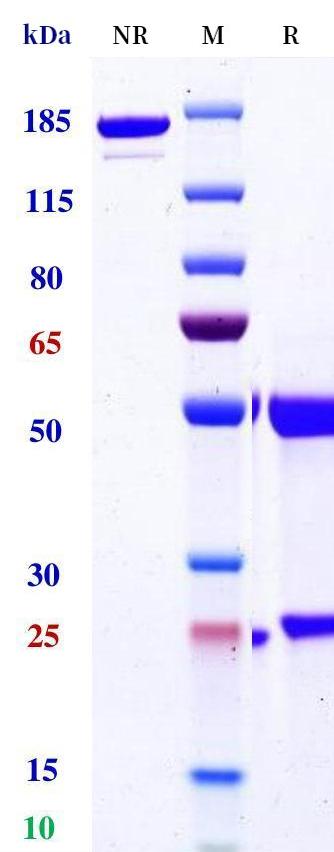
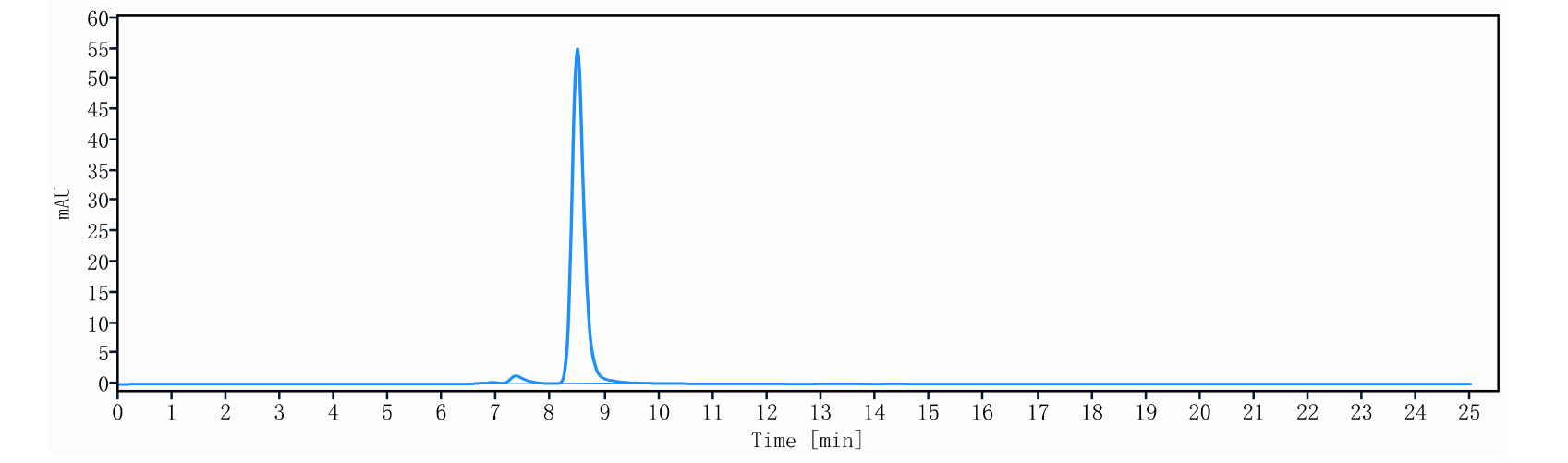
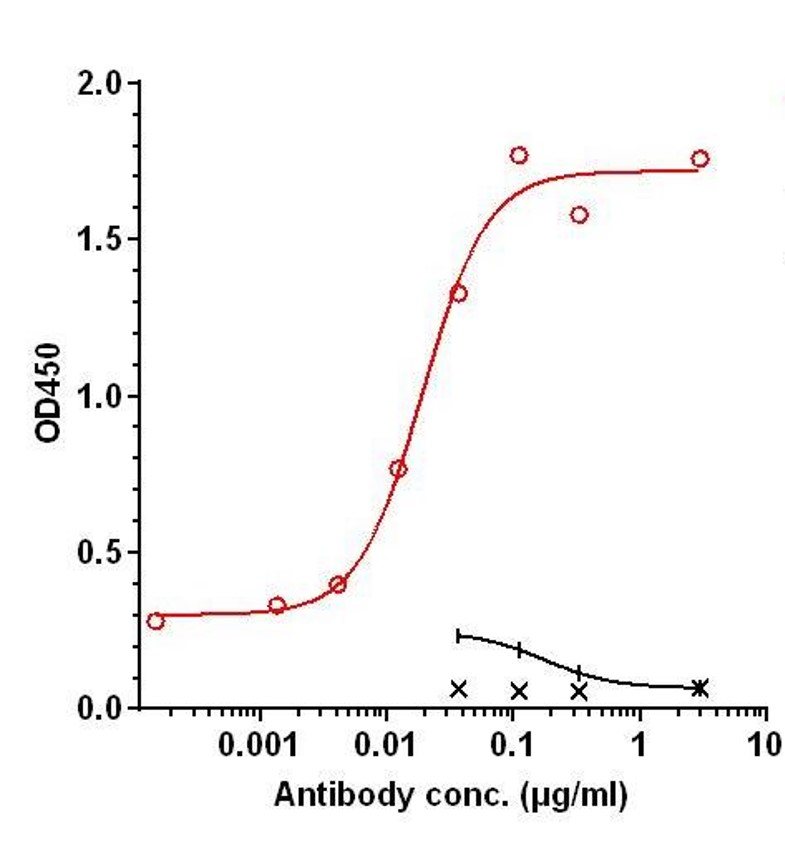
- 产品详情
- 实验流程
Application 
| Functional assay, Kinetics (SPR), Kinetics (BLI), FACS, E, FTA |
|---|---|
| Primary Accession | P08637 |
| Reactivity | Human |
| Clonality | Monoclonal |
| Isotype | IgG1 |
| Calculated MW | 29089 Da |
| Target/Specificity | FcgR3a / CD16a |
|---|---|
| Expression system | CHO |
For Research Use Only. Not For Use In Diagnostic Procedures.
Patent Notice: The variable region sequence of this antibody is derived from a published third-party patent. This product is manufactured independently as a Research Use Only (RUO) reagent and is not licensed, sponsored, or endorsed by the patent holder. It is intended solely for research purposes. Customers considering any commercial, diagnostic, or therapeutic use should independently evaluate freedom-to-operate with respect to relevant third-party patents.
| Name | FCGR3A {ECO:0000303|PubMed:23006327} |
|---|---|
| Function | Receptor for the invariable Fc fragment of immunoglobulin gamma (IgG). Optimally activated upon binding of clustered antigen-IgG complexes displayed on cell surfaces, triggers lysis of antibody-coated cells, a process known as antibody-dependent cellular cytotoxicity (ADCC). Does not bind free monomeric IgG, thus avoiding inappropriate effector cell activation in the absence of antigenic trigger (PubMed:11711607, PubMed:21768335, PubMed:22023369, PubMed:24412922, PubMed:25786175, PubMed:25816339, PubMed:28652325, PubMed:8609432, PubMed:9242542). Mediates IgG effector functions on natural killer (NK) cells. Binds antigen-IgG complexes generated upon infection and triggers NK cell-dependent cytokine production and degranulation to limit viral load and propagation. Involved in the generation of memory- like adaptive NK cells capable to produce high amounts of IFNG and to efficiently eliminate virus-infected cells via ADCC (PubMed:24412922, PubMed:25786175). Regulates NK cell survival and proliferation, in particular by preventing NK cell progenitor apoptosis (PubMed:29967280, PubMed:9916693). Following the engagement of antigen-IgG complexes, triggers phosphorylation of immunoreceptor tyrosine-based activation motif (ITAM)-containing adapters with subsequent activation of phosphatidylinositol 3-kinase signaling and sustained elevation of intracellular calcium that ultimately drive NK cell activation. The ITAM-dependent signaling coupled to receptor phosphorylation by PKC mediates robust intracellular calcium flux that leads to production of pro-inflammatory cytokines, whereas in the absence of receptor phosphorylation it mainly activates phosphatidylinositol 3-kinase signaling leading to cell degranulation (PubMed:1825220, PubMed:23024279, PubMed:2532305). Costimulates NK cells and trigger lysis of target cells independently of IgG binding (PubMed:10318937, PubMed:23006327). Mediates the antitumor activities of therapeutic antibodies. Upon ligation on monocytes triggers TNFA-dependent ADCC of IgG-coated tumor cells (PubMed:27670158). Mediates enhanced opsonization and ADCC in response to afucosylated IgGs (PubMed:34485821, PubMed:28566370). |
| Cellular Location | Cell membrane; Single-pass type I membrane protein. Secreted. Note=Also exists as a soluble receptor |
| Tissue Location | Expressed in natural killer cells (at protein level) (PubMed:2526846). Expressed in a subset of circulating monocytes (at protein level) (PubMed:27670158). |
Provided below are standard protocols that you may find useful for product applications.

终于等到您。ABCEPTA(百远生物)抗体产品。
点击下方“我要评价 ”按钮提交您的反馈信息,您的反馈和评价是我们最宝贵的财富之一,
我们将在1-3个工作日内处理您的反馈信息。
如有疑问,联系:0512-88856768 tech-china@abcepta.com.


