


 癌症的基本特征包括细胞增殖、血管生成、迁移、凋亡逃避机制和细胞永生等。找到癌症发生过程中这些通路的关键标记物和对应的抗体用于检测至关重要。
 为您推荐一个泛素化位点预测神器——泛素化分析工具,可以为您的蛋白的泛素化位点作出预测和评分。
 细胞自噬受体图形绘图工具为你的蛋白的细胞受体结合位点作出预测和评分,识别结合到自噬通路中的蛋白是非常重要的,便于让我们理解自噬在正常生理、病理过程中的作用,如发育、细胞分化、神经退化性疾病、压力条件下、感染和癌症。
CARD8 Antibody
- 产品详情
- 实验流程
- 背景知识
Application 
| WB, IF, ICC, E |
|---|---|
| Primary Accession | Q9Y2G2 |
| Other Accession | AAG50014, 12247742 |
| Reactivity | Human |
| Host | Rabbit |
| Clonality | Polyclonal |
| Isotype | IgG |
| Calculated MW | 60652 Da |
| Concentration (mg/ml) | 1 mg/mL |
| Conjugate | Unconjugated |
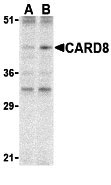
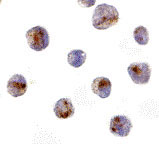
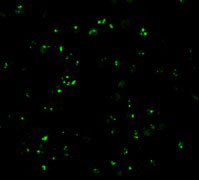
| Application Notes | CARD8 antibody can be used for detection of CARD8 by Western blot at 2 and 4 µg/mL. An approximate 45 kDa can be detected. Antibody can also be used for immunocytochemistry starting at 10 µg/mL. For immunofluorescence start at 20 µg/mL. |
| Gene ID | 22900 |
|---|---|
| Other Names | CARD8 Antibody: NDPP, DACAR, DAKAR, NDPP1, TUCAN, CARDINAL, KIAA0955, Caspase recruitment domain-containing protein 8, Apoptotic protein NDPP1, caspase recruitment domain family, member 8 |
| Target/Specificity | CARD8; |
| Reconstitution & Storage | CARD8 antibody can be stored at 4℃ for three months and -20℃, stable for up to one year. As with all antibodies care should be taken to avoid repeated freeze thaw cycles. Antibodies should not be exposed to prolonged high temperatures. |
| Precautions | CARD8 Antibody is for research use only and not for use in diagnostic or therapeutic procedures. |
For Research Use Only. Not For Use In Diagnostic Procedures.
| Name | CARD8 {ECO:0000303|PubMed:11821383, ECO:0000312|HGNC:HGNC:17057} |
|---|---|
| Function | Inflammasome sensor, which mediates inflammasome activation in response to various pathogen-associated signals, leading to subsequent pyroptosis of CD4(+) T-cells and macrophages (PubMed:11408476, PubMed:11821383, PubMed:15030775, PubMed:32051255, PubMed:32840892, PubMed:33542150, PubMed:34019797, PubMed:36357533). Inflammasomes are supramolecular complexes that assemble in the cytosol in response to pathogens and other damage-associated signals and play critical roles in innate immunity and inflammation (PubMed:11408476, PubMed:11821383, PubMed:15030775, PubMed:36357533). Acts as a recognition receptor (PRR): recognizes specific pathogens and other damage-associated signals, such as HIV-1 protease activity or Val- boroPro inhibitor, and mediates CARD8 inflammasome activation (PubMed:32840892, PubMed:33542150, PubMed:36357533). In response to pathogen-associated signals, the N-terminal part of CARD8 is degraded by the proteasome, releasing the cleaved C-terminal part of the protein (Caspase recruitment domain-containing protein 8, C-terminus), which polymerizes to initiate the formation of the inflammasome complex: the CARD8 inflammasome directly recruits pro-caspase-1 (proCASP1) independently of PYCARD/ASC and promotes caspase-1 (CASP1) activation, which subsequently cleaves and activates inflammatory cytokines IL1B and IL18 and gasdermin-D (GSDMD), leading to pyroptosis (PubMed:32051255, PubMed:32840892, PubMed:33053349, PubMed:33542150, PubMed:36357533). Ability to sense HIV-1 protease activity leads to the clearance of latent HIV-1 in patient CD4(+) T-cells after viral reactivation; in contrast, HIV-1 can evade CARD8-sensing when its protease remains inactive in infected cells prior to viral budding (PubMed:33542150). Also acts as a negative regulator of the NLRP3 inflammasome (PubMed:24517500). May also act as an inhibitor of NF- kappa-B activation (PubMed:11551959, PubMed:12067710). |
| Cellular Location | Cytoplasm. Nucleus |
| Tissue Location | High expression in lung, ovary, testis and placenta (PubMed:11551959). Lower expression in heart, kidney and liver (PubMed:11551959). Also expressed in spleen, lymph node and bone marrow (PubMed:11821383). |
Provided below are standard protocols that you may find useful for product applications.
BACKGROUND
CARD8 Antibody: Apoptosis is related to many diseases and development. Cell death signals are transduced by death domain (DD), death effector domain (DED), and caspase recruitment domain (CARD) containing molecules. CARD containing proteins include some caspases, Apaf-1, CARD4, IAPs, RICK, ARC, RAIDD, BCL-10, and ASC. A novel CARD-containing protein was recently identified and designated CARD8. This protein interacts with DRAL, a p53-responsive protein implicated in the induction of apoptosis, and caspase-1 and its related proteins ICEBERG and pesudo-ICE. Although there are conflicting reports on whether CARD8 acts a pro- or anti-apoptotic protein, it has been suggested that it functions as an adaptor molecule regulating caspase-1 and NF-κB activation.
REFERENCES
Scholl FA, McLoghlin P, Ehler E, et al. DRAL is a p53-responsive gene whose four and a half LIM domain protein product induces apoptosis. J. Cell Biol. 2000; 151:495-506.
Stil R, Leonardi A, Formisano L, et al. TUCAN/CARDINAL and DRAL participate in a B activation. FEBS 2002;kcommon pathway for modulation of NF- 521:165-9.
Razmara M, Srinivasula SM, Wang L, et al. CARD-8 protein, a new CARD family member that regulates caspase-1 activation and apoptosis. J. Biol. Chem. 2002; 277:13952-8.
Pathan N, Marusawa H, Krajewska M, et al. TUCAN, an antiapoptotic caspase-assoicated recruitment domain family protein overexpressed in cancer. J. Biol. Chem. 2001; 276:32220-9.

终于等到您。ABCEPTA(百远生物)抗体产品。
点击下方“我要评价 ”按钮提交您的反馈信息,您的反馈和评价是我们最宝贵的财富之一,
我们将在1-3个工作日内处理您的反馈信息。
如有疑问,联系:0512-88856768 tech-china@abcepta.com.


